

Home/
Blog/
Understanding Sprocket Tooth Count: How It Affects Speed, Torque, and Chain Life

8 min read

Understanding Sprocket Tooth Count: How It Affects Speed, Torque, and Chain Life

Understanding Sprocket Tooth Count: How It Affects Speed, Torque, and Chain Life
17:27

In roller chain drive systems, the number of teeth on the sprocket is important. It affects how well the system works. No matter what type of machine you are working on, understanding tooth count is important. This includes motorcycles, conveyors, farm equipment, and other chain-driven machines.

Knowing how tooth count affects speed, torque, and chain life can help you save time and money. It can also help you avoid expensive downtime.


What Is Sprocket Tooth Count?

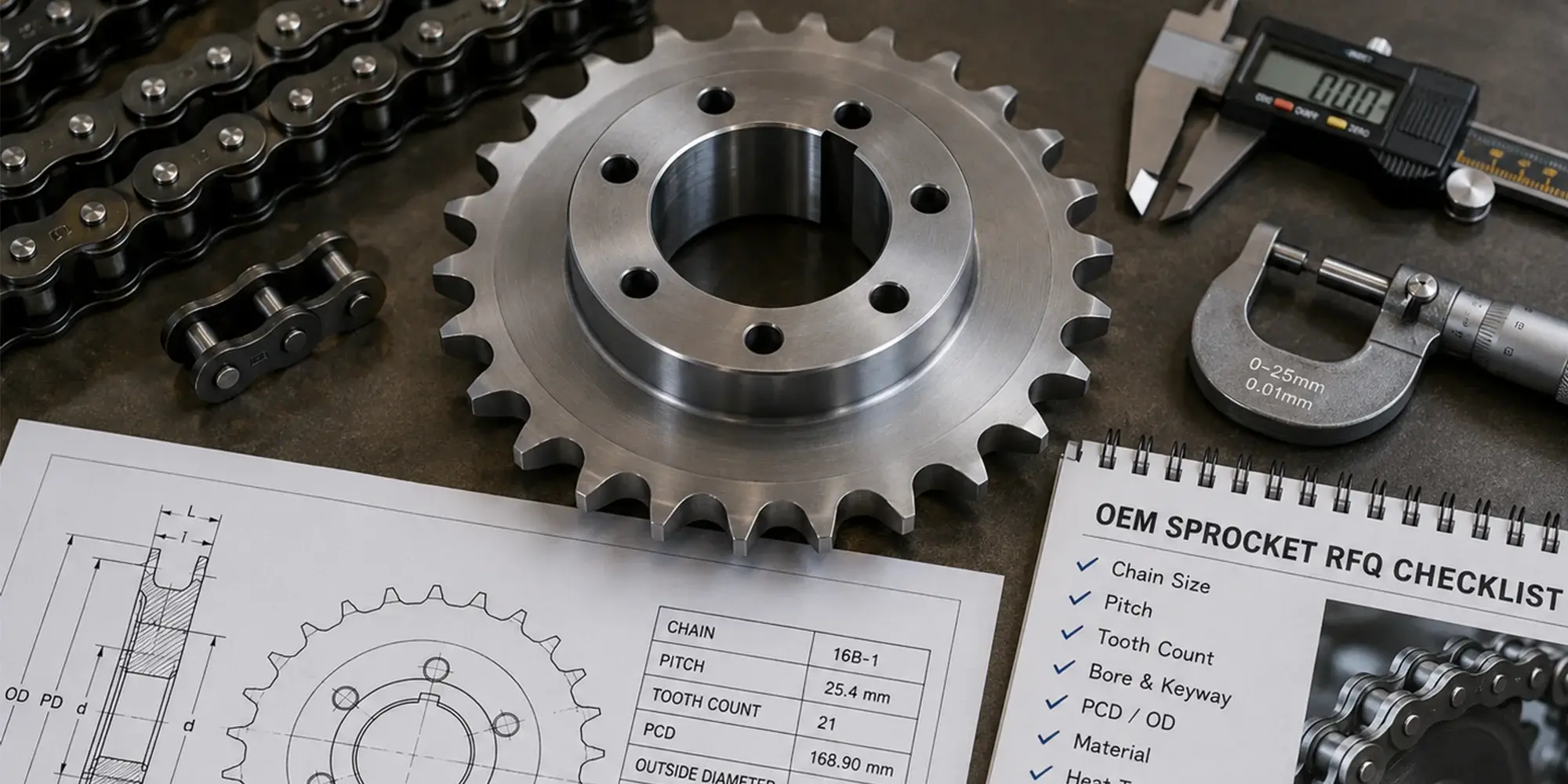
Sprocket tooth count refers to the total number of teeth around the circumference of a sprocket. This seemingly simple number has profound implications for how your chain drive system operates. Common tooth counts can range from 10 teeth on small driver sprockets to over 100 teeth on large driven sprockets used in industry.


The number of teeth affects the sprocket's pitch diameter. This is the diameter of the circle that goes through the chain pin centers. As the number of teeth increases, the pitch diameter also grows. This change affects how the sprocket works with the chain and sends power.


51v8qqwlNwL._AC_UF1000,1000_QL80_


The Fundamentals: Sprocket Ratios and Gear Reduction

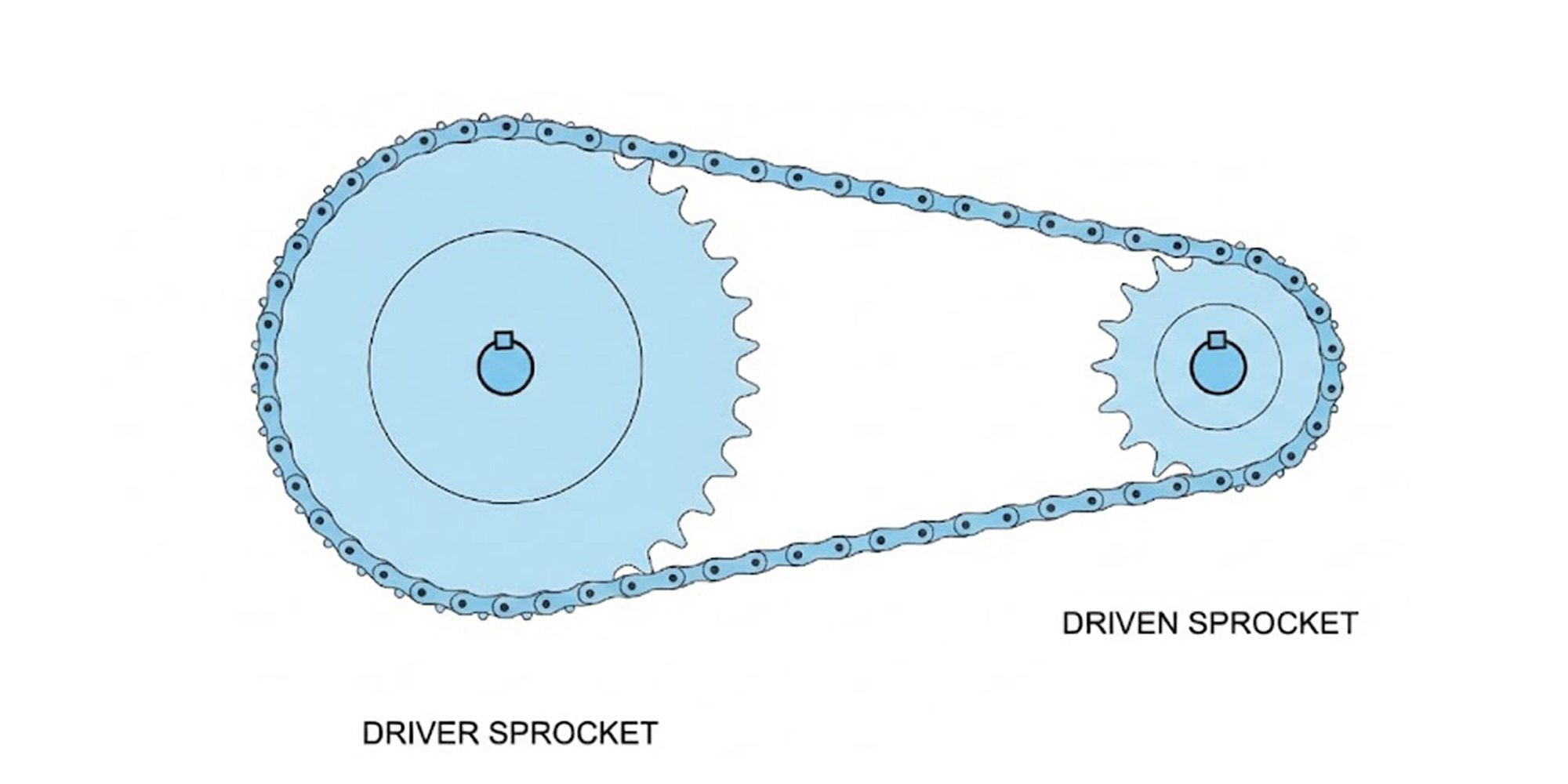
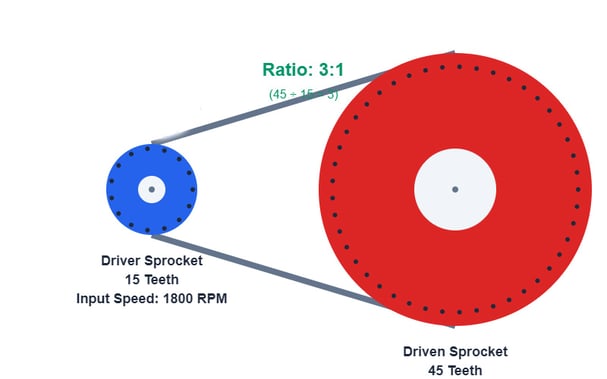
Before diving into the specific effects of tooth count, it's essential to understand sprocket ratios. The ratio between your driver sprocket and driven sprocket decides your system's mechanical advantage. The driver sprocket is linked to the power source, while the driven sprocket is linked to the load.

Calculating Sprocket Ratio: The sprocket ratio is calculated by dividing the driven sprocket tooth count by the driver sprocket tooth count.

Example 1: Driver = 15 teeth, Driven = 45 teeth

  • Ratio = 45 ÷ 15 = 3:1

  • The driven shaft rotates once for every three rotations of the driver shaft

Example 2: Driver = 20 teeth, Driven = 20 teeth

  • Ratio = 20 ÷ 20 = 1:1

  • Both shafts rotate at the same speed

Understanding this ratio is crucial because it forms the foundation for how tooth count affects speed and torque.


下载-3


How Tooth Count Affects Speed

The relationship between sprocket tooth count and speed is simple. When you increase the driven sprocket tooth count and keep the driver the same, the output speed goes down.


Speed Reduction Scenarios

High-Speed Applications (Speed Increase)

If your driver sprocket has more teeth than your driven sprocket, you create a speed increase or overdrive situation. A 30-tooth driver and a 15-tooth driven sprocket create a 1:2 ratio. This means the output shaft spins twice as fast as the input.

  • This configuration is common in:

  • Bicycle final drives where you want maximum speed

  • Some conveyor systems requiring rapid material movement

  • Certain power transmission applications where speed is prioritized over torque


Speed Reduction Applications

Conversely, when the driven sprocket has more teeth than the driver (the more common scenario), you achieve speed reduction. A 15-tooth driver with a 60-tooth driven creates a 4:1 reduction, meaning the output rotates at one-quarter the input speed.

Speed reduction is prevalent in:

  • Motorcycle rear drives (engine speed to wheel speed)

  • Industrial machinery requiring high torque at lower speeds

  • Agricultural equipment like harvesters and tillers

  • Heavy-duty conveyors moving substantial loads


Calculating Output Speed

To calculate the actual output speed in RPM:

Output RPM = (Driver Teeth ÷ Driven Teeth) × Input RPM

If your motor runs at 1,800 RPM with a 15-tooth driver sprocket and a 45-tooth driven sprocket:

Output RPM = (15 ÷ 45) × 1,800 = 600 RPM

This math relationship makes choosing sprockets a useful way to meet exact speed needs. You can do this without changing motors or other power sources.


下载 (1)


How Tooth Count Affects Torque

While speed and torque are often discussed separately, they're inversely related in chain drive systems. The fundamental principle is that power remains constant (minus efficiency losses), so when speed decreases, torque must increase proportionally.


The Torque Multiplication Effect

When you increase the driven sprocket tooth count relative to the driver, you create mechanical advantage. This means less input torque is required to move a given load, or conversely, a given input torque can move a heavier load.

Torque Calculation: Output Torque = Input Torque × Sprocket Ratio

Using our previous 3:1 ratio example (15-tooth driver, 45-tooth driven):

  • If input torque is 10 lb-ft

  • Output torque = 10 lb-ft × 3 = 30 lb-ft

This torque multiplication is why chain drives are so effective in heavy machinery. A relatively small motor can move substantial loads through proper sprocket selection.


Practical Torque Applications

High Torque Requirements

  • Applications needing substantial torque use large driven sprockets:

  • Mining equipment moving tons of material

  • Construction machinery

  • Agricultural tillers breaking hard soil

  • Industrial mixers handling viscous materials

  • Elevator and lifting systems

Low Torque, High Speed

Some applications prioritize speed over torque:

  • High-speed conveyors for light packages

  • Certain machining operations

  • Racing motorcycles (in specific gear ranges)

  • Some pumping applications


The Trade-off Reality

It's crucial to understand that you cannot have both high speed and high torque simultaneously in a direct drive system. Tooth count selection is fundamentally about choosing the right balance for your application. Many complex machines use several chain drive stages or combination systems. This helps them achieve high speed and high torque during different operations.


How Tooth Count Affects Chain Life

Perhaps less obvious but equally important is how sprocket tooth count directly impacts roller chain service life. This relationship involves multiple factors including articulation angles, polygon effect, and contact stress.


Minimum Tooth Count Recommendations

Industry standards recommend minimum tooth counts to ensure reasonable chain life:

  • Driver Sprockets: Minimum 17-25 teeth (depending on application)

  • Driven Sprockets: Minimum 17 teeth

  • Idler Sprockets: Minimum 17 teeth

These minimums exist because smaller sprockets create more severe operating conditions for the chain.


The Polygon Effect and Chain Articulation

When a chain wraps around a sprocket, it doesn't follow a perfect circular path. Instead, it forms a polygon with sides equal to the chain pitch. Smaller sprockets (fewer teeth) create a polygon with sharper angles, causing several problems:

Increased Articulation Frequency

With fewer teeth, the chain must articulate (bend at the pin joints) more frequently for each revolution. A 12-tooth sprocket needs 12 movements for each turn. A 30-tooth sprocket requires 30 movements for the same turn. However, the 30-tooth sprocket makes fewer turns over the same distance.

Higher Articulation Angles

Smaller sprockets force the chain through sharper bending angles at each tooth engagement. This increased angle creates:

  • Higher stress on chain pins and bushings

  • Accelerated wear at articulation points

  • Increased friction and heat generation

  • Greater likelihood of chain fatigue failure

Chordal Action (Speed Variation)

The polygon effect creates a slight speed variation known as chordal action. As each chain link engages and disengages from the sprocket teeth, the effective radius changes slightly, causing speed pulsation. Smaller sprockets amplify this effect, leading to:

  • Increased vibration

  • Greater noise

  • Higher dynamic loads on the chain

  • Accelerated component wear


下载 (2)


Contact Stress and Load Distribution

The number of teeth engaged with the chain at any given moment affects how load is distributed:

  • Fewer Teeth = Higher Individual Tooth Load: A sprocket with fewer teeth has less contact with the chain. This means each tooth carries a bigger share of the total load. This concentrated stress accelerates tooth wear.

  • More Teeth = Better Load Distribution: Larger sprockets have more teeth. They engage more chain links at the same time. This spreads the load across more contact points. This reduces individual tooth stress and extends both sprocket and chain life.


Wear Rates and Tooth Count

Research and field experience show clear correlations:

  • 10-15 teeth: Expect significantly reduced chain life (potentially 50-70% of optimal)

  • 17-21 teeth: Acceptable for many applications but still below optimal

  • 25-30 teeth: Good chain life for most industrial applications

  • 35+ teeth: Excellent chain life, minimal articulation stress

To make chains last longer, many engineers recommend using driver sprockets with 21 to 25 teeth. They suggest more teeth for heavy loads or long hours of use.


下载 (3)


Lubrication Requirements

Smaller sprockets (fewer teeth) require more frequent and effective lubrication because:

  • Higher articulation frequency generates more friction heat

  • Sharper bending angles squeeze lubricant out more aggressively

  • Faster relative motion between pins and bushings accelerates lubricant breakdown

Systems with smaller sprockets often need continuous lubrication systems rather than periodic manual lubrication to maintain adequate chain life.


Selecting the Right Tooth Count for Your Application

Choosing optimal tooth counts involves balancing multiple competing factors. Here's a systematic approach:


Step 1: Determine Required Speed and Torque

Start with your application requirements:

  • What input speed do you have available?

  • What output speed do you need?

  • How much torque must be transmitted?

  • What are the peak loads during operation?


Step 2: Calculate Required Ratio

Based on speed requirements, calculate your needed ratio:

  • Required Ratio = Input Speed ÷ Desired Output Speed


Step 3: Select Driver Sprocket Tooth Count

Choose a driver sprocket with these considerations:

  • Minimum: 17 teeth for reasonable chain life (25+ teeth for demanding applications)

  • Space constraints: Larger drivers need more clearance

  • Shaft size: Ensure sprocket bore matches shaft diameter

  • Standard sizes: Using standard tooth counts (15, 17, 19, 20, 25, 30, etc.) reduces cost


Step 4: Calculate Driven Sprocket Tooth Count

Multiply your driver tooth count by the required ratio:

  • Driven Teeth = Driver Teeth × Required Ratio

Round to the nearest standard size.


Step 5: Verify Chain Life Expectations

Check that both sprockets meet minimum tooth count recommendations for your service conditions:

  • Light duty, low hours: 17+ teeth may be acceptable

  • Moderate duty: 21+ teeth recommended

  • Heavy duty, high hours: 25+ teeth for driver, 30+ for driven

  • Severe service: 30+ teeth driver, 40+ driven


Step 6: Consider Physical Constraints

Ensure your selected sprockets fit within your space envelope:

  • Calculate pitch diameter: PD = (Pitch × Teeth) ÷ π

  • Verify shaft center distance accommodates both sprockets plus proper chain wrap

  • Check for clearance around housings, guards, and adjacent components


下载 (4)


Common Tooth Count Mistakes and How to Avoid Them


Mistake 1: Choosing Too Few Teeth to Save Space

While smaller sprockets are compact, the hidden costs include:

  • Premature chain failure requiring more frequent replacement

  • Higher maintenance labor costs

  • Potential system downtime during chain failures

  • Accelerated sprocket wear

Solution: Invest in proper space for adequately sized sprockets during design phase.


Mistake 2: Ignoring Minimum Tooth Count Standards

Some designers select 10-12 tooth sprockets to achieve high ratios in a single stage.

Solution: Use multiple stages of reduction or consider alternative drive methods (gearbox, belt drive) for extreme ratios.


Mistake 3: Mismatching Sprocket Sizes to Load Conditions

Using small sprockets in high-load applications accelerates failure.

Solution: Scale tooth count to service severity, not just space availability.


Mistake 4: Forgetting About Peak Loads

Sizing sprockets for average load while ignoring shock loads or peak torque events leads to premature failure.

Solution: Size sprockets for peak loads with appropriate service factors (typically 1.2-2.0 depending on application).


Mistake 5: Copying Existing Designs Without Understanding

"It worked before" doesn't mean it's optimal, especially if maintenance was frequent.

Solution: Analyze existing systems for actual vs. expected service life before replicating designs.


Advanced Considerations


Odd vs. Even Tooth Counts

Experienced engineers often prefer sprockets with odd tooth counts, particularly prime numbers (17, 19, 23, 29, etc.). The reasoning:

  • Odd tooth counts distribute wear more evenly across chain links

  • Prime numbers reduce the frequency of the same chain link engaging the same tooth

  • This "wear distribution" can extend chain life by 10-20% in some applications

However, even tooth counts (20, 24, 30, etc.) are also widely used and acceptable, particularly when:

  • Exact ratios are required

  • Standard sizes match your needs

  • The sprockets are large enough that wear distribution is less critical


Multiple Strand Chains

When power requirements exceed single-strand chain capacity, multiple strand chains (duplex, triplex, or quadruplex) are used. Tooth count considerations remain the same, but:

  • Load is distributed across multiple strands

  • Minimum tooth counts become even more critical

  • Alignment between sprockets becomes crucial

  • Cost and complexity increase significantly


Temperature Effects

Operating temperature affects optimal tooth count selection:

  • High temperatures: Lubricants thin out, requiring larger sprockets for better heat dissipation

  • Low temperatures: Lubricants thicken, potentially requiring larger sprockets to overcome increased friction

  • Temperature cycling: Temperature changes can cause expansion and contraction. This affects chain tension. So, choosing the right tooth count is important for keeping proper wrap angles.


Real-World Application Examples


Example 1: Industrial Conveyor

Requirements:

  • Motor: 1,750 RPM, 5 HP

  • Desired conveyor speed: 30 feet per minute

  • Load: 2,000 lbs steady state

  • Operation: 16 hours daily, 6 days weekly

Solution:

  • Driver sprocket: 25 teeth (robust for continuous duty)

  • Driven sprocket: 72 teeth (approximately 2.9:1 ratio)

  • Output speed: ~600 RPM

  • Chain: ANSI #60 (3/4" pitch)

  • Expected chain life: 15,000-20,000 hours with proper maintenance


Example 2: Motorcycle Final Drive

Requirements:

  • Engine output: 8,000 RPM maximum

  • Desired rear wheel speed: 2,000 RPM at top speed

  • Peak torque: 60 lb-ft

  • Usage: Performance street riding

Solution:

  • Front sprocket: 15 teeth (compact, fits engine case)

  • Rear sprocket: 43 teeth (approximately 2.87:1 ratio)

  • Output torque: ~172 lb-ft to rear wheel

  • Chain: #520 (5/8" pitch)

  • Trade-off: Front sprocket below optimal for chain life, but acceptable for motorcycle duty cycle


Example 3: Agricultural Equipment

Requirements:

  • Tractor PTO: 540 RPM

  • Tiller blade desired speed: 180 RPM

  • Peak shock loads: 150% of nominal

  • Environment: Dusty, contaminated, seasonal use

Solution:

  • Driver sprocket: 30 teeth (robust for shock loads)

  • Driven sprocket: 90 teeth (3:1 ratio)

  • Chain: ANSI #80 (1" pitch) heavy duty

  • Special consideration: Both sprockets oversized to handle contamination and shock loading

  • Expected chain life: 5-7 years with seasonal use and proper storage


Maintenance Tips for Extended Chain Life

Regardless of tooth count selection, proper maintenance maximizes chain system longevity:

  • Regular Lubrication: Follow manufacturer intervals, increase frequency for smaller sprockets

  • Tension Monitoring: Check and adjust chain tension monthly or per manufacturer specifications

  • Alignment Verification: Misalignment accelerates wear regardless of tooth count

  • Wer Inspection: Measure chain elongation regularly; replace at 2-3% elongation

  • Sprocket Inspection: Replace sprockets when tooth wear becomes evident (hooked tooth profiles)

  • Cleanliness: Remove debris that accelerates abrasive wear

  • Load Monitoring: Avoid exceeding design loads which stress both chain and sprockets


Conclusion

Sprocket tooth count is far more than just a dimension on a drawing. It's a fundamental parameter that determines system speed, torque multiplication, efficiency, noise, vibration, and component life. Knowing how tooth count impacts these factors helps engineers and technicians make smart choices. This can improve performance and lower lifecycle costs.

For more information about sprockets, please contact Lily Bearing.

Sprocket Wear: How to Identify, Prevent, and Fix It

Sprocket Wear: How to Identify, Prevent, and Fix It

In any power transmission setup, the relationship between the chain and the sprocket is symbiotic. While much attention is often given to chain...

Read More
How to Remove and Replace a Bicycle Sprocket

How to Remove and Replace a Bicycle Sprocket

Learning how to remove a bicycle sprocket is a core skill for any cyclist. This comprehensive guide will show you how to remove the old one and...

Read More
What is a Sprocket? The 2026 Guide to Types, Uses, and Selection

What is a Sprocket? The 2026 Guide to Types, Uses, and Selection

A sprocket (or chainwheel) is a toothed wheel that meshes with a chain to transmit power between shafts without slipping. You'll find them on...

Read More