


Home/
Blog/
Troubleshooting Common Linear Guide Failures

7 min read

Troubleshooting Common Linear Guide Failures

Troubleshooting Common Linear Guide Failures

Linear guides are the backbone of precision motion in modern manufacturing, automation, and CNC machinery. When these critical components fail, production halts, costs skyrocket, and maintenance teams scramble to find the root cause.

Understanding how to troubleshoot common linear guide failures is essential for any engineer, technician, or facility manager aiming to maximize uptime and extend the lifespan of their linear motion systems.

In this comprehensive guide, we will explore the most frequent failure modes of linear guides, delve into their underlying causes, and provide actionable troubleshooting steps.

Whether you are dealing with premature wear, excessive noise, or catastrophic damage, this article will equip you with the knowledge to diagnose and resolve linear guide issues effectively.


The Importance of Linear Guide Maintenance

Before diving into specific failure modes, it is crucial to understand why linear guide maintenance matters. Linear guides, also known as linear rails or linear bearings, are designed to support heavy loads while maintaining high precision and low friction. However, they operate in environments that are often harsh, dusty, or subject to extreme forces.

Without proper care, even the highest-quality linear guides will succumb to wear and tear. Regular inspection, adequate lubrication, and correct installation are the pillars of linear guide longevity. By proactively addressing potential issues, you can prevent minor problems from escalating into major failures, saving your company significant time and money.


Common Linear Guide Failure Modes

When a linear guide fails, it rarely happens without warning. The key to effective troubleshooting is recognizing the early signs of damage and understanding what they mean. Below are the most common failure modes encountered in the bearing industry.


Flaking (Spalling)

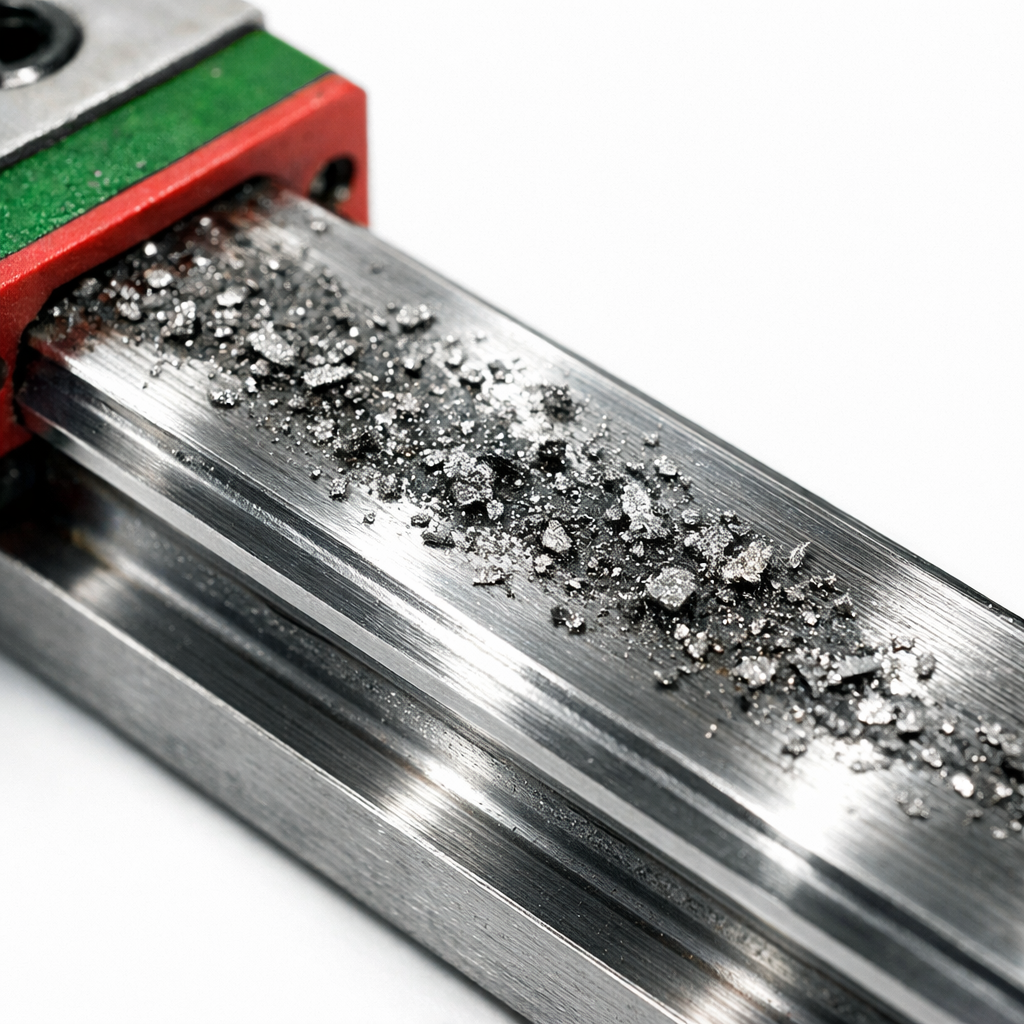
Flaking, also known as spalling, is one of the most prevalent failure modes in linear guides. It occurs when small particles of metal separate from the surface of the raceways or the rolling elements (balls or rollers). This creates a rough, pitted surface that significantly impairs the smooth operation of the guide.


Flaking damage on a linear guide rail


Causes of Flaking

Flaking is typically the result of rolling contact fatigue. Every linear guide has a calculated fatigue life based on its dynamic load rating. When the guide reaches the end of this life, flaking is a natural occurrence. However, premature flaking is a clear indicator of an underlying problem.


Common causes of premature flaking include

  • Overloading:  Exceeding the static or dynamic load capacity of the guide.

  • Misalignment:  Improper installation that causes uneven load distribution across the raceways.

  • Improper Preload: A preload that is too high increases internal stress, accelerating fatigue.


Troubleshooting Flaking

If you observe flaking, the first step is to review the load calculations for your application. Ensure that the guide is appropriately sized for the forces it is experiencing.

Next, check the alignment of the rails and the mounting surfaces. Even a slight misalignment can drastically reduce the life of a linear guide.

Finally, verify that the preload setting matches the manufacturer's recommendations for your specific application.


Wear and Scoring

Wear is a gradual process that degrades the surface of the raceways and rolling
elements. While some wear is inevitable over time, accelerated wear or deep scoring indicates a severe issue that must be addressed immediately.


Causes of Wear

The primary culprits behind accelerated wear are poor lubrication and contamination.

  • Inadequate Lubrication: Without a proper film of lubricant, metal-to-metal

    contact occurs, leading to rapid wear and increased friction.

  • Contamination: Dust, dirt, metal chips, or coolant entering the bearing block act as abrasives, grinding away the precision surfaces of the guide.


Troubleshooting Wear

To combat wear, start by evaluating your lubrication practices. Are you using the
correct type of grease or oil? Are you applying it at the recommended intervals? Ensure that the lubrication system is functioning correctly and that lubricant is reaching all necessary components.

Next, inspect the sealing system of the linear guide. If the environment is highly
contaminated, standard seals may not be sufficient. Consider upgrading to double seals, scrapers, or protective bellows to keep debris out of the bearing block.


Fretting

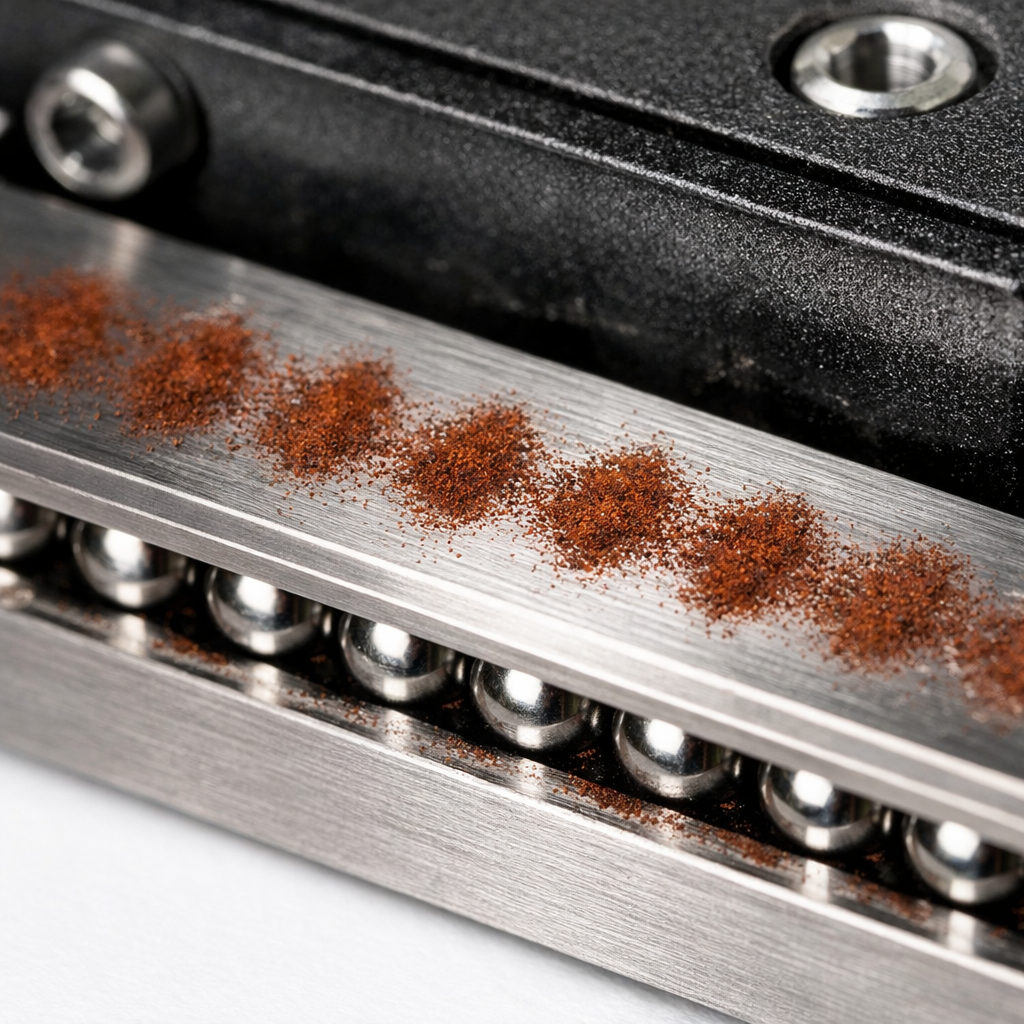
Fretting is a specific type of wear that occurs when there are micro-vibrations between two contacting surfaces. In linear guides, fretting often appears as a reddish-brown or black discoloration on the raceways, which can easily be mistaken for rust.


Fretting corrosion on a linear guide rail


Causes of Fretting

Fretting is typically caused by external vibrations when the linear guide is stationary or moving over very short strokes. The micro-movements break down the lubricant film, allowing metal-to-metal contact and subsequent oxidation of the wear particles.


Troubleshooting Fretting

If fretting is detected, the most effective solution is to eliminate or isolate the source of the vibration. If this is not possible, consider using a lubricant specifically formulated to resist fretting, such as a grease with high-pressure additives.

Additionally, programming the machine to perform a longer "lubrication stroke" periodically can help redistribute the grease and prevent fretting in short-stroke applications.


 Indentations (Brinelling)

Indentations, or brinelling, are permanent deformations on the raceways caused by the rolling elements pressing into the steel. These indentations match the spacing of the balls or rollers and cause a noticeable bump or vibration as the block moves along the rail.


Causes of Indentations

Indentations are the result of extreme forces that exceed the static load capacity of the linear guide. This can happen due to:

  • Shock Loads: Sudden impacts or collisions during operation.

  • Improper Handling: Dropping the guide or striking it with a hammer during installation.

  • Contamination: Large particles trapped between the rolling elements and the raceway can also cause localized indentations.


Troubleshooting Indentations

Preventing indentations requires careful handling during installation and operation. Never use excessive force to mount a linear guide block onto a rail. If shock loads are a regular part of the application, consider upgrading to a guide with a higher static load rating or incorporating shock absorbers into the system design.


Corrosion

Corrosion is the chemical degradation of the linear guide's metal surfaces, typically appearing as rust. Corrosion not only weakens the material but also creates a rough surface that accelerates wear and flaking.


Causes of Corrosion

Corrosion is caused by exposure to moisture, corrosive chemicals, or improper storage conditions. Even the natural oils from human hands can initiate rust on unprotected steel surfaces.


Troubleshooting Corrosion

To prevent corrosion, ensure that the linear guides are stored in a dry, climate-controlled environment before installation. During operation, protect the guides from direct exposure to water or chemicals using covers or bellows. If the application requires washdowns or operates in a corrosive environment, consider using stainless steel linear guides or guides with specialized anti-corrosion coatings, such as hard chrome or black chrome plating.


Electrolytic Corrosion (Fluting)

Electrolytic corrosion, also known as fluting, is a unique failure mode characterized by a series of parallel lines or "flutes" across the raceway. This damage is often accompanied by a dark discoloration and a significant increase in noise during operation.


Causes of Electrolytic Corrosion

This type of corrosion occurs when an electrical current passes through the linear guide, arcing between the rolling elements and the raceway. The localized heat from the arcing melts the steel, creating the characteristic fluting pattern. This is a common issue in applications involving welding equipment or poorly grounded electric motors.


Troubleshooting Electrolytic Corrosion

The only way to prevent electrolytic corrosion is to ensure that electrical currents cannot pass through the linear guide. This can be achieved by properly grounding all equipment and, if necessary, using insulating materials to isolate the linear guide from the electrical source.


Damaged Recirculation Parts

The recirculation system of a linear guide, which includes the end caps and ball return tubes, is critical for smooth operation. If these plastic or resin components are damaged, the rolling elements will not circulate properly, leading to a catastrophic failure of the bearing block.


Causes of Damage

Damage to the recirculation parts is often caused by:

  • Excessive Speed: Operating the guide beyond its maximum speed rating can cause the rolling elements to impact the end caps with too much force.

  • Impact: A sudden crash or collision can shatter the plastic components.

  • Improper Assembly: Forcing the block onto the rail without a dummy rail can dislodge or damage the internal parts.


Troubleshooting Damage

Always adhere to the manufacturer's speed ratings for your specific linear guide. If high speeds are required, consult with the manufacturer to select a guide designed for those conditions. When installing the block onto the rail, always use the provided dummy rail to ensure the rolling elements remain in place and the end caps are not stressed.


Diagnostic Techniques for Linear Guides

When a linear guide begins to fail, it will often exhibit symptoms that can help you diagnose the problem before a complete breakdown occurs. Here are the most effective diagnostic techniques.


Auditory Inspection

Listening to the linear guide during operation is one of the simplest and most effective diagnostic tools.

  • Grinding or Crunching: Indicates a lack of lubrication or severe contamination.

  • Squeaking or Whining: Often points to a dry raceway or excessive preload.

  • Clicking or Popping: Suggests damaged rolling elements or broken recirculation parts.


Visual Inspection

A thorough visual inspection can reveal a wealth of information about the health of the linear guide.

  • Discoloration: Look for rust (corrosion), black/brown marks (fretting), or blueing (excessive heat from lack of lubrication).

  • Surface Damage: Check for flaking, scoring, or indentations on the visible portions of the rail.

  • Debris: Inspect the area around the seals for accumulation of dirt, metal chips, or dried grease.


Tactile Inspection

Feeling the movement of the linear guide can help identify alignment and preload issues.

  • Jerky or Catching Motion: Indicates contamination, indentations, or damaged rolling elements.

  • Uneven Resistance: If the block moves easily in one section but binds in another, the rails are likely misaligned or not parallel.

  • Excessive Heat: Carefully touch the bearing block after operation. If it is unusually hot, the guide may be suffering from poor lubrication, high preload, or overloading.


Best Practices for Linear Guide Installation

Many linear guide failures can be traced back to improper installation. Following best practices during assembly is critical for ensuring the longevity and performance of the system.


Prepare the Mounting Surfaces

The accuracy of a linear guide is only as good as the surface it is mounted on. The mounting surfaces must be machined to a high degree of flatness and parallelism. Any irregularities in the base will be transferred to the rail, causing localized stress and premature wear.


Align the Rails Carefully

When installing multiple rails in parallel, alignment is paramount. Use a dial indicator to ensure the rails are perfectly parallel along their entire length. Even a misalignment of a few hundredths of a millimeter can significantly increase the friction and reduce the life of the guides.


Torque the Bolts Correctly

Always use a torque wrench to tighten the mounting bolts to the manufacturer's specified torque. Tighten the bolts in a specific sequence, usually starting from the center of the rail and working outward towards the ends. This ensures even stress distribution and prevents the rail from bowing or twisting.


Handle with Care

Linear guides are precision components and should be treated as such. Never drop the rails or blocks, and avoid striking them with hard tools. When sliding the block onto the rail, ensure it is perfectly aligned and never force it.


The Role of Lubrication in Preventing Failures

Lubrication is the lifeblood of any linear motion system. It reduces friction, dissipates heat, and protects the metal surfaces from corrosion and wear. Understanding how to properly lubricate your linear guides is the most effective way to prevent premature failures.


Choosing the Right Lubricant

The choice between grease and oil depends on the specific application.

  • Grease: The most common choice for linear guides. It adheres well to the surfaces, provides excellent protection against contamination, and requires less frequent maintenance. Lithium-soap based greases are standard for general applications.

  • Oil: Preferred for high-speed applications or systems where heat dissipation is critical. Oil lubrication requires a continuous supply system, such as a centralized pump or drip feed.


Establishing a Lubrication Schedule

Linear guides must be lubricated regularly to maintain their performance. The frequency of lubrication depends on several factors, including the load, speed, operating environment, and the type of lubricant used.

As a general rule, linear guides should be re-lubricated every 100 km of travel or every 3 to 6 months, whichever comes first. However, in harsh environments with high levels of contamination or extreme temperatures, more frequent lubrication may be necessary.


Proper Lubrication Techniques

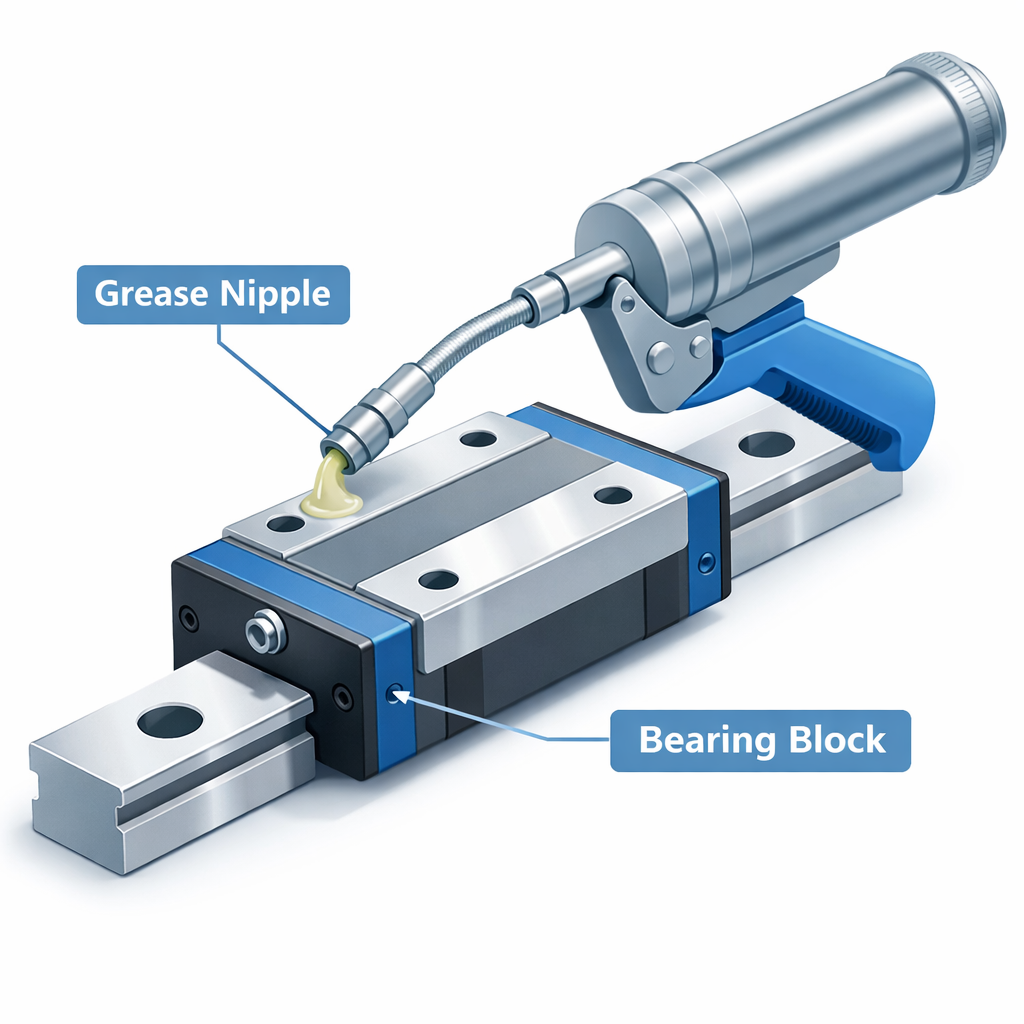
When applying grease, ensure that it reaches all the rolling elements and raceways. Most linear guide blocks are equipped with a grease nipple for easy application. Pump the grease slowly while moving the block back and forth along the rail to distribute the lubricant evenly. Avoid over-lubricating, as excess grease can attract dirt and increase rolling resistance.


Proper lubrication technique for linear guide blocks


Conclusion

Troubleshooting linear guide failures requires a combination of observation, knowledge, and proactive maintenance. By understanding the common failure modes—such as flaking, wear, fretting, and corrosion—and their underlying causes, you can take decisive action to resolve issues before they lead to costly downtime.

Remember that proper installation, rigorous alignment, and a strict lubrication regimen are your best defenses against premature linear guide failure. By investing time in these preventive measures, you will ensure that your linear motion systems operate smoothly, accurately, and reliably for years to come.

Navigating the Linear Guide Market - Major Players and Key Strengths

Navigating the Linear Guide Market - Major Players and Key Strengths

The Critical Role of Linear Motion Linear guide rails are crucial components for achieving precise, smooth motion in automation, robotics, and...

Read More
Linear Guide: Key Factors That Influence Linear Rail Costs

Linear Guide: Key Factors That Influence Linear Rail Costs

For purchasing engineers or equipment manufacturers, the cost of linear motion guides is a key consideration when selecting products. However, the...

Read More
Linear Guide Installation: Step-by-Step Guide

Linear Guide Installation: Step-by-Step Guide

Linear rail guides are engineered for applications requiring precise motion and strong load capacity. However, incorrect installation can introduce...

Read More