

 Richard
Dental Bearings: Key Advantages
 Richard : Aug 27, 2025 4:36:16 AM
Dental bearings, though small, are vital in dental handpieces, crucial for effective and efficient procedures. These bearings offer significant...
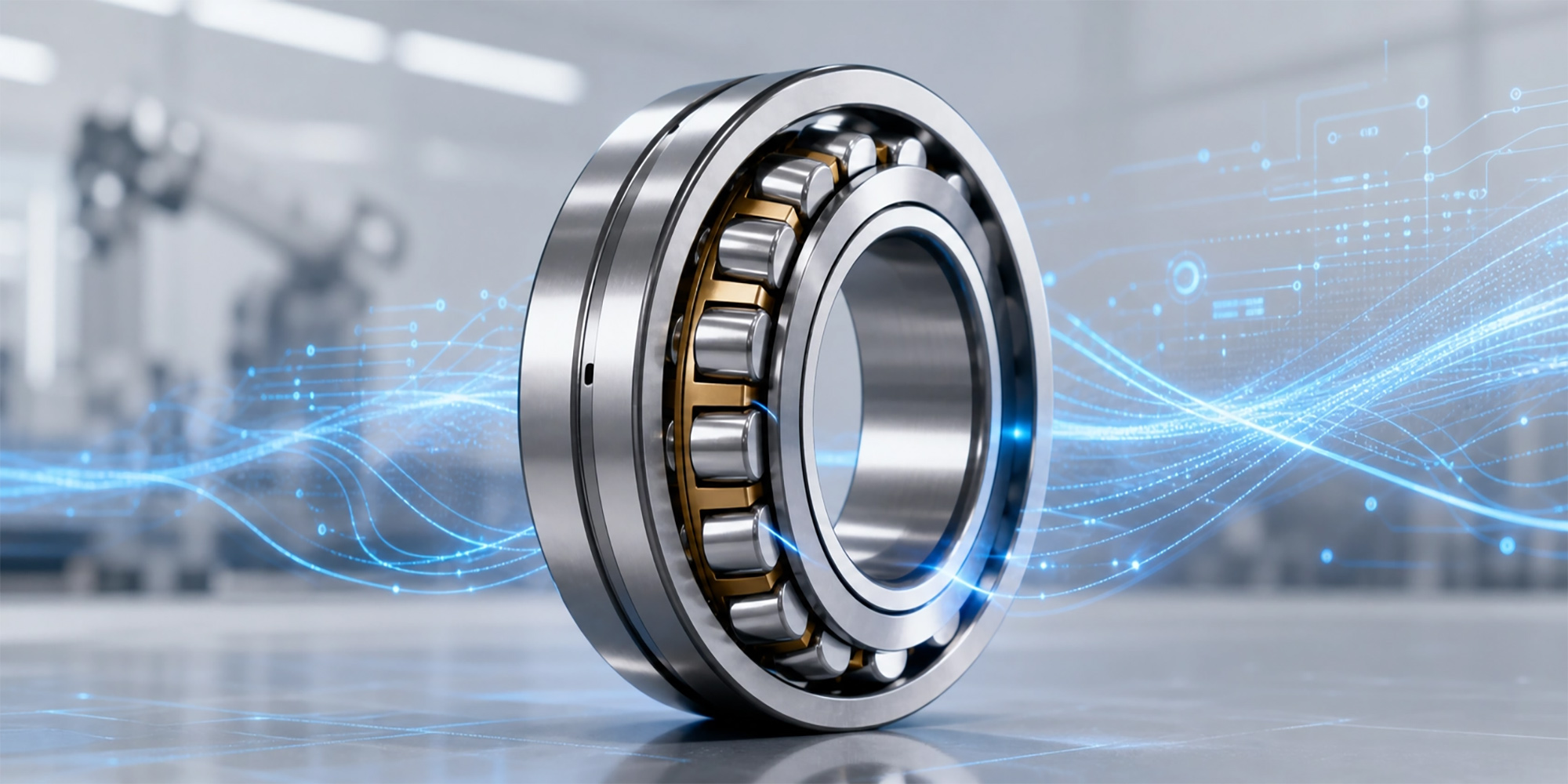
In the intricate world of industrial machinery, spherical roller bearings (SRBs) are indispensable components, renowned for their robustness and ability to handle extreme loads and misalignment.
They are the workhorses in critical applications across diverse sectors such as mining, wind energy, and heavy manufacturing. However, like all mechanical components, SRBs are susceptible to wear and eventual failure. Unplanned downtime due to bearing failure can lead to catastrophic financial losses, production delays, and safety hazards.
This is where the transformative power of Predictive Maintenance (PdM), fueled by the Industrial Internet of Things (IIoT) and Artificial Intelligence (AI), emerges as a game-changer. This blog post delves into how these cutting-edge technologies are revolutionizing the maintenance landscape for SRBs, enabling proactive intervention, optimizing operational efficiency, and significantly reducing costly downtime.
Spherical roller bearings are designed to accommodate very heavy radial and axial loads, even in the presence of shaft deflections or misalignment. Their unique design, featuring two rows of rollers and a common sphered outer ring raceway, allows them to self-align, making them ideal for demanding environments. Despite their inherent durability, SRBs are not immune to failure. Common failure modes include:
Fatigue: This manifests as spalling or pitting on the raceways and rollers, often due to repeated stress cycles.
Wear: Abrasive or adhesive wear can occur from inadequate lubrication or the presence of contaminants.
Corrosion: Moisture or water ingress can lead to rust and material degradation.
Overheating: Excessive friction, lubrication failure, or improper loading can cause temperature spikes, accelerating wear.
Contamination: Particles entering the bearing can cause abrasive wear and indentations.
Traditionally, maintenance approaches have been either reactive (fixing after failure) or preventive (scheduled maintenance). While preventive maintenance reduces some risks, it often leads to unnecessary component replacements and downtime, as bearings are serviced regardless of their actual condition. Predictive maintenance, in contrast, monitors the real-time health of SRBs, allowing for interventions precisely when needed.
The foundation of effective predictive maintenance for SRBs lies in the ability to collect accurate, real-time data from the bearings themselves. This is where the Industrial Internet of Things (IIoT) plays a pivotal role. IIoT involves deploying a network of interconnected sensors and devices that continuously monitor critical parameters of the machinery. For SRBs, the primary data points include:
Vibration: Accelerometers are crucial for detecting subtle changes in vibration patterns, which are often the earliest indicators of bearing damage. High-frequency sampling is essential for capturing these nascent fault signatures.
Temperature: Resistance Temperature Detectors (RTDs) or thermocouples monitor bearing temperature. Abnormal temperature increases can signal lubrication issues, excessive friction, or advanced stages of failure.
Acoustic Emission (AE): AE sensors can detect high-frequency stress waves generated by microscopic cracks or lubrication film breakdown, offering very early fault detection capabilities.
Oil Analysis: In-line sensors can monitor lubricant quality, detecting changes in viscosity, moisture content, and the presence of metallic wear particles, which indicate internal degradation.
These sensors are integrated with IoT gateways that aggregate and transmit the data to a central cloud-based analytics platform. The choice of connectivity (e.g., LoRaWAN, NB-IoT, 5G, Wi-Fi) depends on the industrial environment and data transmission requirements. This continuous stream of data provides an unprecedented level of insight into the operational health of SRBs, moving beyond periodic inspections to constant vigilance.
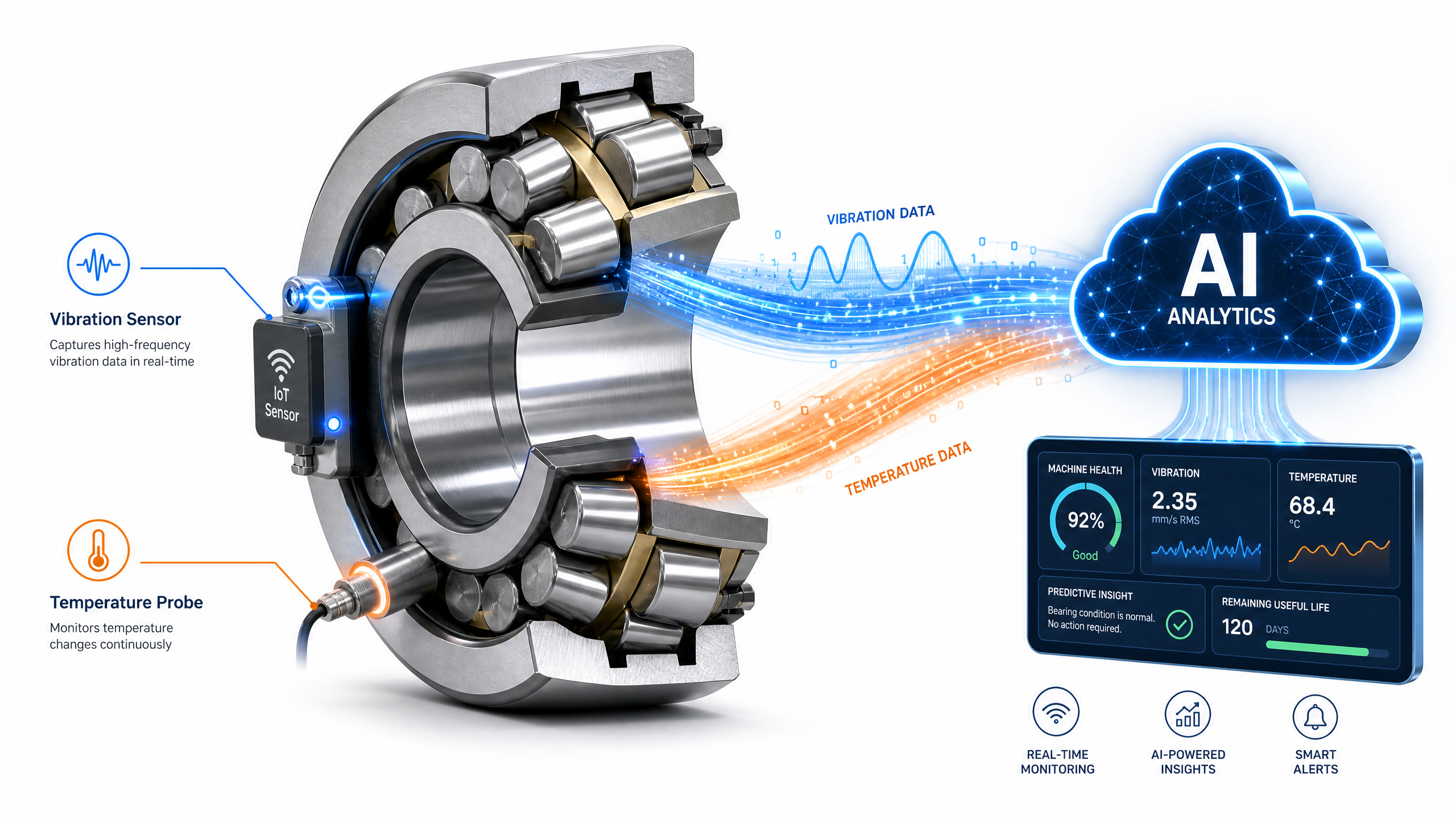
Figure 1: An infographic illustrating an IoT-connected spherical roller bearing, with sensors transmitting vibration and temperature data to a cloud-based AI analytics platform.
Raw sensor data, while valuable, needs sophisticated analysis to translate into actionable insights. This is where Artificial Intelligence (AI) and Machine Learning (ML) algorithms become indispensable. AI models are trained on vast datasets of historical bearing data, including both healthy and faulty conditions, to learn complex patterns and correlations that human analysis might miss. The process typically involves:
Raw vibration signals, for instance, are often transformed using techniques like Fast Fourier Transform (FFT), Wavelet Transform, or Envelope Analysis. These methods convert time-domain signals into frequency-domain representations or highlight specific fault frequencies, making patterns more discernible for ML models.
Algorithms like Autoencodersare particularly effective here. An autoencoder is trained to reconstruct
its input; when presented with anomalous data, it struggles to reconstruct it accurately, thus flagging an anomaly. This is crucial for identifying deviations from normal operating conditions before they escalate into failures.
Once an anomaly is detected, the next step is to identify the type of fault. Convolutional Neural Networks (CNNs) are highly effective for this. By converting vibration signals into 2D images (e.g., spectrograms or scalograms), CNNs can automatically extract spatial features indicative of specific fault types (e.g., inner race fault, outer race fault, roller fault).
Predicting how much longer a bearing can operate reliably is the holy grail of predictive maintenance. Long Short-Term Memory (LSTM) networks, a type of recurrent neural network, excel at processing sequential data like time-series sensor readings. LSTMs can learn long-term dependencies in the data, enabling them to forecast the degradation trend of a bearing and estimate its RUL. This allows maintenance to be scheduled precisely when needed, maximizing bearing life while preventing unexpected failures.
Often, a combination of these AI techniques yields the best results. For example, a CNN-LSTM hybrid model can leverage CNNs for robust feature extraction from raw signals and then feed these features into LSTMs for RUL prediction, combining the strengths of both architectures.
Implementing a PdM program for SRBs involves a systematic workflow:
1 Data Acquisition: IoT sensors continuously collect vibration, temperature, acoustic, and oil analysis data from SRBs.
2 Data Transmission: Data is securely transmitted via IoT gateways to a cloud-based analytics platform.
3 Data Preprocessing: Raw data is cleaned, filtered, and transformed into suitable formats for AI analysis.
4 AI Analysis: ML models (CNN, LSTM, Autoencoders) process the data to detect anomalies, diagnose faults, and predict RUL.
5 Decision Support: The analytics platform provides actionable insights, alerts, and recommendations to maintenance personnel.
6 Maintenance Action: Based on the insights, maintenance is scheduled and executed proactively.
7 Feedback Loop: Data from maintenance actions (e.g., repair details, component replacement) is fed back into the system to refine and improve AI models.
This iterative process ensures continuous learning and optimization of the PdM system.
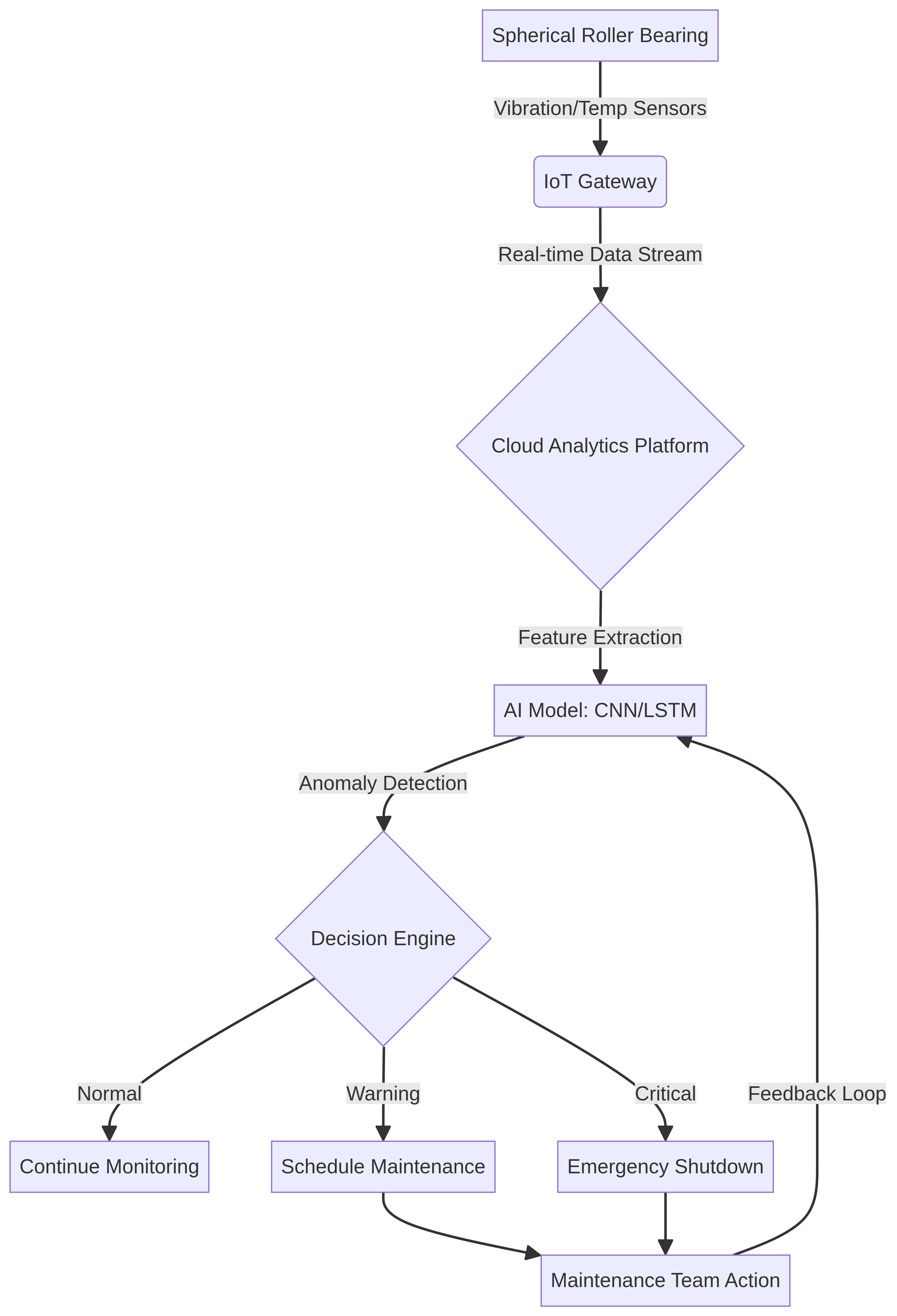
Figure 2: A Mermaid diagram illustrating the end-to-end workflow of a Predictive Maintenance system for spherical roller bearings.
The adoption of IoT and AI-driven predictive maintenance for SRBs offers profound benefits that directly impact an organization's bottom line and operational efficiency. The most significant advantage is the prevention of costly unplanned downtime.
Unplanned downtime can be incredibly expensive. Industry research indicates that manufacturing facilities can lose an average of $108,000 to $260,000 per hour during unplanned downtime. The cumulative annual loss due to unplanned downtime across industries can be as high as $1.4 trillion. By shifting from reactive or time-based preventive maintenance to predictive maintenance, companies can realize substantial savings and operational improvements:
Reduced Maintenance Costs: Predictive maintenance can lead to a 25-30% reduction in overall maintenance costs by eliminating unnecessary maintenance activities and optimizing resource allocation.
Elimination of Breakdowns: Proactive intervention based on real-time data can eliminate 70-75% of equipment breakdowns, ensuring smoother operations.
Decreased Downtime: Unplanned downtime can be reduced by 35-45%, leading to higher asset utilization and productivity.
Increased Production: With fewer interruptions and optimized asset performance, production can increase by 20-25%.
Extended Asset Lifespan: By addressing issues before they become critical, the lifespan of expensive SRBs and associated machinery can be significantly extended.
Enhanced Safety: Preventing catastrophic failures reduces the risk of accidents and creates a safer working environment.
To further illustrate the financial advantages, consider the relative costs associated with different maintenance strategies:
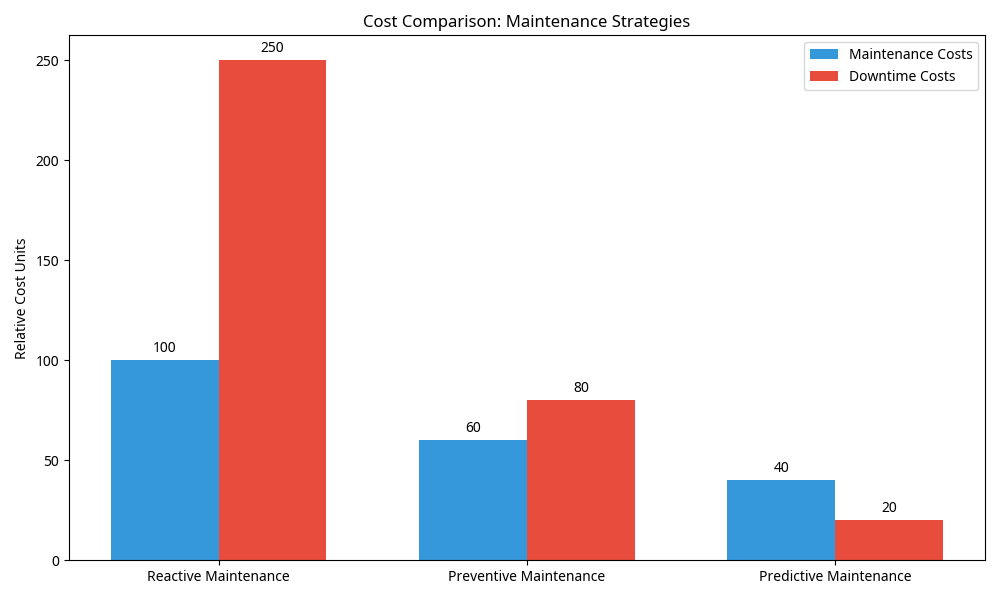
Figure 3: A bar chart comparing the relative maintenance and downtime costs across Reactive, Preventive, and Predictive Maintenance strategies. Predictive Maintenance consistently shows the lowest costs.
As depicted in Figure 3, Predictive Maintenance significantly lowers both maintenance and downtime costs compared to reactive and even preventive approaches. This is because PdM ensures that maintenance is performed only when necessary, avoiding both premature replacements and catastrophic failures.
The principles of IoT and AI-driven predictive maintenance for SRBs are being successfully applied across various heavy industries:
Mining: In harsh mining environments, SRBs in conveyor belts, crushers, and excavators are subjected to extreme loads and abrasive conditions. PdM systems monitor these bearings, predicting failures and preventing costly interruptions in extraction and processing operations.
Wind Energy: Wind turbine main shafts rely heavily on large SRBs. Failure of these bearings can lead to prolonged downtime and expensive repairs, often requiring specialized cranes. PdM helps monitor the health of these critical components, optimizing maintenance schedules and extending turbine operational life.
Pulp and Paper: In paper mills, SRBs in drying cylinders and presses operate under high temperatures and moisture. PdM ensures continuous operation by detecting early signs of bearing degradation, preventing production bottlenecks.
These examples underscore the versatility and effectiveness of leveraging IoT and AI to safeguard critical assets and maintain operational continuity.
While the benefits are clear, implementing a successful PdM program for SRBs comes with its own set of challenges:
Data Quality and Volume: Ensuring high-quality, consistent data collection from a multitude of sensors can be complex. Managing and storing large volumes of data also requires robust infrastructure.
Integration with Existing Systems: Integrating new IoT sensors and AI platforms with legacy industrial control systems (ICS) and Enterprise Asset Management (EAM) systems can be a significant hurdle.
Talent Gap: A shortage of skilled professionals in data science, AI, and industrial IoT can impede implementation and effective utilization of PdM systems.
Initial Investment: The upfront cost of sensors, software, and infrastructure can be substantial, though the long-term ROI is typically very high.
Cybersecurity: Connecting industrial assets to the internet introduces cybersecurity risks that must be meticulously managed.
To overcome these challenges, organizations should consider a phased implementation approach, starting with critical assets, and partnering with experienced technology providers. Investing in training for existing staff and fostering a data-driven culture are also crucial for long-term success.
The trajectory of predictive maintenance for SRBs points towards increasingly autonomous operations. Future developments will likely include:
Edge AI: Processing data closer to the source (at the edge) to reduce latency and bandwidth requirements, enabling faster decision-making.
Digital Twins: Creating virtual replicas of physical SRBs that continuously update with real-time data, allowing for highly accurate simulations of degradation and failure scenarios.
Reinforcement Learning: AI agents learning optimal maintenance strategies through trial and error in simulated environments.
Self-healing Systems: Advanced materials and embedded intelligence that can detect and mitigate minor damage autonomously.
These advancements promise a future where bearing maintenance is not just predictive but truly prescriptive and eventually autonomous, further minimizing human intervention and maximizing operational uptime.
Spherical roller bearings are vital components in heavy industry, and their reliable operation is paramount for productivity and profitability. The convergence of the Industrial Internet of Things (IIoT) and Artificial Intelligence (AI) has ushered in a new era of Predictive Maintenance, transforming how we manage these critical assets.
By continuously monitoring bearing health, analyzing data with sophisticated AI models, and predicting potential failures, organizations can move beyond reactive fixes and scheduled overhauls. This proactive approach not only prevents costly unplanned downtime but also significantly reduces maintenance expenses, extends asset lifespan, and enhances overall operational safety and efficiency. Embracing IoT and AI in the maintenance of spherical roller bearings is not just an option; it is a strategic imperative for any industry aiming to thrive in the era of smart manufacturing and Industry 4.0.
_compressed-1.jpg) Richard : Aug 27, 2025 4:36:16 AM
Richard : Aug 27, 2025 4:36:16 AM
Dental bearings, though small, are vital in dental handpieces, crucial for effective and efficient procedures. These bearings offer significant...
 Richard : Aug 27, 2025 9:48:56 PM
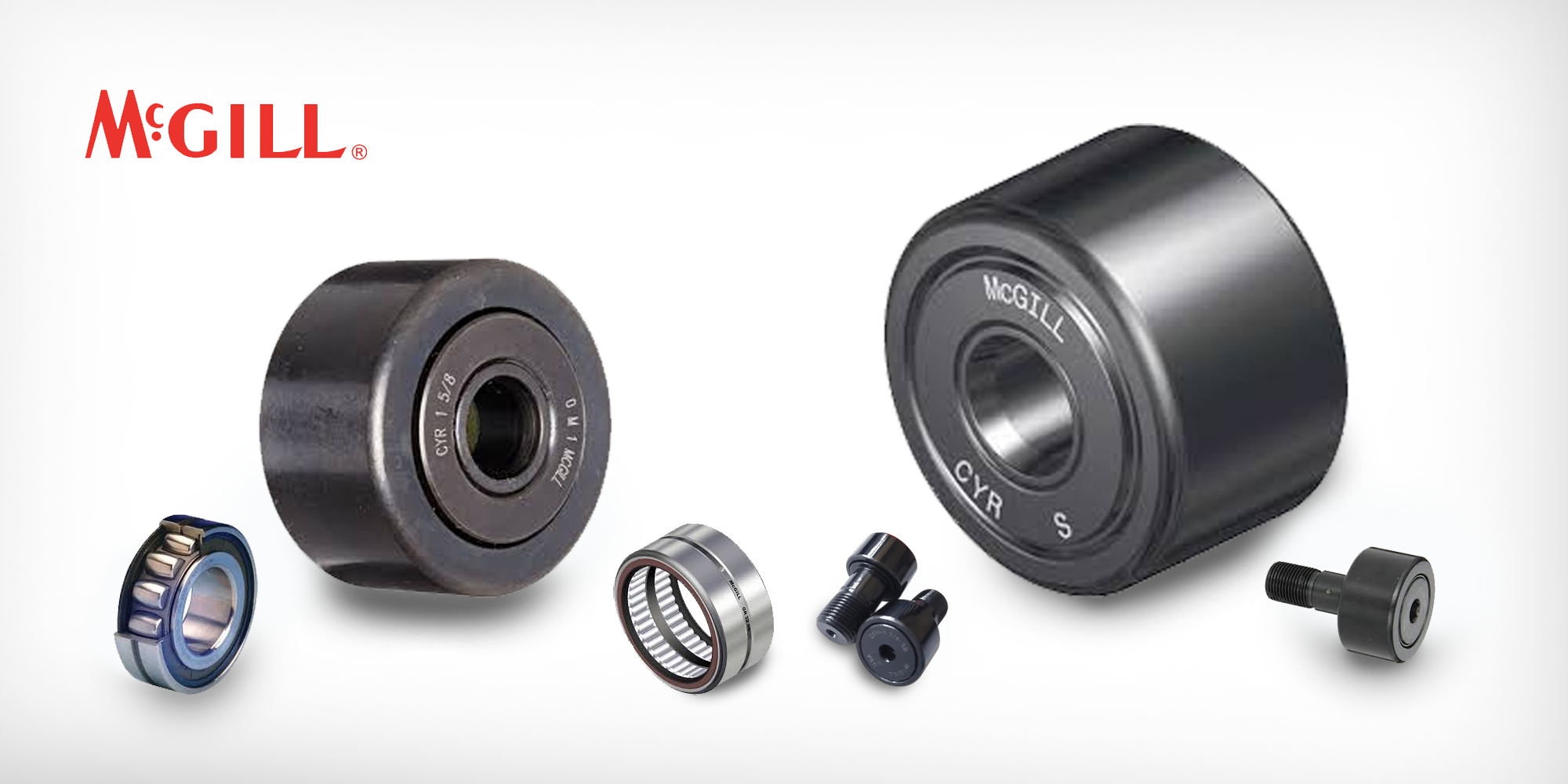
Since 1937, McGill has been a leader in creating innovative bearings that resist contamination. These bearings are crucial to industries like...
 Richard : Jan 9, 2026 2:35:14 AM
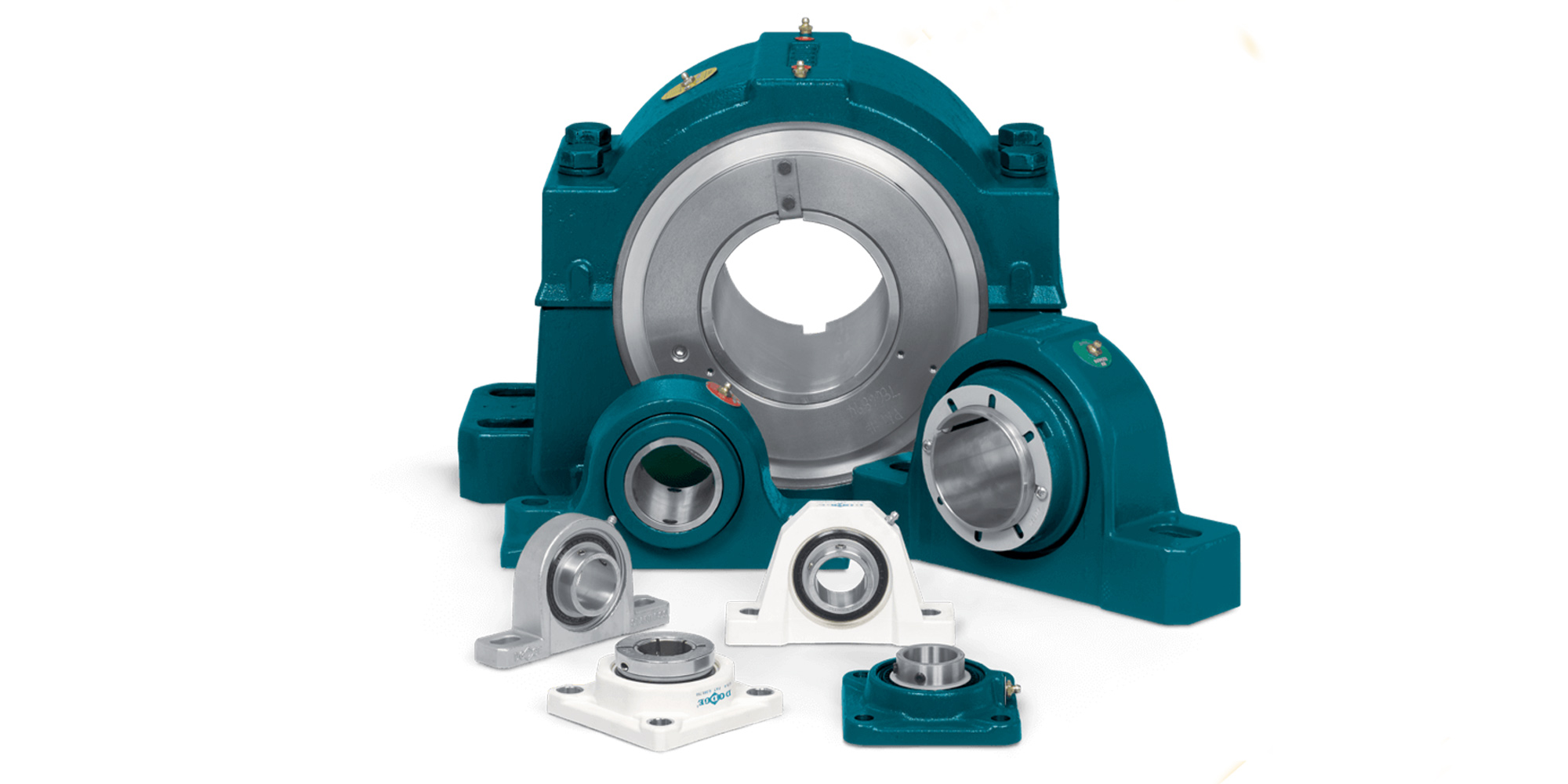
When you choose mounted bearing solutions for your application, your main goal is to ensure good performance and reliability. You also want to keep...