


Home/
Blog/
Ceramic Bearings for Electric Motors:Solving Electrical Erosion Problems

5 min read

Ceramic Bearings for Electric Motors:Solving Electrical Erosion Problems

Ceramic Bearings for Electric Motors:Solving Electrical Erosion Problems
12:08

What Is Electrical Erosion in Electric Motors?

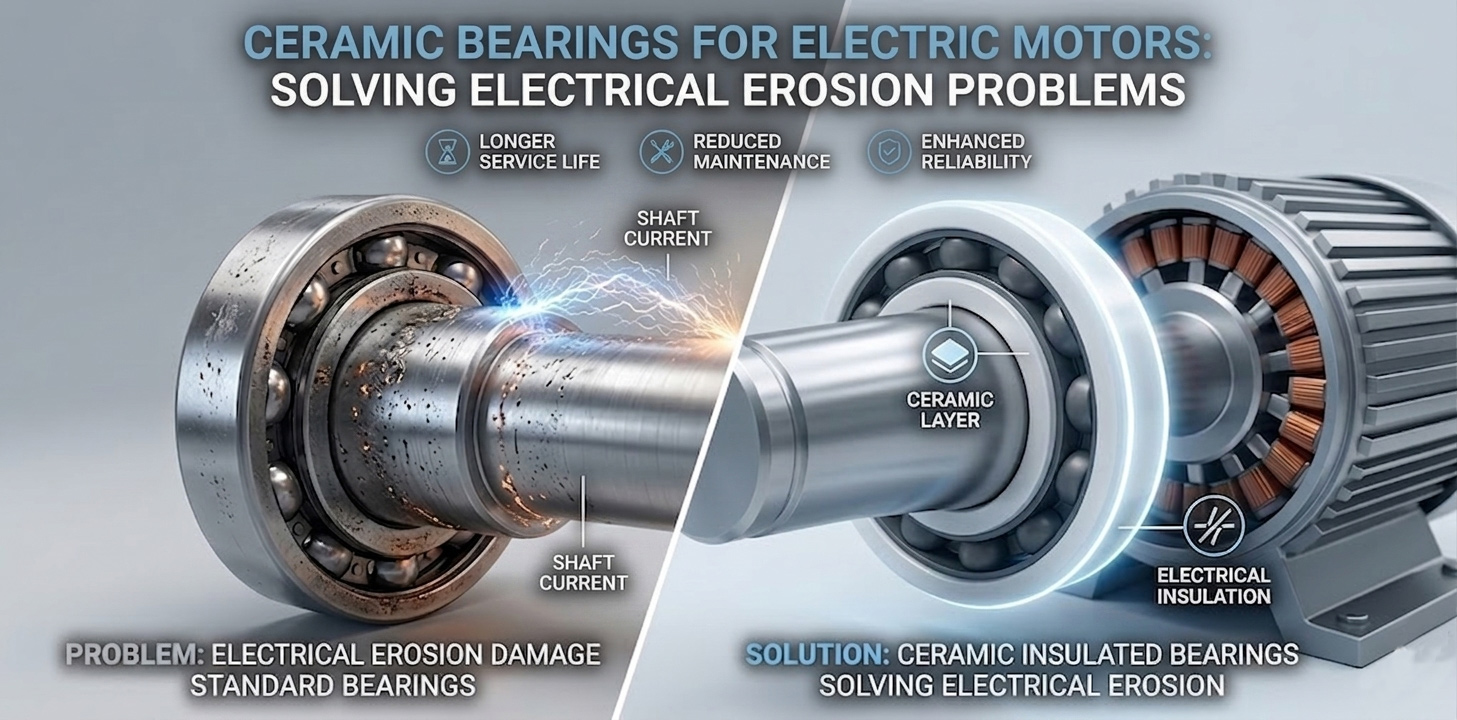
As variable frequency drives (VFDs) and inverter-driven electric motors become the backbone of modern industrial automation, one critical problem has grown with them: electrical erosion of bearing raceways — also known as electrical discharge machining (EDM) damage or fluting.
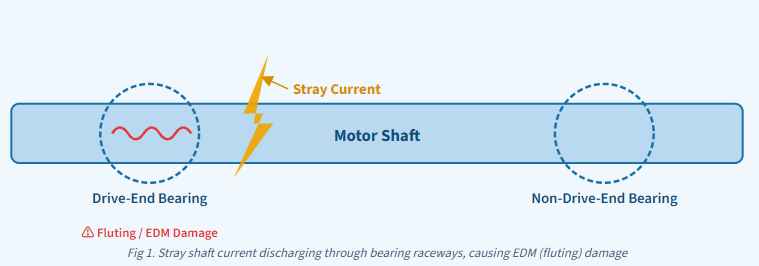
When stray electrical currents pass through a rotating motor shaft, they seek the path of least resistance — often right through the bearing. Each microscopic discharge burns tiny craters into the hardened steel raceway surface, gradually transforming a smooth precision surface into a corrugated, fluted pattern. The result is premature bearing failure, vibration, noise, and costly unplanned downtime.

Stray shaft current discharging through bearing raceways, causing EDM (fluting) damage


Key Statistics


Why Conventional Steel Bearings Fail

Standard chrome steel (AISI 52100) or stainless steel bearings offer excellent mechanical performance — but they are electrically conductive. When shaft currents flow, these bearings become a conducting bridge between the motor shaft and the motor housing.

Key Insight: A VFD-driven motor can generate common-mode voltages of 50-1,500V on the shaft. Even a brief discharge of just a few milliamps through a bearing is enough to begin cumulative raceway damage — invisible at first, catastrophic over thousands of operating hours.


Common Signs of Electrical Erosion Damage

  • Characteristic "washboard" or rippled pattern on the inner/outer raceway
  • Grey or brown frosted appearance on rolling element surfaces
  • Rapid increase in vibration and acoustic noise without obvious mechanical cause
  • Grease turning dark grey or black from metallic particle contamination
  • Premature bearing failure, often within 6–18 months of installation

Traditional mitigation strategies — shaft grounding brushes, insulated bearing housings, shielded cables — can help, but they add cost and maintenance burden, and they often address symptoms rather than root causes. Ceramic bearings attack the problem directly at the source.


Types of Ceramic Bearings: Full vs. Hybrid

Not all ceramic bearings are the same. There are two principal configurations used in electric motor applications, each with distinct advantages.

Hybrid Ceramic Bearings

Hybrid bearings use silicon nitride (Si₃N₄) ceramic rolling elements combined with standard steel inner and outer rings. This is the most widely adopted solution for electrical erosion prevention because:

  • Silicon nitride balls are inherently non-conductive, breaking the current path
  • Steel rings provide familiar machinability and housing fit compatibility
  • Cost is significantly lower than full ceramic solutions
  • Drop-in replacement for standard steel bearings in most motor frame sizes

Full Ceramic Bearings

Full ceramic bearings use ceramic for all components — rings, rolling elements, and often the cage. Silicon nitride or zirconia (ZrO₂) are common material choices. These are reserved for the most extreme environments:

  • Operating temperatures exceeding 300°C
  • Highly corrosive environments (acids, seawater, aggressive chemicals)
  • Non-magnetic or MRI-compatible applications
  • Ultra-high vacuum or cleanroom conditions

Types of Ceramic Bearings: Full vs. Hybrid


Performance Comparison: Steel vs. Hybrid vs. Full Ceramic

Understanding how these bearing types compare across critical parameters helps engineers specify the right solution for each application. The table below summarizes key performance characteristics.

Parameter

Standard Steel

Hybrid Ceramic

Full Ceramic

Electrical Insulation

None (conductive)

Excellent (Si3N4 balls)

Outstanding (entire path)

Max Operating Temp

~180 degrees C

~250 degrees C

Up to 800 degrees C

Density / Weight

7.8 g/cm3 (steel)

~40% lighter elements

3.2 g/cm3 — very light

Corrosion Resistance

Moderate

Good (rings may corrode)

Excellent (fully inert)

Hardness

~60-64 HRC

~78 HRC (Si3N4 balls)

~78 HRC all surfaces

Lubrication Required

Standard grease/oil

Reduced — lower friction

Minimal / self-lubricating

Relative Unit Cost

$ Baseline

$$ - $$$ (2-5x steel)

$$$$ (10-20x steel)

EDM / Fluting Protection

None

High

Maximum

Drop-in Replacement

N/A

Yes (standard dims)

Often needs redesign

Typical Service Life (VFD)

6-18 months

3-6 years

5-10+ years


 💡 Engineering Note: For the vast majority of VFD-driven industrial motors, hybrid ceramic bearings represent the optimal balance of performance and cost. Full ceramic bearings are reserved for specialty applications where operating conditions exceed the limits of hybrid designs. 


Key Applications: Where Ceramic Bearings Make the Biggest Impact

Electrical erosion is not equally distributed across all electric motor applications. Certain industries and motor configurations face dramatically elevated risk. Below are the sectors where specifying ceramic bearings delivers the most measurable return on investment.

Industry / Application

Motor Type

EDM Risk Level

Recommended Solution

EV Traction Motors

PMSM / Induction

Very High

Hybrid Ceramic (both ends)

Industrial VFD Pumps & Fans

AC Induction

High

Hybrid Ceramic (DE + NDE)

CNC Machine Tool Spindles

High-speed spindle

High

Full or Hybrid Ceramic

Wind Turbine Generators

DFIG / PMSM

Very High

Hybrid Ceramic + Grounding

Servo & Robotics Motors

AC/DC Servo

Medium-High

Hybrid Ceramic

Medical / MRI Equipment

Brushless DC

Medium

Full Ceramic (non-magnetic)

Food Processing (washdown)

AC Induction

Medium

Full Ceramic (corrosion)

Semiconductor Fab Equipment

Ultra-precision

Medium

Full Ceramic (cleanroom)


Electric Vehicles: A Fast-Growing Market Driver

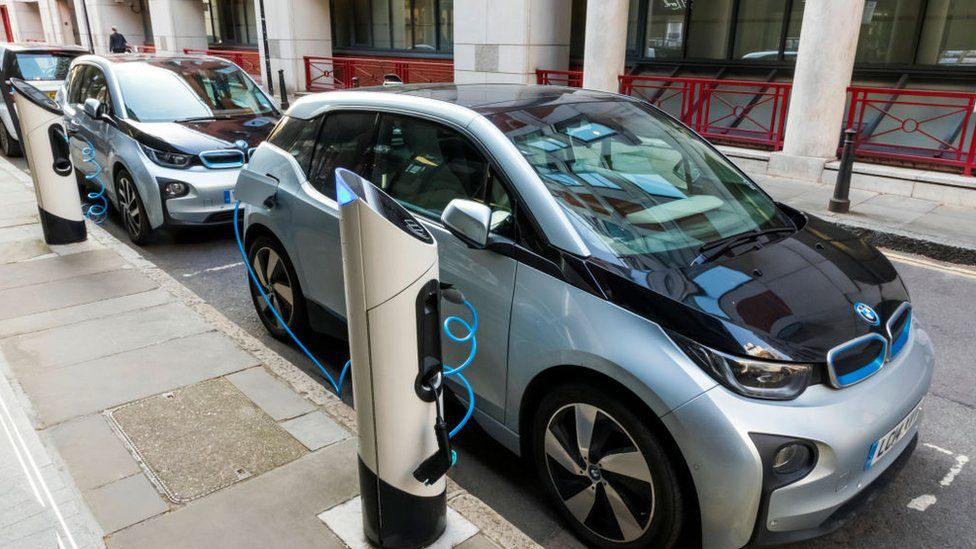
The rapid adoption of electric vehicles has created one of the fastest-growing markets for ceramic bearings. EV traction motors operate with high switching frequency inverters that generate significant common-mode shaft voltages. Given the compact motor designs and high rotational speeds (often 10,000–20,000 RPM), bearing failure from electrical erosion would have severe safety and warranty implications. Leading EV manufacturers now specify hybrid ceramic bearings as standard for both the drive-end and non-drive-end positions.

Case Study Snapshot: A major European industrial pump manufacturer switched from standard steel to hybrid ceramic bearings on a fleet of 200 VFD-driven motor pumps. Average bearing replacement interval increased from 14 months to over 5 years, reducing maintenance costs by an estimated 380,000 EUR annually.


How to Select the Right Ceramic Bearing

Selecting the correct ceramic bearing is a multi-variable engineering decision. The following framework guides engineers through the key considerations in a structured way.

Ceramic bearing selection decision matrix for electric motor engineers.


Cage Material Matters Too

In high-speed and extreme-temperature applications, the cage (retainer) material deserves careful attention. Common options include:

  • PEEK (Polyether Ether Ketone): Excellent for high speed and elevated temperatures up to 250°C; also electrically insulating
  • Silicon nitride cage: Full ceramic option for the most demanding thermal or chemical environments
  • Brass cage: Available for hybrid ceramic in standard industrial applications where temperatures are moderate


Cost vs. Benefit Analysis: Is the Premium Justified?

The most common objection to ceramic bearings is their higher unit cost. However, a proper life-cycle cost (LCC) analysis almost always tells a very different story — particularly in VFD-driven applications where EDM damage is severe.

Cost Factor

Steel Bearing (per motor/yr)

Hybrid Ceramic (per motor/yr)

Bearing Unit Cost

~$80

~$280

Replacement Frequency

1.5x per year (avg.)

0.2x per year (avg.)

Labor Cost per Replacement

$250

$250

Downtime Cost per Event

$1,500 (avg.)

$1,500 (avg.)

Annual Bearing Cost

$120

$56

Annual Labor + Downtime Cost

$2,625

$350

Total Annual Cost per Motor

$2,745

$406

Annual Saving with Hybrid Ceramic: ~$2,339 per motor per year


ROI Summary: In most high-cycle VFD applications, hybrid ceramic bearings pay back their premium cost within 3-6 months through reduced replacement labor, eliminated unplanned downtime, and lower grease consumption.


Frequently Asked Questions


Can I install hybrid ceramic bearings without modifying the motor?

Yes — in the vast majority of cases. Hybrid ceramic bearings are manufactured to the same ISO dimensional standards (e.g., 6200, 6300, 7200 series) as their steel counterparts. Bore diameter, outer diameter, and width are identical, making them true drop-in replacements. No housing or shaft modification is required.

Do ceramic bearings need special grease?

Standard grease can be used with hybrid ceramic bearings, but performance is optimized with greases specifically formulated for ceramic/steel interfaces — typically low-viscosity polyurea or PAO (polyalphaolefin) based lubricants. Full ceramic bearings often run with minimal lubrication or specialized PTFE-based greases.

Are ceramic bearings suitable for high-load applications?

Silicon nitride has a compressive strength comparable to hardened bearing steel, and hybrid ceramic bearings carry dynamic load ratings (C values) closely matching their steel equivalents. They are well-suited for the load profiles typical in electric motors. For extreme shock loading or very heavy radial loads, consult the bearing manufacturer for specific dynamic/static load ratings.

Does ceramic electrically insulate the entire bearing?

In a hybrid ceramic bearing, the Si₃N₄ balls break the electrical path between inner and outer rings, providing effective current isolation. However, if the outer ring housing or inner ring bore is part of a grounded circuit, additional precautions such as insulating sleeves may still be needed in very high-current applications. Full ceramic bearings provide complete electrical isolation throughout.

What is the maximum speed for hybrid ceramic bearings?

Due to lower density (Si₃N₄ is ~60% lighter than steel), reduced centrifugal force on the rolling elements allows hybrid ceramic bearings to operate at 20–40% higher speeds than comparable steel bearings. This makes them ideal for high-speed spindles, turbomachinery, and modern EV traction motors.


Conclusion

Electrical erosion is one of the most underdiagnosed — and most costly — failure modes in inverter-driven electric motors. As VFDs become the standard across industrial automation, HVAC, water treatment, and electric vehicles, the exposure to shaft current-induced bearing damage is not going away: it is growing.

Ceramic bearings — and hybrid ceramic designs in particular — represent a proven, engineered solution that eliminates the root cause of EDM damage rather than simply managing its symptoms. When total lifecycle costs are considered, the economics are compelling: lower maintenance frequency, reduced downtime, and significantly extended service life deliver measurable return on investment within a single operational year.

For design engineers, maintenance managers, and procurement specialists, the question is no longer whether ceramic bearings are worth specifying in VFD applications. The evidence consistently shows they are. The question is how quickly your organization will make the transition.

Need Help Selecting the Right Ceramic Bearing?

Our bearing specialists can help you identify the optimal solution for your motor application — from standard hybrid ceramic replacements to custom full-ceramic designs for extreme environments. Contact us for a free technical consultation. 

Si3N4 Ceramic Bearings & Electric Vehicle Industry

Si3N4 Ceramic Bearings & Electric Vehicle Industry

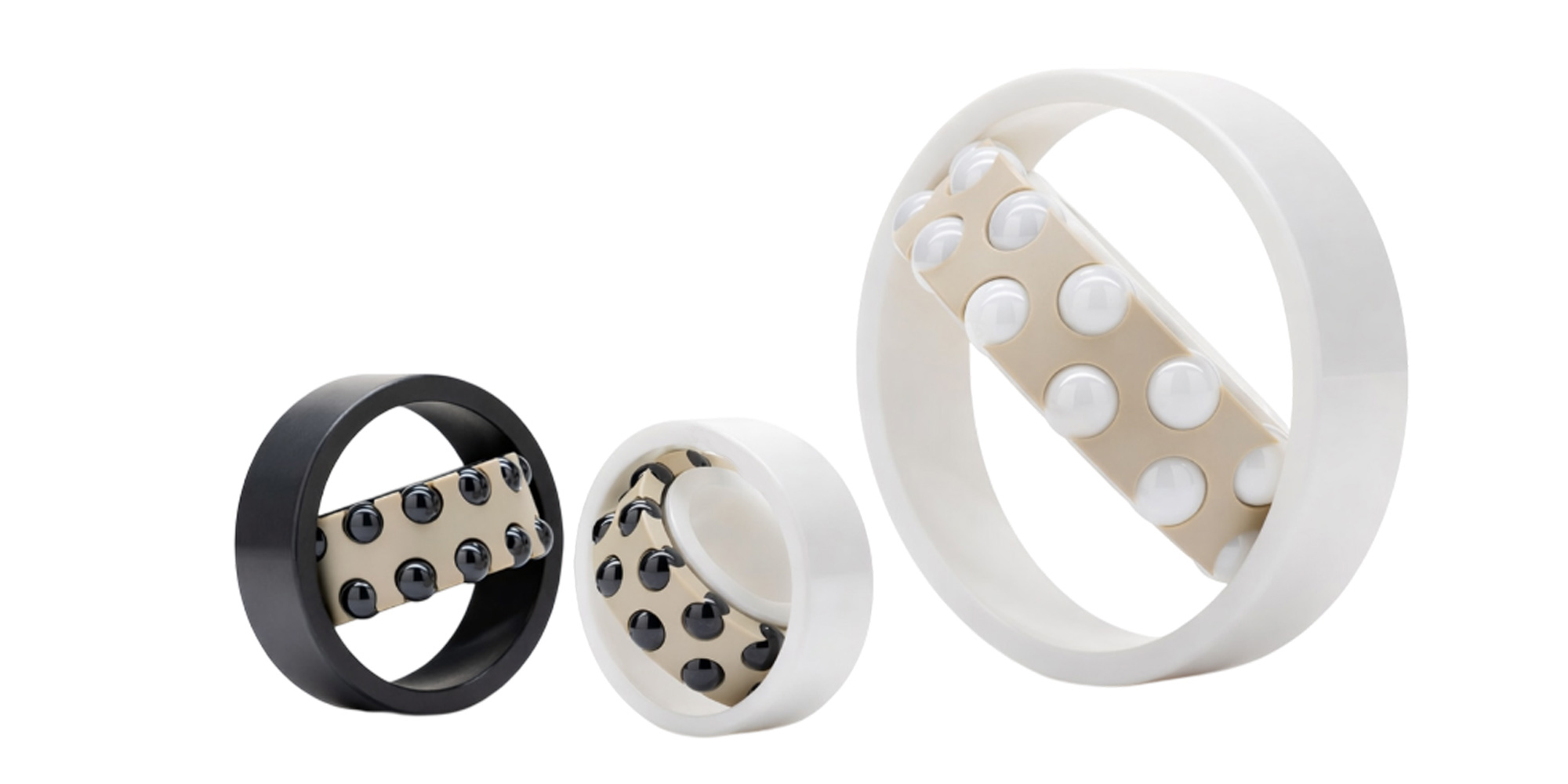
For the sake of environmental protection, the electric vehicle industry has been growing rapidly in recent years. The electric vehicles in China...
Read More
Why Electric Vehicles Are Driving Massive Demand for Ceramic Bearings in 2026

Why Electric Vehicles Are Driving Massive Demand for Ceramic Bearings in 2026

KEY NUMBERS AT A GLANCE �� $64.73 Billion EV Bearing Market (2033) �� 32.14% Market CAGR 2023–2033 ⚙️ $693 Million Si₃N₄ Market...

Read More
Electroplating Bearings

Electroplating Bearings

Electroplating bearings are an economical alternative to stainless steel bearings. Although their cost is generally lower, their rust and corrosion...

Read More