

Home/
Blog/
A Brief History of Ceramic Bearings: From Lab Curiosity to Industry Standard

8 min read

A Brief History of Ceramic Bearings: From Lab Curiosity to Industry Standard

A Brief History of Ceramic Bearings: From Lab Curiosity to Industry Standard
18:30

Introduction: Why Ceramic Bearings Matter

Few components in modern machinery are as quietly essential — or as technically fascinating — as the bearing. And within the world of bearings, no technology has undergone a more dramatic journey than ceramic bearings.

Today, ceramic bearings are found inside wind turbines spinning off the coast of Scotland, inside the spindles of ultra-precision CNC machines, inside electric vehicle motors, and inside the dental drill your dentist uses. They are trusted in environments where conventional steel bearings would fail within hours.

But it wasn't always this way. Sixty years ago, ceramic bearings were a laboratory curiosity — expensive, brittle, and considered impractical for real-world use. The story of how they went from academic research papers to global industry standard is one of materials science innovation, aerospace necessity, and decades of engineering perseverance.

Why Ceramic Bearings Matter


Origins: The Birth of Ceramic Engineering (1940s–1960s)

To understand ceramic bearings, we first need to understand the broader evolution of engineering ceramics. In the aftermath of World War II, materials scientists began seriously exploring non-metallic materials for structural applications.

Early work focused on alumina (Al₂O₃) and zirconia (ZrO₂) — materials that had been used in spark plugs and refractory linings for decades. But using ceramics as rolling elements in a bearing? That idea seemed far-fetched to most engineers in the 1950s.

The fundamental challenge was clear: ceramics were known for being extremely hard and heat-resistant, but also notoriously brittle. A material that could shatter under impact loading was poorly suited for the demanding dynamic stress cycles inside a bearing.

Early Laboratory Ceramic Speciments

The first serious theoretical work on ceramic rolling contact fatigue was published in the late 1950s by researchers at institutions including MIT and the German aerospace research establishment (DFVLR). These papers established the mathematical framework for understanding how ceramic materials would behave under Hertzian contact stress — the compressive stresses generated when two curved surfaces roll against each other.

"The potential for ceramic rolling elements was recognized early, but the gap between theoretical promise and practical reality was enormous. Every prototype failed — the question was always whether the failure mode was fundamental or solvable."
— Dr. H. Witzke, DLR Research Archives, 1961


Aerospace Ignition: When NASA Needed Better Bearings (1960s–1970s)

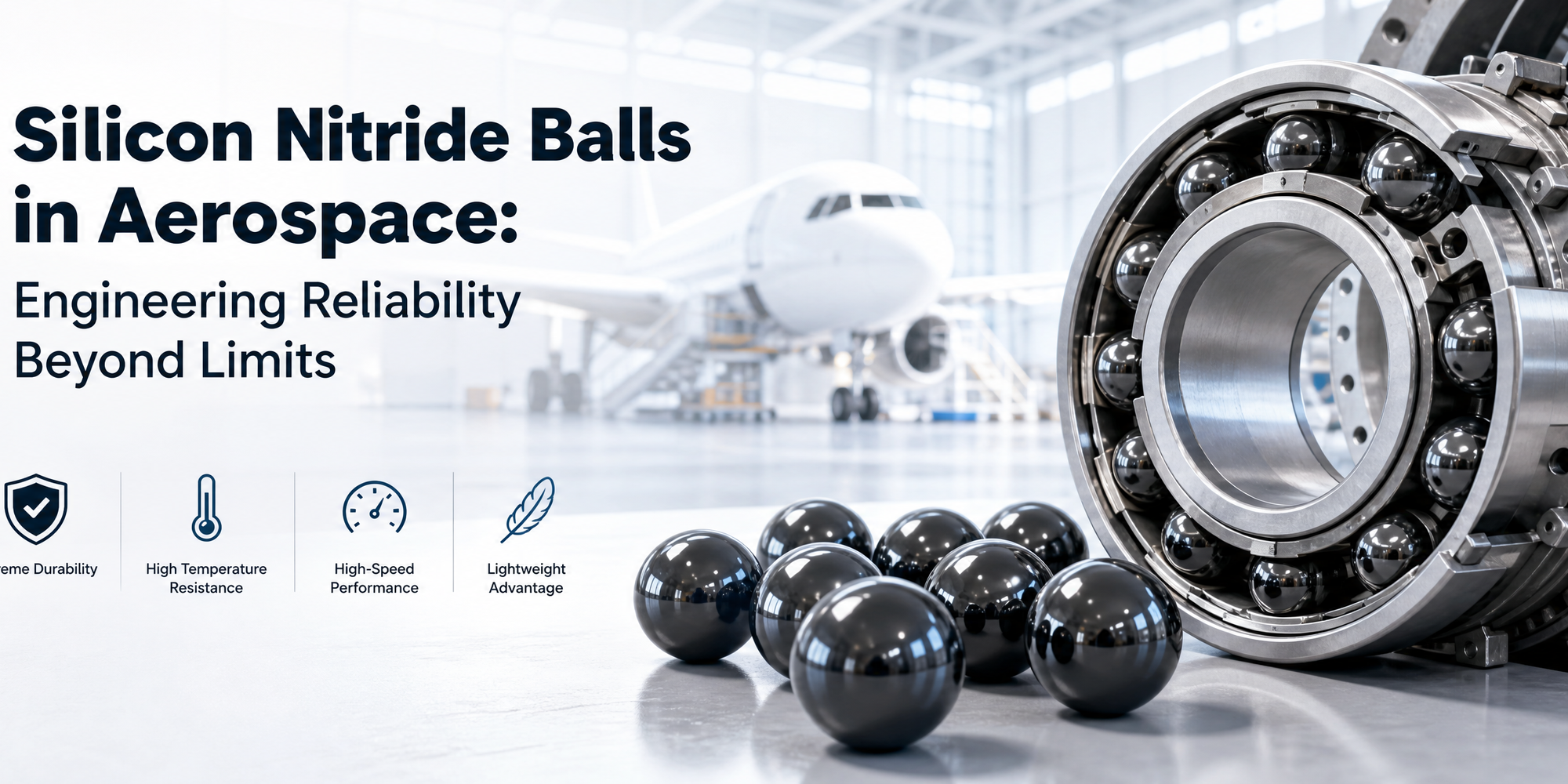
The space race fundamentally changed the trajectory of ceramic bearing development. NASA and the US Air Force faced a problem: conventional steel bearings failed in the cryogenic liquid propellant pumps of rocket engines. Steel bearings operating in liquid oxygen or liquid hydrogen environments suffered from catastrophic adhesive wear — metal-to-metal contact with zero lubrication.

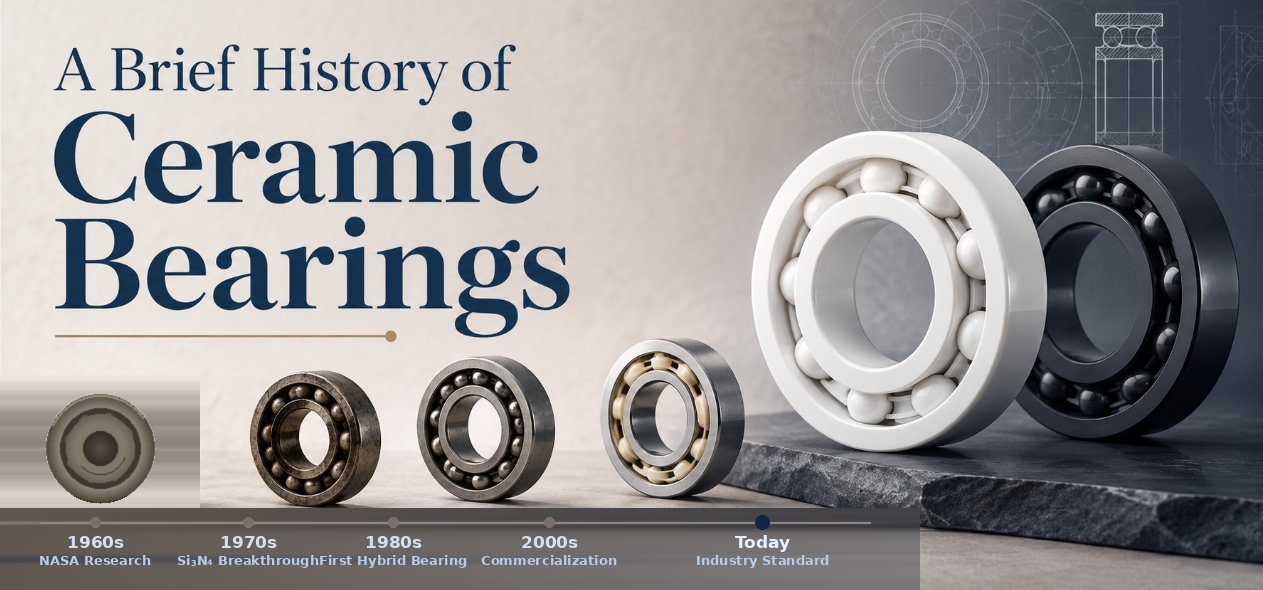
▶ 1962 NASA Research Program Initiated

NASA's Lewis Research Center launches systematic testing of ceramic materials as bearing components for rocket turbopump applications. Alumina balls show promise in dry-run cryogenic tests.

▶ 1965 First Ceramic Bearing Run in Cryogenic Environment

A prototype bearing using alumina balls with steel rings successfully operates in liquid nitrogen conditions for over 100 hours — outperforming steel by a factor of 8.

▶ 1969 Apollo Program & High-Speed Testing

Research intensifies. Engineers recognize ceramic bearings could serve dual roles: cryogenic tolerance AND high-speed capability. DN values exceeding 2 million are demonstrated in lab settings.

▶ 1972 SKF & FAG Enter the Research Field

European bearing giants SKF and FAG begin dedicated ceramic bearing research programs, driven by aerospace contracts. The commercial race begins in earnest.

 💡 Key Insight:

The aerospace sector's unique demands — extreme temperatures, zero lubrication environments, and aggressive weight reduction targets — created the perfect forcing function for ceramic bearing development. Without the space race, the technology might have remained a laboratory concept for another two decades.


The Silicon Nitride Breakthrough (1970s–1980s)

While alumina bearings showed promise in cryogenic environments, they still exhibited excessive brittleness under the dynamic shock loads common in real machinery. The true breakthrough came with the development of silicon nitride (Si₃N₄) as a structural ceramic.

Silicon nitride had been known since the 19th century, but producing it in dense, reliable, and defect-free form for structural components was an immense materials processing challenge. The key advances came in the 1970s through two fabrication breakthroughs:

Fabrication Process

Developer

Year

Significance

Hot Pressing (HP-Si₃N₄)

GE Research / Lucas Industries

1971–74

First dense Si₃N₄ with sufficient fracture toughness for bearing prototype testing.

Sintering with Y₂O₃ + Al₂O₃

Kyocera / NGK Spark Plug

1976–79

Japanese manufacturers pioneer cost-effective sintered Si₃N₄. Defect density dramatically reduced.

Hot Isostatic Pressing (HIP)

Norton Company / Sinterstahl

1981–85

Near-zero porosity Si₃N₄ balls with fatigue life exceeding 100× early alumina prototypes.

Gas Pressure Sintering (GPS)

Multiple (Japan / Germany)

1984–88

Lower-cost production route enabling scale-up. Si₃N₄ bearings approach industrial pricing.


By the mid-1980s, silicon nitride had definitively surpassed alumina as the ceramic material of choice for bearing applications. Its combination of properties was — and remains — unmatched by any other engineering ceramic:

Property

Si₃N₄ (Silicon Nitride)

100Cr6 Steel

Al₂O₃ (Alumina)

Density (g/cm³)

3.2

7.8

3.9

Hardness (HV)

1,500–1,800

700–900

1,600–2,000

Elastic Modulus (GPa)

310

210

380

Fracture Toughness (MPa√m)

6–8

20–25

3–4

Max Operating Temp (°C)

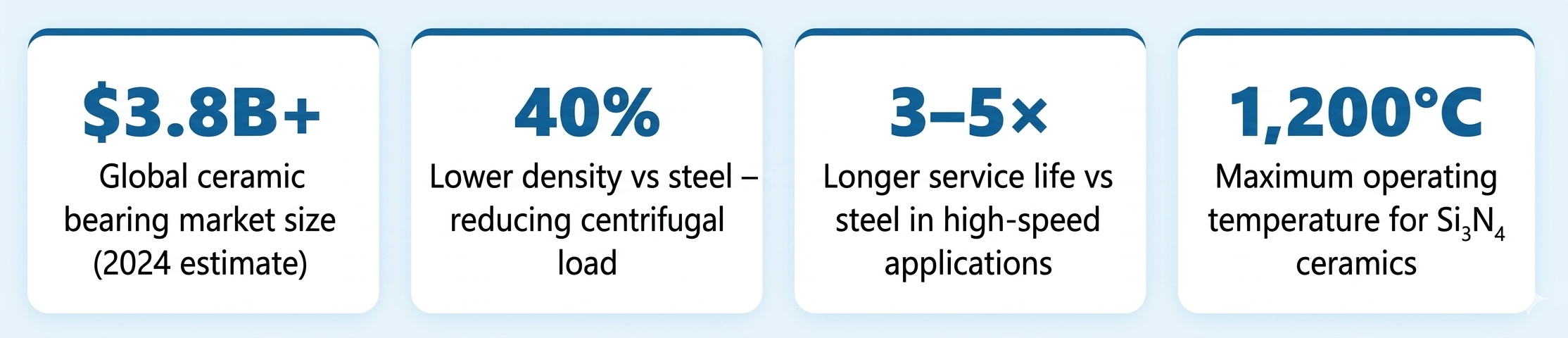
1,200

180

1,400

Thermal Expansion (10⁻⁶/°C)

3.2

12.0

8.0

Electrical Resistivity (Ω·cm)

>10¹³ (insulator)

~10⁻⁵ (conductor)

>10¹⁴ (insulator)


The Rise of Hybrid Ceramic Bearings (1980s–1990s)

Full ceramic bearings — where both rings and rolling elements are made of Si₃N₄ — offered impressive performance but carried a significant limitation: the ceramic outer and inner rings were expensive to manufacture to the tight tolerances required for precision bearing seats, and their brittleness made them vulnerable to mounting damage.

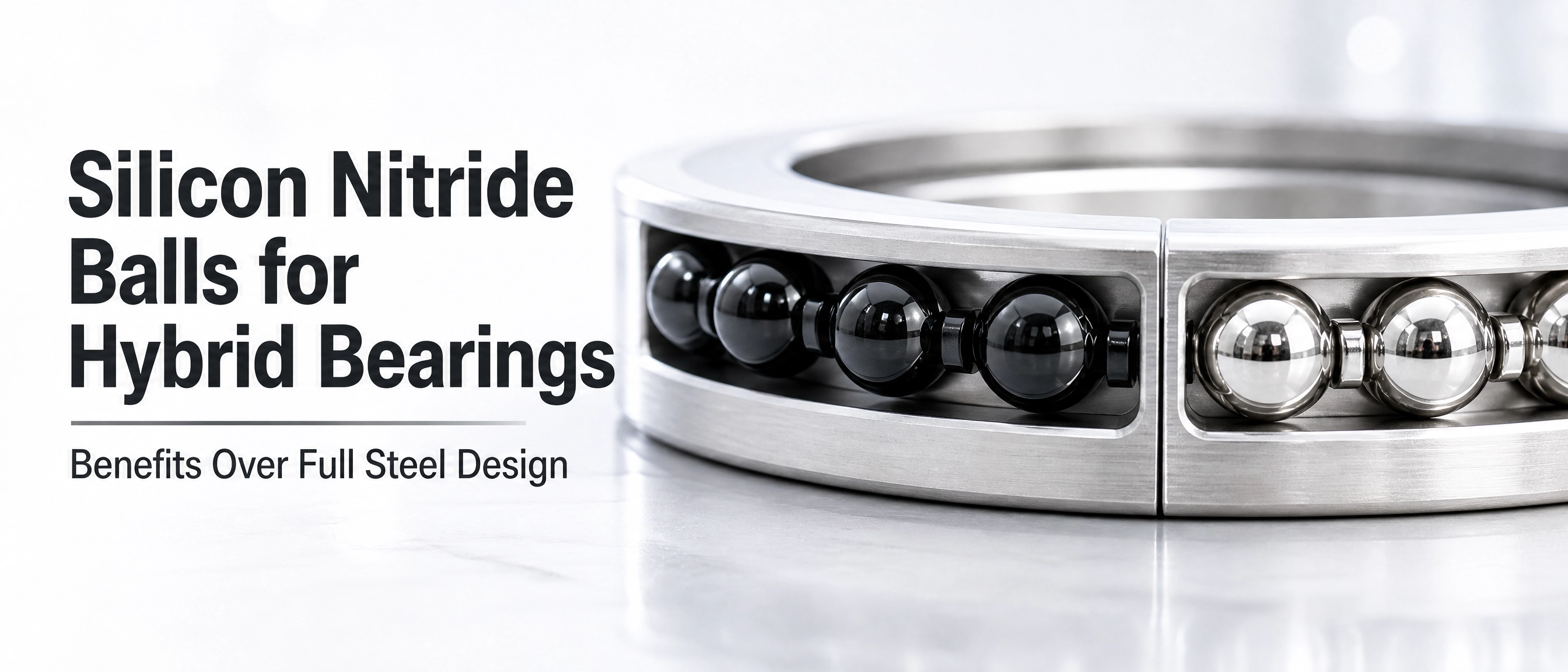
The engineering solution was elegant: keep the steel rings (proven, cost-effective, easy to machine) and replace only the rolling elements with Si₃N₄ ceramic balls or rollers. This hybrid ceramic bearing design captured most of the ceramic performance benefits at a fraction of the cost.

Hybrid Ceramic Bearing Cross-Section

�� Why Hybrid Bearings Won the Market

Hybrid ceramic bearings offered a sweet spot that neither full ceramic nor conventional all-steel bearings could match: the dimensional stability of steel rings combined with the hardness, low density, and electrical insulation of ceramic rolling elements. For most industrial applications, this delivers 80–90% of maximum ceramic performance at 30–50% of full ceramic bearing cost.

The first commercial hybrid ceramic bearings entered the market around 1983–1985, initially through SKF's and FAG's aerospace divisions. By the late 1980s, they had migrated into the machine tool industry — specifically into high-speed grinding spindles, where their ability to operate at DN values exceeding 1.5 million gave manufacturers a decisive competitive advantage.

▶ 1983 First Commercial Hybrid Bearings (SKF / FAG)

SKF and FAG launch the first catalogued hybrid ceramic bearing product lines targeting aerospace and precision machine tools.

▶ 1988 Machine Tool Revolution

Japanese CNC machine makers adopt hybrid ceramic bearings. Spindle speeds jump from 10,000 to 30,000+ RPM, enabling the High-Speed Machining revolution.

▶ 1992 Formula 1 Adoption

F1 teams experiment with ceramic hybrid bearings in gearboxes, accelerating development and public awareness.

▶ 1996 Medical Device Market Entry

Dental handpiece manufacturers adopt ceramic hybrid bearings for high-speed turbine drills operating at 400,000+ RPM.


Going Mainstream: Industrial Adoption (1990s–2000s)

The 1990s marked the pivotal transition of ceramic bearings from niche aerospace/motorsport components to genuine industrial products with broad commercial availability. Several converging factors drove this shift.

Adoption Driver

Impact

Period

Si₃N₄ Manufacturing Scale-Up

Cost of ceramic balls fell ~70%. Hybrid bearings became economically viable for industrial use.

1990–1998

CNC Machining of Ceramic

Advanced grinding enabled Grade 5/3 precision on ceramic balls, matching steel standards.

1988–1995

Petrochemical Industry Need

Corrosive-fluid pumps required bearings for dry-run operation. Full ceramic bearings entered chemical markets.

1992–2000

Food & Pharma Regulations

FDA/EU regulations drove adoption of ceramic bearings for dry or water-lubricated operation.

1995–2003

ISO & DIN Standardization

Publication of ceramic bearing standards gave OEMs confidence to specify ceramics in new designs.

1998–2005

By the turn of the millennium, virtually every major bearing manufacturer — SKF, Schaeffler/FAG, NSK, NTN, Timken, Koyo — offered hybrid ceramic bearings as standard catalogue products. What had once required a special engineering application and six-month lead times was now available from stock.


Modern Era: Wind Turbines, EVs & Precision Manufacturing (2000s–Present)

The 21st century brought three transformative application areas that have driven ceramic bearing technology to new heights of refinement and volume adoption.


Wind Energy: Solving the White Etching Crack Crisis

 As wind turbines scaled up to multi-megawatt ratings in the 2000s, a catastrophic failure mode emerged in gearbox bearings: White Etching Cracks (WECs) — subsurface cracks that caused premature bearing failure at a fraction of the designed service life. The financial impact was enormous, with gearbox replacements costing $200,000–$500,000 per turbine.

Hybrid ceramic bearings, particularly those using Si₃N₄ rollers in the high-load first and second planetary stages, proved dramatically more resistant to WEC formation. Their lower density reduced slip events under dynamic loading — a key WEC trigger — and their electrical insulation property addressed the stray current damage problem simultaneously.
Hybrid ceramic spherical roller bearing in wind turbine gearbox


Electric Vehicles: The Bearing Current Problem

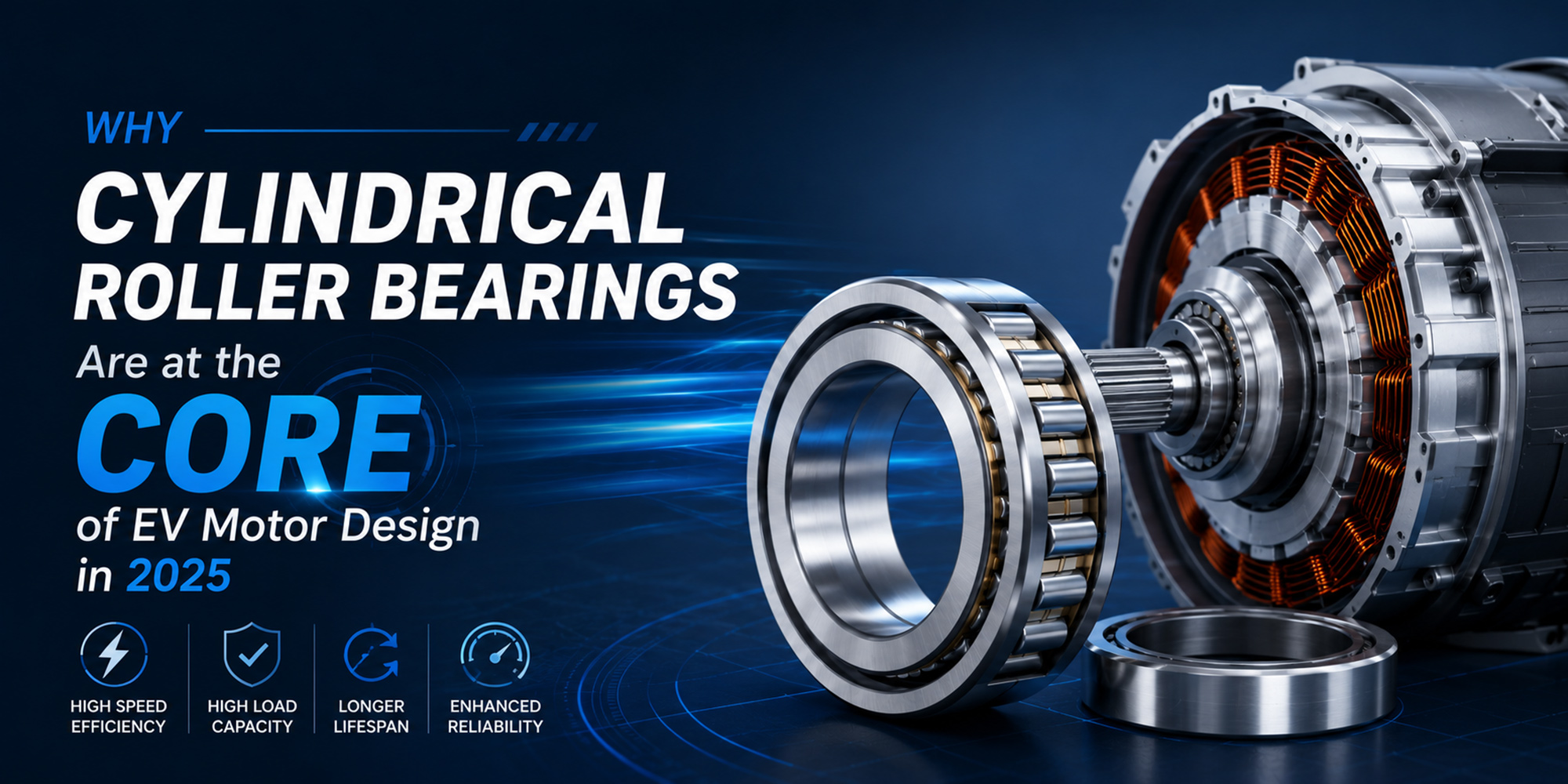
The rapid growth of electric vehicles created a new and urgent demand for ceramic bearings. Variable Frequency Drive (VFD) inverters used in EV motors generate high-frequency electrical noise that induces bearing currents — tiny electrical discharges that create microscopic craters (fluting) on bearing raceways, leading to vibration, noise, and eventual failure.

The solution? Hybrid ceramic bearings. Because Si₃N₄ rolling elements have electrical resistivity exceeding 10¹³ Ω·cm, they interrupt the electrical circuit through the bearing, preventing discharge damage entirely. Every major EV manufacturer now specifies ceramic hybrid bearings in at least one motor bearing position.


Ultra-Precision Manufacturing

In semiconductor fabrication, aerospace component machining, and medical device manufacturing, the demand for sub-micron precision at high speed has pushed ceramic bearings into their most demanding applications yet. Modern ceramic hybrid spindle bearings routinely operate at DN values above 2 million, with temperature rise of less than 5°C — a level of performance impossible with steel bearings.

Industry

Application

Why Ceramic?

Key Benefit

Wind Energy

Gearbox planetary stages

WEC resistance + electrical insulation

3–5× longer gearbox life

Electric Vehicles

Traction motor bearings

Prevents bearing current fluting

Eliminates EDM damage

CNC Machining

High-speed spindles (30,000+ RPM)

Low density → low heat generation

Higher speeds, better surface finish

Semiconductor Mfg

Wafer handling, spindles

Dry-run, cleanroom compatible

Zero lubricant contamination

Medical Devices

Dental drills, surgical tools

Steam sterilization compatible

400,000+ RPM capability

Aerospace

Jet engine accessories, turbopumps

High-temp + cryogenic tolerance

Operates where no steel bearing can

Food Processing

Pumps, conveyors

Corrosion resistance, dry-run

No food contamination risk


Ceramic vs Steel: How Far We've Come

Looking back at the journey from 1960s laboratory samples to today's precision-engineered components, the performance gains are extraordinary. The table below illustrates just how dramatically the technology has evolved.

Parameter

Early Ceramic (1965)

Modern Hybrid Ceramic (2024)

Steel Bearing (2024)

Max DN Value

~400,000

>2,000,000

~1,000,000

L10 Fatigue Life

Unpredictable / minutes

3–5× steel baseline

Baseline (1×)

Temp Rise at Max Speed

Catastrophic

<5°C above ambient

15–25°C above ambient

Electrical Insulation

Partial (defect leakage)

Complete (>10¹³ Ω·cm)

None (conductor)

Cost Premium vs Steel

>2,000%

50–200%

0% (baseline)

Commercial Availability

Research only

Standard catalogue

Standard catalogue

Standards Coverage

None

ISO, ABMA, DIN

ISO, ABMA, DIN


The Future of Ceramic Bearing Technology

The evolution of ceramic bearings is far from over. As machinery becomes smarter, faster, and more electrified, ceramic bearing technology continues to advance on multiple fronts.

▶ Now Digital Integration & Smart Bearings

Embedding sensors into ceramic bearing assemblies enables real-time condition monitoring. Ceramic's electrical insulation simplifies sensor integration by eliminating bearing current interference.

▶ 2026–2028 Additive Manufacturing of Ceramic Components

3D printing of Si₃N₄ components is advancing rapidly. Custom near-net-shape ceramic bearing components with internal cooling channels are emerging from R&D labs.

▶ 2028–2032 Next-Gen Ceramic Composites

Si₃N₄ composites reinforced with carbon nanotubes or graphene platelets promise fracture toughness approaching steel while retaining full ceramic hardness. Early data shows 40–60% toughness improvements.

▶ 2030+ Hydrogen Economy Applications

Hydrogen compression and fuel cell systems demand bearings that resist hydrogen embrittlement — exactly where ceramic bearings excel. A major growth market for the decade ahead.

 Market Outlook

The global ceramic bearing market is projected to grow at a CAGR of 7–9% through 2030, driven by EV adoption, offshore wind expansion, and precision manufacturing growth. Asia-Pacific is the fastest-growing region, while Europe leads in wind energy applications.


Frequently Asked Questions

Q: When were ceramic bearings first commercially available?

The first commercial hybrid ceramic bearings appeared in catalogues around 1983–1985 from SKF and FAG, initially targeting aerospace and precision machine tool applications. Full commercial availability with standard lead times came in the mid-to-late 1990s.


Q: What is the most common ceramic material used in bearings?

Silicon nitride (Si₃N₄) accounts for over 90% of the ceramic bearing rolling element market. Its combination of hardness, fracture toughness, low density, and thermal stability makes it superior to all competing ceramics including alumina and zirconia for rolling contact applications.


Q: Why are ceramic bearings used in electric motors?

Variable Frequency Drives generate high-frequency bearing currents that cause 'fluting' damage in steel bearings. Si₃N₄ (resistivity >10¹³ Ω·cm) interrupts the electrical current path through the bearing, completely preventing this failure mode.


Q: How much more expensive are ceramic bearings than steel?

Modern hybrid ceramic bearings typically cost 50–200% more than equivalent steel bearings. However, when total cost of ownership is considered — extended service life, reduced maintenance, and avoided failure events — ceramic bearings often deliver positive ROI within 2–3 years.


Q: Do ceramic bearings need lubrication?

Hybrid ceramic bearings still require lubrication because the steel rings can wear without it. Full ceramic bearings are capable of dry-run operation in specific environments. The ceramic-to-steel interface in hybrid bearings requires less lubricant than steel-to-steel contact due to the harder, smoother ceramic surface.


Explore Our Ceramic Bearing Solutions

From hybrid Si₃N₄ bearings for wind turbine gearboxes to full ceramic bearings for cleanroom applications.

→ Request a Technical Consultation

https://www.lily-bearing.com


Corrosion-Resistant Bearings for Marine Use: A Coating Selection Guide

Corrosion-Resistant Bearings for Marine Use: A Coating Selection Guide

Stainless steel has a strong reputation for corrosion resistance — which makes it genuinely surprising when stainless steel bearings start failing...

Read More
Stainless Steel Bearing Seals & Lubricants: Selection Guide

Stainless Steel Bearing Seals & Lubricants: Selection Guide

Choosing the right grade of stainless steel is only the starting point. In food processing lines, offshore platforms, and chemical plants, the steel...

Read More
How Much Grease to Put in Bearings: SKF Formula & Fill Guide

How Much Grease to Put in Bearings: SKF Formula & Fill Guide

Getting bearing lubrication right comes down to one thing: using the right amount of grease—not too much, not too little. Too little and the bearing...

Read More