

Home/
Blog/
Spherical Roller Bearings in Wind Turbine Gearboxes: Challenges and Solutions

6 min read

Spherical Roller Bearings in Wind Turbine Gearboxes: Challenges and Solutions

Spherical Roller Bearings in Wind Turbine Gearboxes: Challenges and Solutions
13:14

Introduction: Why Bearings Make or Break a Wind Turbine

Wind energy has become one of the world's fastest-growing renewable energy sources, with global installed capacity surpassing 1,000 GW. But behind every megawatt of clean energy spinning into the grid lies a complex mechanical system where a single component failure can cost hundreds of thousands of dollars in downtime, repairs, and lost revenue.

Spherical roller bearings (SRBs) are among the most critical components in a wind turbine's drivetrain. Positioned inside the gearbox — the mechanical heart of the turbine — these bearings must endure decades of operation under extreme and constantly changing loads, all while spinning at high speed in remote, difficult-to-access locations.

Key Industry Statistics

This article provides a comprehensive engineering analysis of the challenges spherical roller bearings face in wind turbine gearboxes — and the solutions that modern engineers and bearing manufacturers have developed to overcome them. 


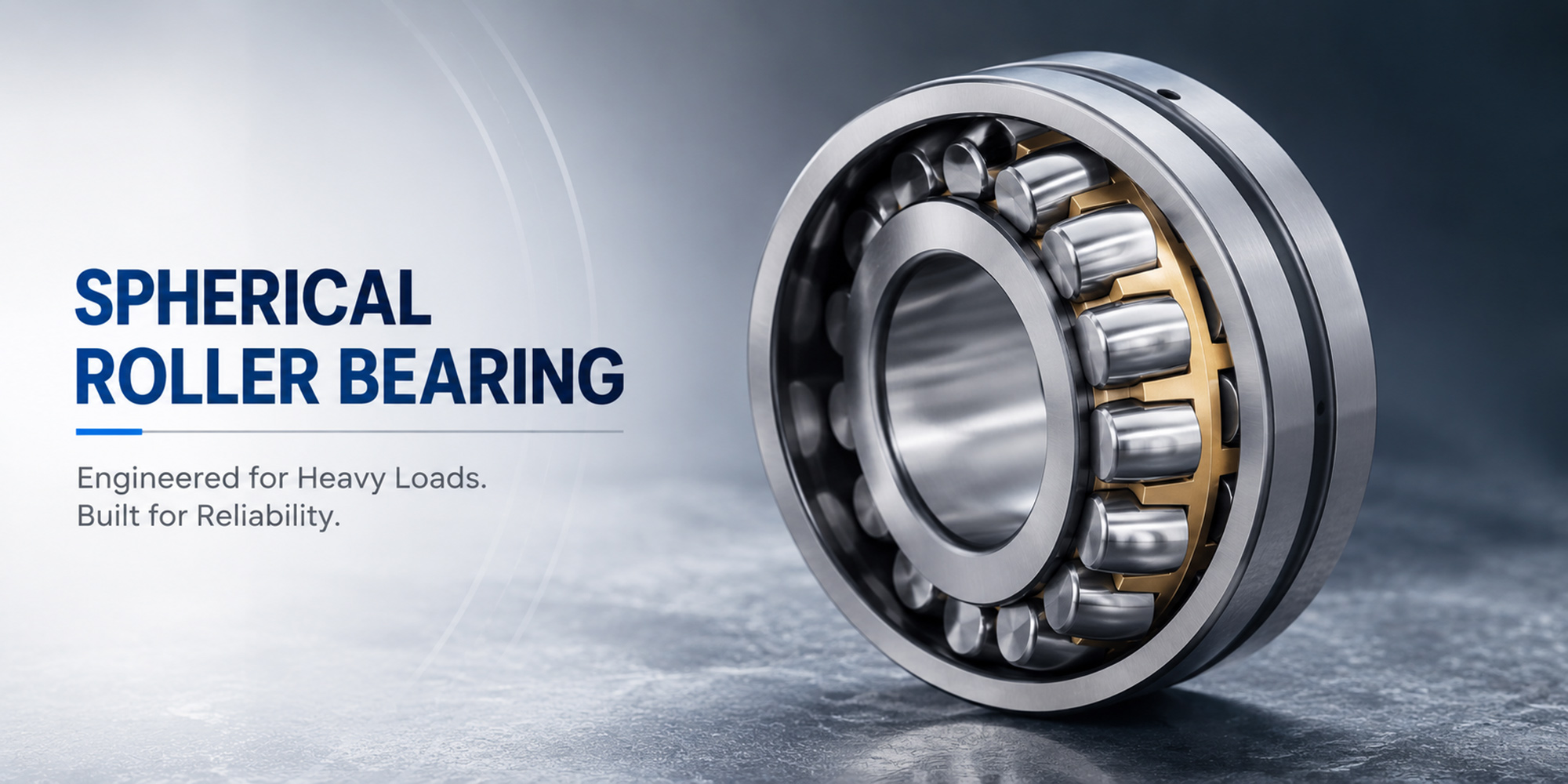
Anatomy of a Spherical Roller Bearing

Before diving into wind turbine applications, it's worth understanding what makes a spherical roller bearing unique. Unlike deep groove ball bearings or cylindrical roller bearings, SRBs feature a specific geometry that allows them to accommodate angular misalignment while carrying both radial and axial loads simultaneously.

Anatomy of a Spherical Roller Bearing


Key Structural Components

Component

Material

Function

Critical Spec

Outer Ring

Through-hardened 100Cr6

Fixed raceway; transmits load to housing

Spherical inner surface for self-alignment

Inner Ring

Through-hardened or case-hardened steel

Rotates with shaft; distributes load to rollers

Double-row raceway at ~25° contact angle

Barrel Rollers

High-carbon chrome steel or Si3N4

Transmit radial + axial loads

Barrel shape allows misalignment compensation

Cage / Retainer

Stamped steel, brass, or polyamide

Separates rollers; maintains even spacing

Must withstand centrifugal forces at high RPM

Seals / Shields

Nitrile rubber, PTFE, or steel

Retain lubricant; exclude contaminants

Critical in contaminated environments


 💡  Key Advantage: The spherical outer raceway allows the bearing to tolerate shaft deflections and housing misalignment of up to ±2.5° — a critical feature in wind turbine gearboxes where structural flexing under variable loads is unavoidable.


The Role of SRBs in Wind Turbine Gearboxes

A modern multi-megawatt wind turbine gearbox is a marvel of mechanical engineering. It takes slow rotor shaft rotation (typically 5–15 RPM) and amplifies it to 1,500–1,800 RPM for the generator — a gear ratio of 100:1 or more. Spherical roller bearings are deployed at multiple stages throughout this system.

multiple stages

In a typical 3-stage gearbox, SRBs are used predominantly in the first and second planetary stages, where radial and combined loads are highest. As speeds increase toward the generator, cylindrical roller bearings or tapered roller bearings are sometimes substituted — but SRBs remain dominant where misalignment tolerance is essential.


Key Engineering Challenges

Wind turbines operate in some of the harshest mechanical environments imaginable. Unlike industrial machinery running at consistent speeds and loads, wind turbines constantly change their operating conditions, creating a uniquely demanding set of challenges for their bearing systems.

Key Engineering Challenges


Challenge Severity Matrix

Challenge

Failure Mode

Frequency

Severity

Detectability

White Etching Cracks

Subsurface fatigue spalling

Very Common

CRITICAL

Very Low

False Brinelling

Surface indentation, pitting

Common

High

Moderate

Lube Degradation

Surface fatigue, scuffing

Common

High

Good

Electrical Pitting

EDM craters, fluting

Moderate

High

Moderate

Dynamic Overload

Subsurface cracks, spalling

Occasional

CRITICAL

Moderate

Contamination

Abrasive wear, corrosion

Common (offshore)

High

Good


Proven Solutions and Technologies

The bearing industry has responded to the wind energy sector's demanding requirements with a range of innovations, spanning materials science, surface engineering, lubrication chemistry, and digital monitoring technologies.


Advanced Steel Grades and Surface Treatments

Traditional through-hardened 100Cr6 steel remains the baseline, but leading manufacturers now offer carbonitrided steel grades that significantly improve resistance to WECs. The case-hardened layer absorbs subsurface stress differently, inhibiting crack nucleation.

1

Carbonitriding Heat Treatment

Creates a nitrogen-enriched surface layer that retards the phase transformation responsible for WEC formation. Increases bearing life by 2–4× in WEC-prone applications.

2

Black Oxide Surface Coating

Improves corrosion resistance and provides a sacrificial layer during run-in, reducing early-life surface distress and micropitting under mixed lubrication conditions.

3

Diamond-Like Carbon (DLC) Coatings

Extremely hard, low-friction coatings applied to roller surfaces. Proven to reduce smearing and adhesive wear under slip conditions during rapid load changes.

4

Ceramic Hybrid Bearings

Silicon nitride (Si₃N₄) rollers in steel rings offer electrical insulation, 40% lower density (reducing centrifugal loading), and superior hardness for contaminated environments.


Next-Generation Lubrication

The lubricant is the bearing's first line of defense. Advances in grease and oil formulation have dramatically extended service intervals and improved performance under the cyclic loading characteristic of wind turbines.

Lubricant Technology

Target Challenge

Performance Benefit

Application Stage

PAO Synthetic Base Oil + EP Additives

Film breakdown, thermal degradation

Stable viscosity across -30°C to +120°C

All stages

Anti-WEC Additive Packages

White Etching Cracks

Reduces WEC incidence by 60–80%

High-load stages 1 & 2

Ionic Liquid Additives

Wear and friction under slip

Tribofilm formation at low concentrations

Emerging / premium

Micropump Circulation Systems

Lubricant starvation, contamination

Continuous fresh oil supply; particle filtration

Offshore/large turbines


Electrical Isolation Solutions

To prevent EDM pitting caused by stray currents, engineers have developed multiple strategies. Ceramic (Si₃N₄) hybrid bearings provide inherent electrical insulation. Alternatively, aluminum oxide or zirconia-coated outer rings (insulated bearings) break the electrical circuit while maintaining conventional steel contact geometry.

 🔌  Best Practice: Always ground the generator shaft through a dedicated shaft grounding ring. Combine with at least one insulated bearing per shaft position to eliminate both axial current paths and loop currents in the drivetrain.


Condition Monitoring & Predictive Maintenance

Perhaps the most transformative development in wind turbine bearing management is the shift from time-based maintenance to condition-based and predictive maintenance (PdM). Advanced sensor arrays can now detect bearing faults weeks or months before catastrophic failure.

Monitoring Technology

Detection Capability

Lead Time

Implementation Cost

Vibration Analysis (MEMS)

Spalling, looseness, imbalance

4–12 weeks

Low–Medium

Acoustic Emission (AE) Sensors

Early micro-crack formation

8–20 weeks

Medium–High

Oil Particle Counters

Wear debris, contamination

6–16 weeks

Low–Medium

Thermal Imaging (IR)

Friction overheating, lube failure

1–4 weeks

Low

Digital Twin Models

Remaining useful life (RUL) prediction

Months to years

High


Comparison: SRBs vs Other Bearing Types in Wind Turbine Gearboxes

While spherical roller bearings dominate wind turbine gearbox applications, engineers must sometimes choose between competing technologies. Here is how the main contenders compare:

Bearing Type

Radial Load

Axial Load

Misalignment

Speed

Best Position

Spherical Roller Bearing (SRB)

Very High

High (bidir.)

±2.5° (excellent)

Moderate

Stages 1 & 2, main shaft

Cylindrical Roller Bearing (CRB)

Very High

None / Low

Very Low (<0.04°)

High

Stage 3, high-speed shaft

Tapered Roller Bearing (TRB)

High

Very High

Low (<0.05°)

Moderate

Output shaft, axial-loaded pos.

Deep Groove Ball Bearing

Moderate

Moderate

Low (<0.1°)

Very High

Generator bearings

CARB Toroidal Bearing

Very High

None (float)

±0.5° + axial float

Moderate

Floating pos. (paired with SRB)


⚙️ Engineering Insight: The most robust gearbox designs combine a fixed-position SRB (handling both radial and axial loads) with a floating CARB or CRB bearing. This accommodates thermal shaft expansion while ensuring precise axial location at the fixed end.


Maintenance Best Practices for Wind Turbine SRBs

Even the best bearing will fail prematurely without proper maintenance. Wind turbines present unique maintenance challenges: they are often located in remote or offshore locations, and the cost of access can rival the cost of the parts themselves. This makes preventive maintenance ROI exceptionally high.

Maintenance Task

Interval

Method

Impact on Bearing Life

Oil Analysis (viscosity, particles, water)

Every 3–6 months

Inline sensor or lab sample

High (+30% life extension)

Vibration Signature Analysis

Continuous / monthly

Online CMS or portable analyser

Very High (avoids unplanned failures)

Oil Change / Top-Up

Annually or per oil analysis

Drain-and-fill with approved grade

High

Filter Replacement

Every 6 months

Differential pressure indicator

Moderate

Alignment Check

At install & after major events

Laser alignment tool

High (prevents premature wear)

Shaft Grounding Inspection

Annually

Visual + resistance measurement

Moderate (prevents EDM damage)


Future Trends in Wind Turbine Bearing Technology

As turbine ratings climb above 15 MW for offshore platforms, and as the industry pushes to extend service life to 25–30 years, bearing technology must continue to evolve. Several key trends are shaping the future of spherical roller bearings in wind applications.

Future Trends in Wind Turbine Bearing Technology


Frequently Asked Questions (FAQs)


Q: How long should spherical roller bearings last in a wind turbine gearbox?

Modern SRBs in wind turbines are designed for a minimum L10 life of 175,000 hours (approximately 20 years) at rated load. However, actual service life varies significantly based on operating conditions, maintenance quality, and the presence of failure-accelerating factors like WECs or contamination. With best practices, 25+ year lives are achievable.


Q: What is the most common bearing failure mode in wind turbine gearboxes?

White Etching Crack (WEC)-related premature spalling is consistently cited as the single most prevalent and economically damaging failure mode, accounting for a large share of unplanned gearbox replacements. It is often triggered by a combination of hydrogen embrittlement, lubricant additive chemistry, and dynamic loading conditions.


Q: Can spherical roller bearings handle the axial loads in a wind turbine?

Yes. Double-row SRBs are capable of handling bidirectional axial loads in addition to high radial loads. The typical design contact angle (around 25°) provides meaningful axial load capacity. For positions with extreme axial loading, tapered roller bearings or paired angular contact bearings may be preferred, but SRBs handle most gearbox positions effectively.


Q: What lubrication viscosity grade is recommended for wind turbine gearboxes?

Most wind turbine OEMs specify gear oils with ISO VG 220 to VG 320 viscosity grades for the main gearbox. The specific recommendation depends on operating temperature range, turbine model, and the gearbox manufacturer's specifications. Always refer to the turbine OEM's maintenance manual and use lubricants that carry OEM approval certifications.


Q: How do you prevent electrical pitting on wind turbine gearbox bearings?

The most effective strategy combines shaft grounding rings (which provide a low-resistance discharge path bypassing the bearings), insulated bearing designs (ceramic-coated outer rings or full ceramic hybrid bearings), and regular resistance testing. For new turbine designs, insulated bearings on at least one position per shaft are now considered standard practice.


Q: Are spherical roller bearings used in the main shaft (outside the gearbox) of wind turbines?

Yes. Large double-row SRBs or specially designed main shaft bearings are commonly used on the rotor main shaft to support the massive cantilever load of the rotor hub and blades. These bearings are particularly critical because they must operate at very low speeds under extremely high combined radial and moment loads, and are virtually impossible to access without a crane.


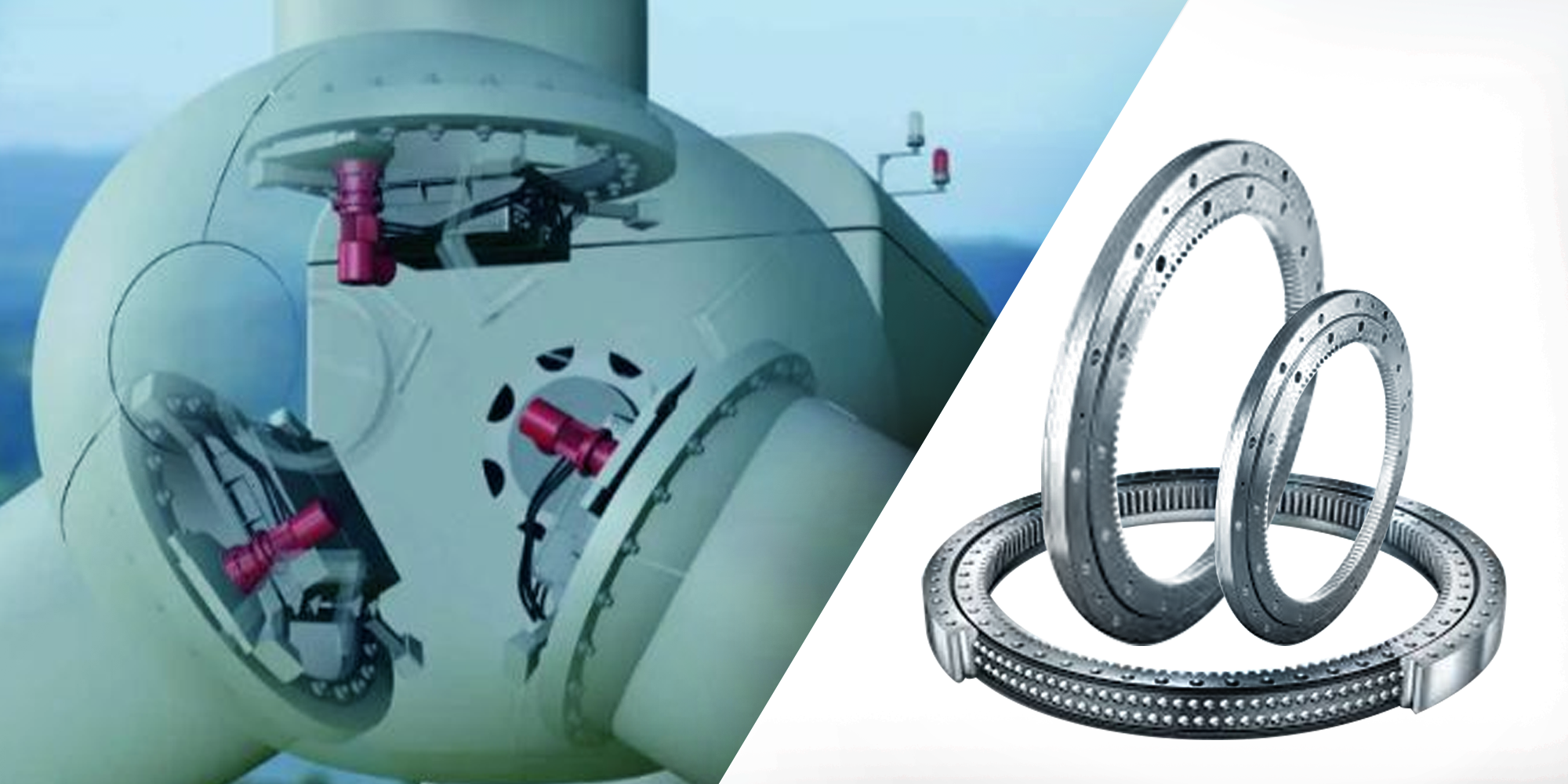
Wind Turbine Slewing Bearings: Pitch, Yaw & Selection Guide

Wind Turbine Slewing Bearings: Pitch, Yaw & Selection Guide

Wind turbines depend on precise, reliable rotation at every level — from individual blade angle adjustments to full nacelle orientation. The...
Read More
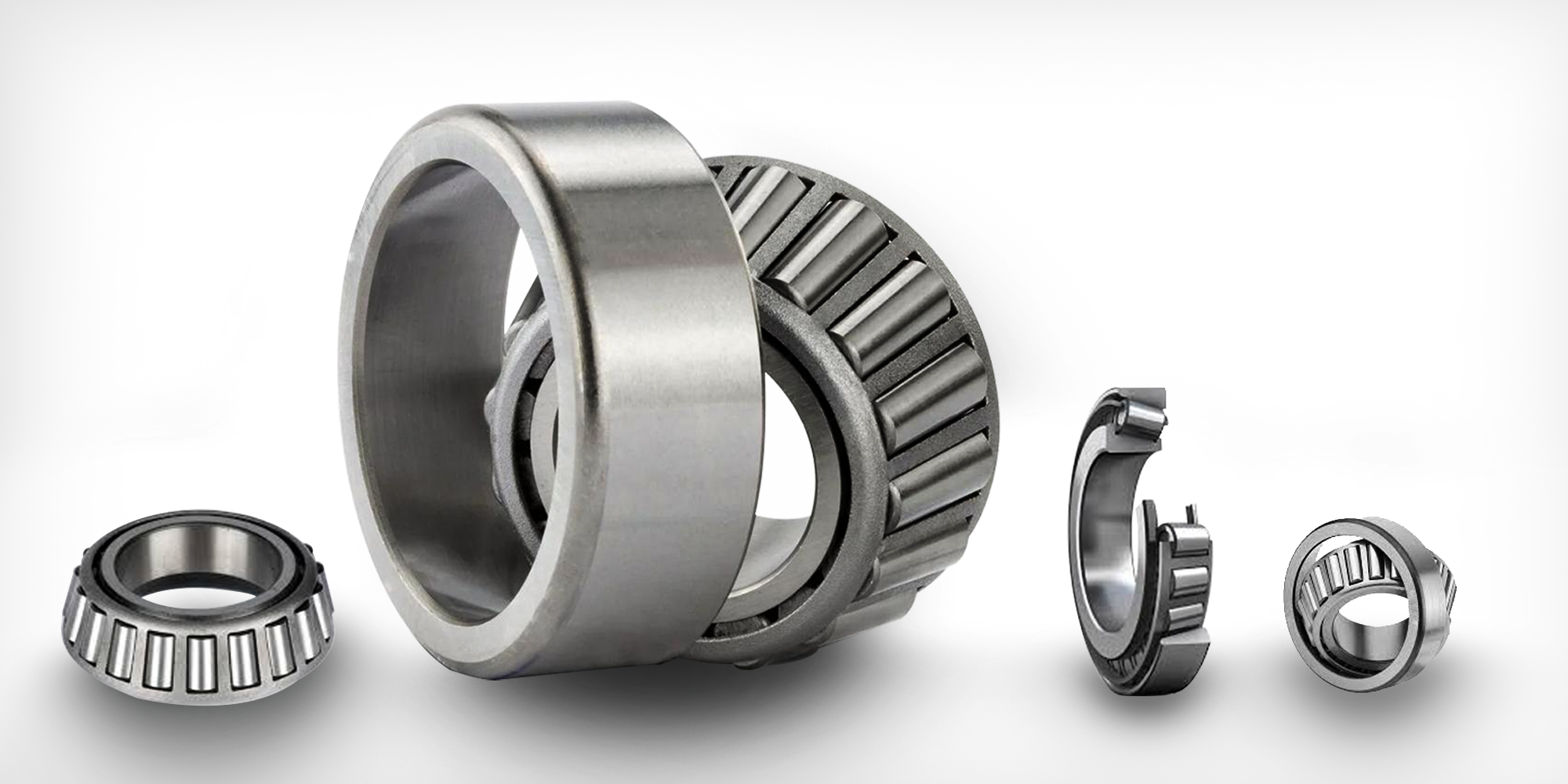
Single Row Tapered Roller Bearings from LYC & Wind Turbine Field

Single Row Tapered Roller Bearings from LYC & Wind Turbine Field

Not long ago, LYC developed a set of 16 MW platformwind power spindle bearings. The bearings have beenthe largest poweredwind power spindle...

Read More
Double-row Four-point Contact Ball Slewing Bearings Well Fostered Wind Turbines

Double-row Four-point Contact Ball Slewing Bearings Well Fostered Wind Turbines

As a major bearing manufacturer in China bearing industry, Lily Bearing is well-known for developing all sorts of sophisticated slewing bearings, one...

Read More