

Home/
Blog/
Industrial Chains and Sprockets: What You Actually Need to Know

5 min read

Industrial Chains and Sprockets: What You Actually Need to Know

Industrial Chains and Sprockets: What You Actually Need to Know
10:36

I've spent enough time around manufacturing floors to know that when a chain drive fails, everything stops.

And trust me, explaining to management why production is down because of a $50 sprocket gets old fast.

So let's talk about industrial chains and sprockets - not the textbook version, but what actually matters when you're dealing with these systems day to day.


The Basics

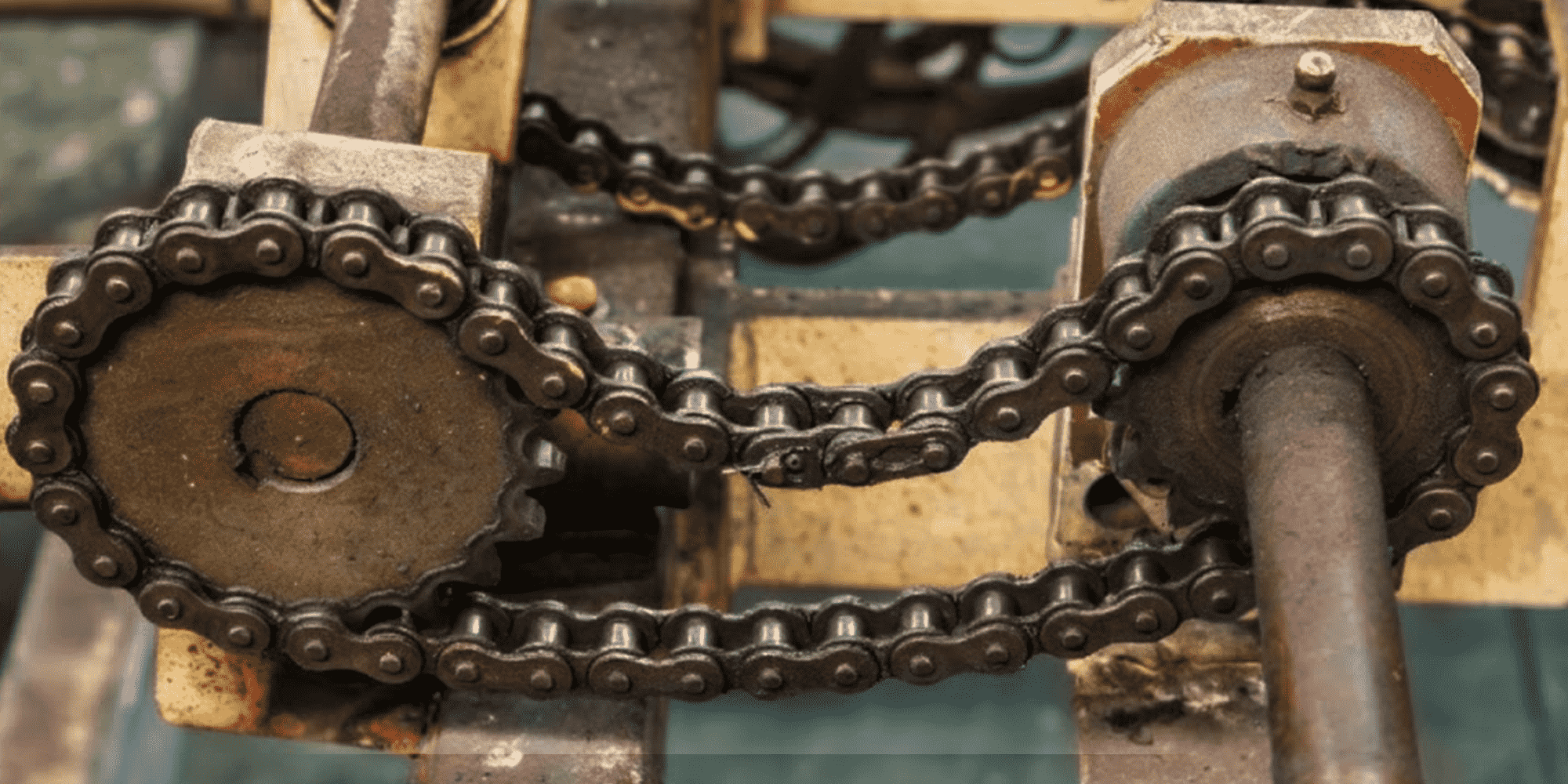
Here's what you're working with: chains and sprockets transfer rotational power from one shaft to another. Simple concept, but the devil's in the details.

Chains are basically metal links that connect together. The most common type is roller chain - you know, the kind with those cylindrical rollers between the plates. They're everywhere because they work, plain and simple.

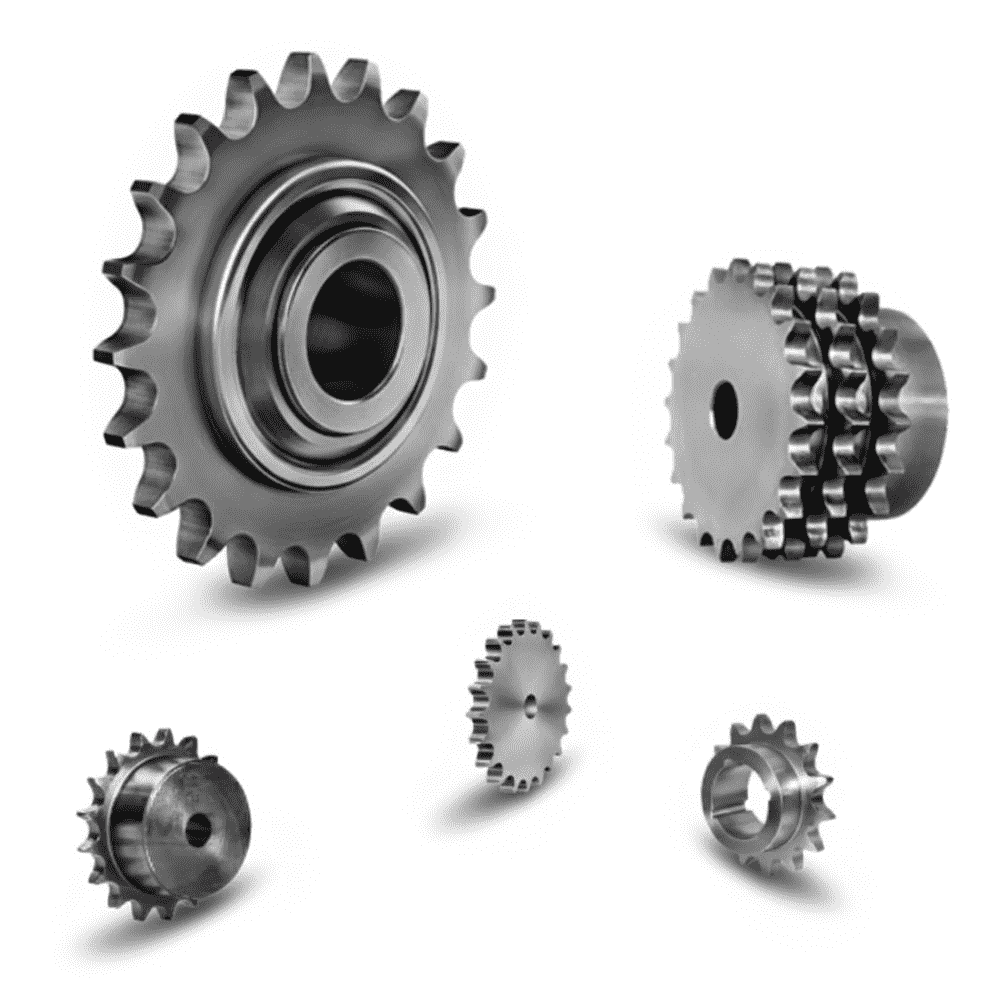
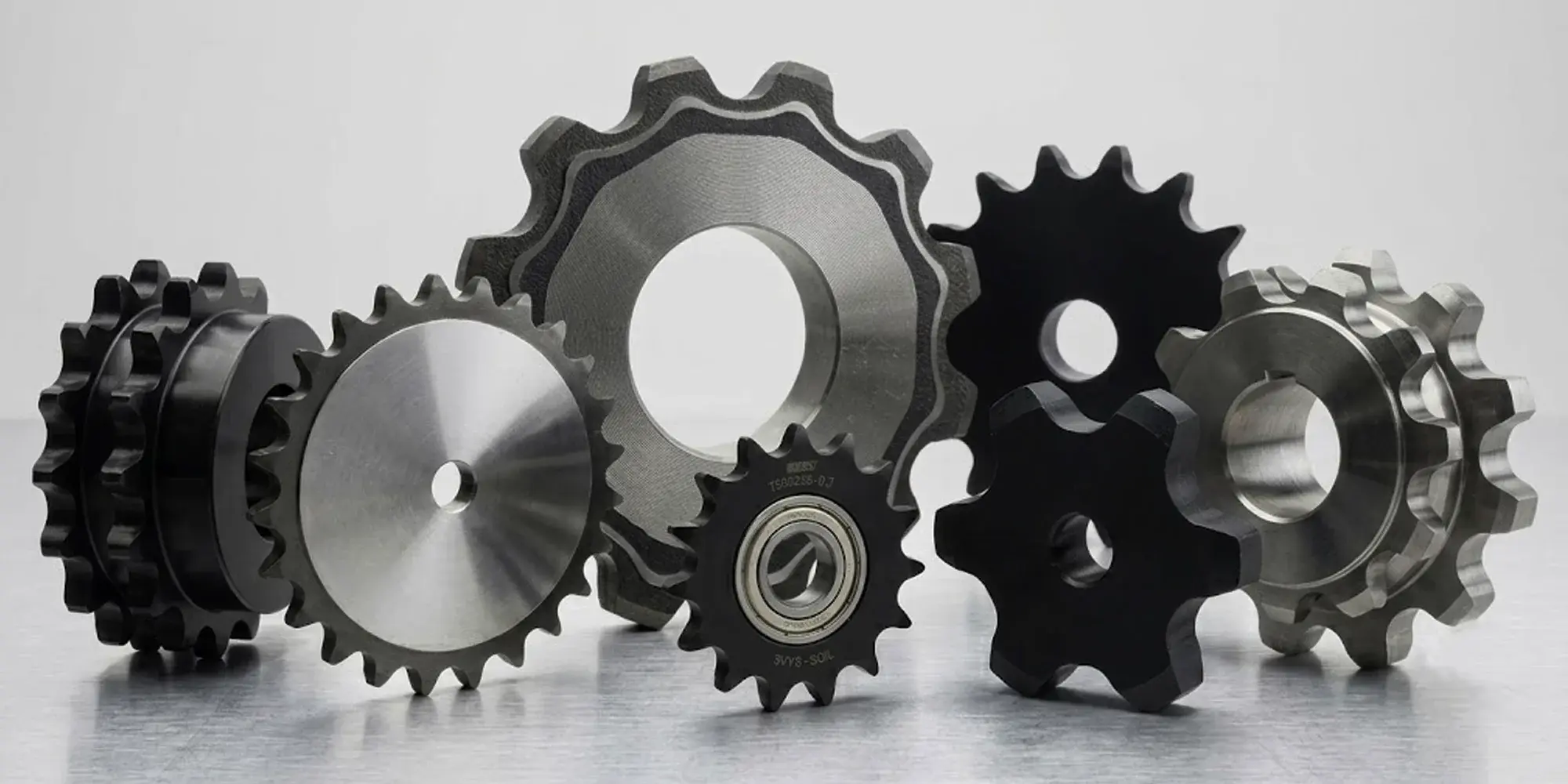
Sprockets are the toothed wheels that grab onto the chain. They're not gears (even though people mix them up constantly). Gears mesh with other gears; sprockets only work with chains.

sprockets


Types of Chains 

Walk into any industrial facility and you'll run into a few main types:


Roller Chains - The Workhorses

These are your bread and butter. ANSI 40, 50, 60, 80 - those numbers you see stamped on chains? That's the size designation. Bigger number = heavier duty.

The beauty of roller chains is they're standardized under ANSI B29.1. Need to replace an ANSI 60 chain? Any supplier will have it. No custom ordering, no waiting weeks for parts.

For heavier loads, you've got double and triple strand options. Basically the same chain running parallel - more strands, more capacity. It's not rocket science.


Engineering Class Chains

These are beefier. Think conveyor systems moving tons of aggregate or coal.

Larger pitch, built to take abuse. Some have attachments welded on for carrying product directly.

I've seen these chains running in cement plants, covered in dust, operating in 100°F heat, still going strong after years. That's what they're built for.


Specialty Chains (When Standard Won't Cut It)

Sometimes standard chains just don't work:

  • Food processing? You need stainless steel or those weird self-lubricating chains because nobody wants oil dripping on food.

  • High heat environments? Regular chains will stretch and fail. Specialty alloys handle temperatures that would destroy standard chains.

  • Corrosive chemicals? Nickel-plated or plastic chains might be your only option.

These cost more, sometimes a lot more, but it's cheaper than replacing failed chains every month.


Types of Sprockets


The Hub Story

According to ANSI standards, sprockets fall into three categories based on hub design:

Type A

No hub at all, just flat. These are for welding onto custom assemblies or when you need to drill your own bolt pattern. Cheap and flexible.

Type A Sprocket

Type B

Hub on one side. This is what you'll see most often. Good enough for standard applications.

Type B Sprocket

Type C

Hubs on both sides. For when you need serious torque capacity and don't want any shaft movement.

Type C Sprocket

Bore Options

Plain bore sprockets come with a basic hole. You machine it to fit your specific shaft. More work upfront, but you get exactly what you need.

Finished bore sprockets are ready to go - pre-machined with keyways and set screws. Faster installation if the size matches your shaft.

QD and Taper-Lock bushings - these are actually pretty clever. The bushing tapers into the sprocket, creating a tight fit without set screws gouging your shaft. Makes installation and removal way easier, especially on larger sprockets.


Special Mentions


Split sprockets

Split sprockets are lifesavers in tight spaces.

You can install them without pulling the shaft.

I've used these on equipment where getting to the shaft would mean disassembling half the machine.


Smart Tooth sprockets

These sprockets have wear indicator pins built in.

When the pin becomes flush with the tooth, it's time to replace.

No more guessing or measuring with calipers.


Drum sprockets

These are wider to spread the load. Common in drag chain conveyors where you're pulling heavy material horizontally.


Where Industrial Chains and Sprockets Get Used


Food Plants

Sanitation is everything. You'll see stainless chains and sprockets, often those lube-free types.

Health inspectors don't care about your maintenance schedule - they care about contamination.


Mining and Aggregate

This is where chains take a beating.

Abrasive material, dust, moisture, heavy loads.

The chains I've seen pulled from these operations look like they've been through a war zone.

But good quality chains can still run for years in these conditions.


Automotive Assembly Lines

Precision matters here.

Timing chains in engines run at thousands of RPM.

Assembly line conveyors need to run smooth and consistent - you can't have vehicles jerking along the line.


Farms

Agricultural equipment is tough on chains. Combines, balers - they run in dirt, dust, and varying weather.

Maintenance happens in a barn with whatever tools are handy.

Reliability is crucial because downtime during harvest costs serious money.


How to Choose the Right Chain and Sprocket

This is where people mess up most often. A few things to actually pay attention to:


Load capacity

Don't just calculate the working load. What about startup torque? Shock loads?

Industry standard practice is to use a service factor between 1.0 and 3.0 depending on the application - smooth operation might be 1.0, heavy shock loads could need 2.5 or higher.

I've seen chains rated perfectly for steady-state operation fail within weeks because nobody accounted for the shock when the system starts.


Speed

High-speed applications need different considerations.

More precision, better lubrication, potentially lighter chains to reduce centrifugal forces.


Environment

Is it wet? Hot? Corrosive? Abrasive? This matters more than almost anything else.

I've replaced chains in corrosive environments that looked 5 years old after 6 months because someone spec'd regular carbon steel.


Maintenance access

Can you actually get to these chains for inspection and lubrication?

If not, maybe you need sealed chains or consider a different design.


Installation - Do It Right or Do It Twice

A few things I've learned the hard way:


Alignment is critical.

I mean check-it-with-a-straightedge critical. Misalignment will kill chains fast.

You'll see weird wear patterns on the plates, the chain will run hot, and it'll be noisy.


Tension matters.

Too tight and you're loading up the bearings unnecessarily.

Too loose and you get impact loading every time the slack section hits the sprocket.

Most manufacturers specify 2-3% sag in the slack span - follow those specs.


Don't put new chains on worn sprockets.

This is like putting new tires on bent wheels. The worn sprocket teeth will trash your new chain in no time.

If the sprocket teeth look hooked or pointed, replace them with the chain.


Lubrication isn't optional.

The interval depends on your application - high-speed drives might need daily lubrication, while slow-moving conveyors could go weekly or even monthly.

Check your manufacturer's recommendations and environmental conditions. Dry chains wear fast and fail faster.


Maintenance Essentials

Here's what actually catches chains before they fail catastrophically:


Listen to your equipment.

New noises mean something changed. Usually not for the better.


Check tension regularly.

Chains stretch as they wear. When elongation hits 3% of original length, they need replacement - this is the industry standard threshold.


Look at the teeth.

Sprocket teeth should have a relatively square profile. When they start looking like shark teeth, you're on borrowed time.


Watch for rust or corrosion. Even in dry environments, chains can rust. Rusty chains are weak chains.


Common Failure Modes

Chain elongation

Usually from poor lubrication or overloading. The pins and bushings wear, the chain gets longer, and eventually it starts climbing up the sprocket teeth.


Premature sprocket wear

Often from running new chains on old sprockets or vice versa. Or misalignment. Sometimes both.


Broken chains

Usually catastrophic failure from fatigue, overload, or foreign object impact. Not fun to deal with.


New Technology in Chain Maintenance

The Smart Tooth wear indicators I mentioned?

Those are legitimately helpful. Instead of pulling chains for inspection or measuring elongation, you just look at the pin.

When it's flush, order replacement parts.

Better materials and coatings are making chains last longer in nasty environments.

Specialized alloys, advanced surface treatments - this stuff actually works.

Some places are putting sensors on chain drives now.

Vibration monitoring, temperature sensors - it's predictive maintenance stuff.

Jury's still out on whether it's worth the cost for most applications, but in critical systems it makes sense.


Cost Considerations and ROI 

Yes, premium chains cost more. Sometimes double or triple the price of economy chains.

But here's the thing - in most industrial applications, downtime costs way more than the chain does.

According to industry data, unplanned downtime in manufacturing can run anywhere from $2,000 to $20,000+ per hour depending on the operation.

If a chain failure stops your production line and you're in that range, suddenly spending $500 instead of $200 on a chain seems pretty reasonable.

Especially if that better chain lasts twice as long.

Energy efficiency matters too.

Well-maintained chain drives operate at 95-98% efficiency, but neglected ones can drop to 85% or lower as friction increases.

Over a year of continuous operation, that efficiency loss adds up on your power bill.


Bottom Line

Chains and sprockets are simple technology, but simple doesn't mean easy.

Getting the selection right, installing correctly, and maintaining properly makes the difference between systems that run for years and ones that fail constantly.

If you're dealing with a standard application, stick with established brands and ANSI B29.1 standards.

If it's specialized, talk to suppliers who actually understand the application - not just salespeople reading from a catalog.

And for the love of everything mechanical, lubricate your chains.

It's the cheapest insurance you can buy.


What is a Sprocket? The 2026 Guide to Types, Uses, and Selection

What is a Sprocket? The 2026 Guide to Types, Uses, and Selection

A sprocket (or chainwheel) is a toothed wheel that meshes with a chain to transmit power between shafts without slipping. You'll find them on...

Read More
Si3N4 Ceramic Bearings & Electric Vehicle Industry

Si3N4 Ceramic Bearings & Electric Vehicle Industry

For the sake of environmental protection, the electric vehicle industry has been growing rapidly in recent years. The electric vehicles in China...

Read More
Top 10 Spring Manufacturers and Suppliers (2026)

Top 10 Spring Manufacturers and Suppliers (2026)

In my years as a mechanical engineer, I’ve learned that a spring is often the most deceptive component in a bill of materials. On a CAD model, it is...

Read More