

Home/
Blog/
How Are Springs Made? Your Technical Guide to Spring Manufacturing

4 min read

How Are Springs Made? Your Technical Guide to Spring Manufacturing

How Are Springs Made? Your Technical Guide to Spring Manufacturing
7:57

Turning a straight steel wire into a component that survives 10 million compression cycles isn't just a simple mechanical task.

It takes precision metallurgy—and a few engineering tricks that most people never see.

In this guide, we’ll pull back the curtain on how a professional spring manufacturer creates high-performance components that last.


Selecting Professional-Grade Spring Materials

You can’t build a premium part with "mystery metal."

We choose spring materials based on the specific load, temperature, and environment the part will face.

  • Music Wire (ASTM A228): The industry standard for high-tension small springs. It’s tough, reliable, and consistent.

  • Stainless Steel Springs: Usually 302 or 316 grade. We use these for medical devices or food-grade equipment where rust is a deal-breaker.

  • Chrome Silicon: If you're designing valve springs for a high-performance engine, this alloy is non-negotiable due to its heat resistance.

  • Specialized Alloys: For custom spring designs, we might use Phosphor Bronze (for electrical contacts) or Beryllium Copper (for non-sparking or non-magnetic environments).


The Spring Manufacturing Process: Step-by-Step


1. Coiling: Cold vs. Hot

Dimensional accuracy is locked in at the coiling machine.

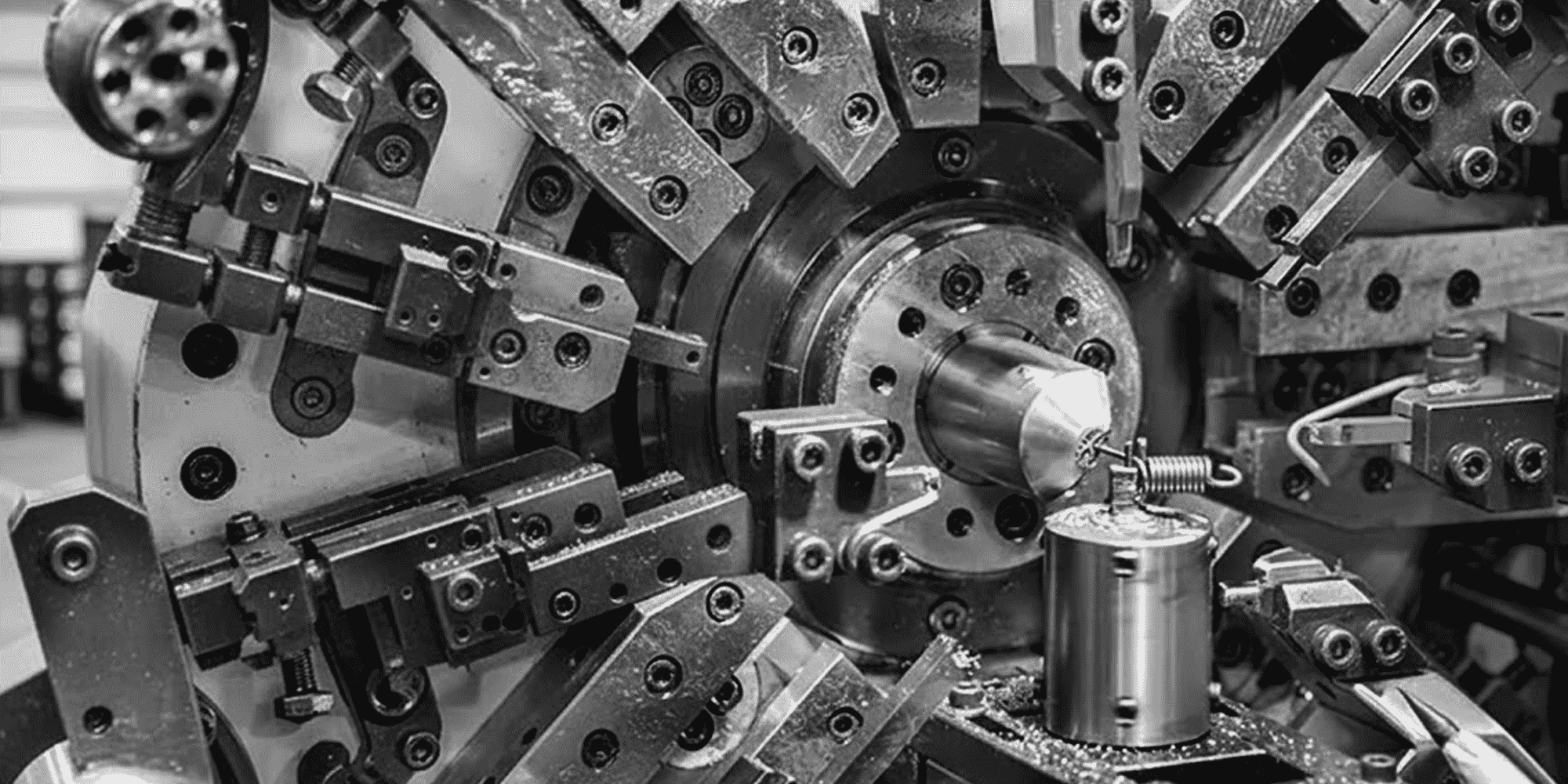
Cold Coiling: For wire diameters up to roughly 25mm (1 inch), CNC rollers deflect the wire at room temperature

Close-up of wire being deflected into a coil by a cold coiling machine

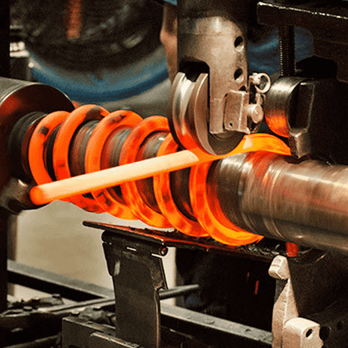
Hot Coiling: For massive industrial springs, we heat the steel to approximately 1700°F (925°C). Once it’s glowing red and malleable, we wrap it around a mandrel.

Hot coiling machine winding a heated steel bar into a large diameter spring

2. Cutting to Length

As the wire reaches the final coil, it is cut to length.

In a high-speed production run, small wire is mechanically sheared in milliseconds—modern CNC coilers can produce up to 100 springs per minute at this stage.

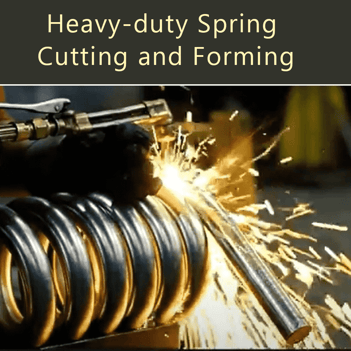
For heavy-gauge bars, we use precision saws to ensure the ends are clean and free of burrs that could lead to stress fractures later in the field.

Heavy-duty spring cutting and forming

3. Stress Relieving (Heat Treatment)

Coiling forces the metal into a shape it doesn't want to be in.

If you skip heat treating, you’re basically making an expensive paperweight—it will snap or deform under the first real load.

We pass the parts on a conveyor belt through an oven (usually between 500°F and 750°F).

This allows the molecular structure to "relax" and stay in its new shape.


4. End Grinding for Stability

For compression springs, stability is everything.

We grind the ends ground flat so the spring stands perfectly square.

If the ends are off by even a few degrees, the spring will buckle, leading to uneven wear on your equipment.

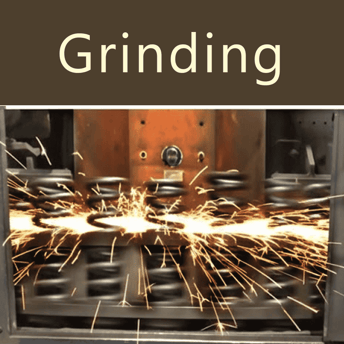
To ensure the spring stands perfectly flat and distributes load evenly, the ends are precision-ground.

As shown in the image, specialized grinding machines flatten the wire ends, a process that creates a shower of sparks as the metal is smoothed.

A spring grinding machine flattening the ends of heavy-duty compression springs with visible sparks

5. Shot Peening for Fatigue Life

This is where we add real value. We blast the metal springs with tiny steel shots to create a layer of compressive stress on the surface.

Shot peening can increase the fatigue life of a spring by 30% to 50%.

  • Real-World Tip: I once saw a client’s mining equipment downtime drop by 40% simply by adding a proper peening cycle to their "budget" springs. Small step, huge impact.


6. Setting and Quality Testing

We compress the spring to its "solid height"—where all coils touch—several times.

This "sets" the spring so it won’t lose its free length after it’s installed.

We then test the load at specific heights to ensure the spring manufacturing process met the exact tolerances.


7. Powder Coating: Protection That Moves

For outdoor or corrosive environments, powder coating is the professional choice.

Unlike standard paint, it provides a flexible, durable shield that moves with the coils without flaking.

  • Standard Performance: A quality coating provides 1000+ hours of salt spray resistance (per ASTM B117 testing).

  • Customization: It allows you to match specific RAL color codes for branding.

  • Expert Insight: Many OEM applications skip coating for cost, but for field equipment, it's cheap insurance against rust and premature failure.

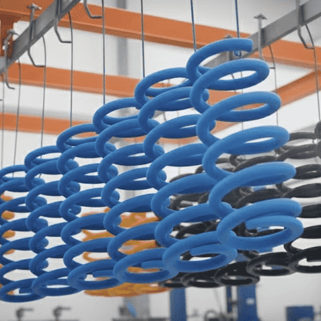
Industrial spring powder coating line showing rows of blue, yellow, and black compression springs on an automated conveyor


Common Types of Springs and Their Manufacturing Challenges

Now that you understand the universal manufacturing process, let's look at how these steps vary for different spring types.

Each spring type requires unique tooling and post-coiling operations.

Here's what changes on the production floor:


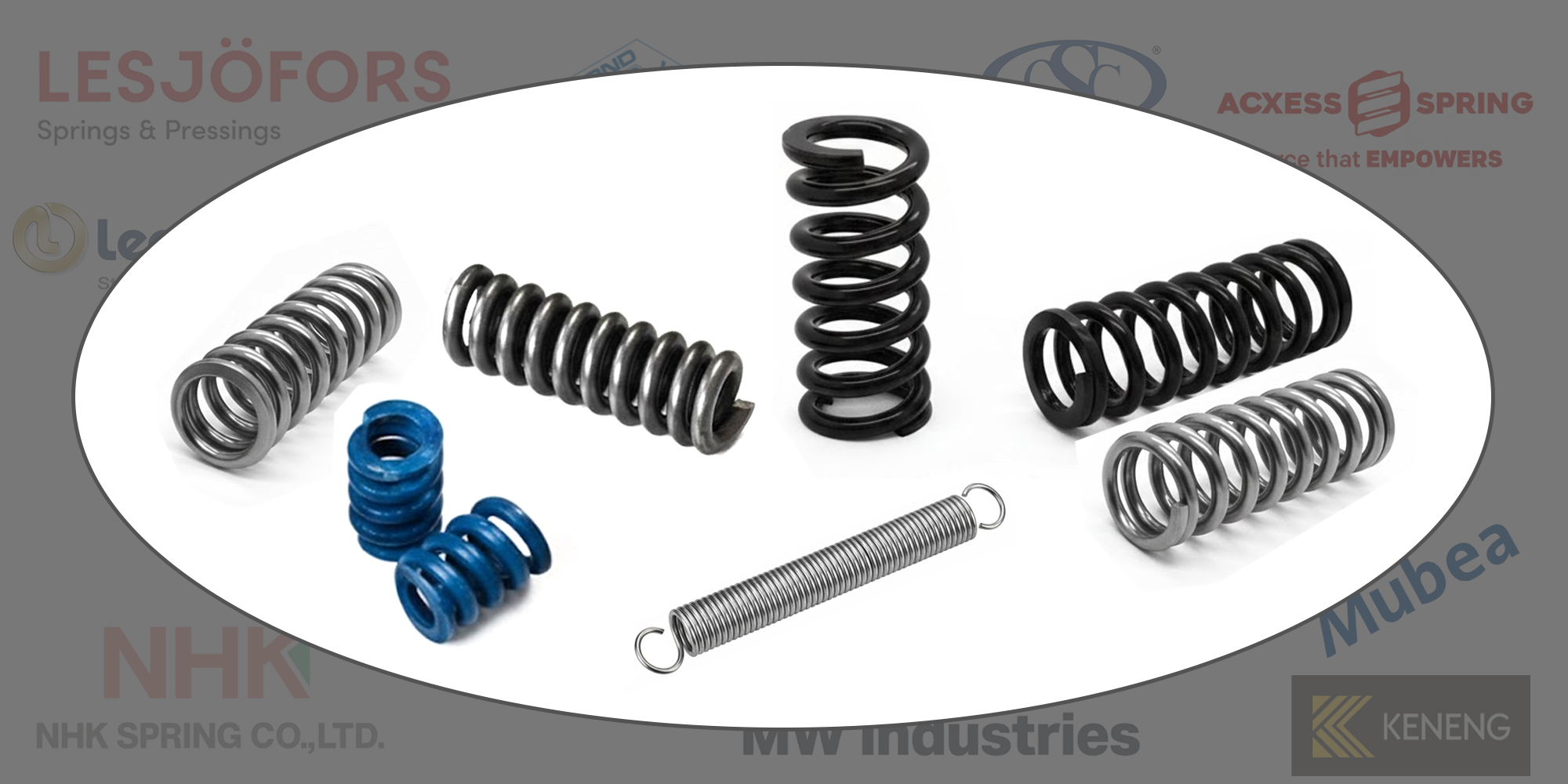
Compression Springs: The End-Grinding Challenge

The most common type of spring, but also the most demanding on grinding equipment.

Compression Springs

Manufacturing Focus:

  • End Configuration: Most applications require the final 12 coils to be ground flat (closed and ground ends) so the spring stands perfectly square. This requires horizontal or vertical grinders depending on wire diameter.

  • Pitch Control: Unlike extension springs, compression springs need precise spacing between coils. CNC coilers must maintain consistent pitch across hundreds of coils in a production run.

  • Presetting Requirements: Heavy-duty compression springs (like valve springs) must be compressed to solid height multiple times to prevent settling in service.


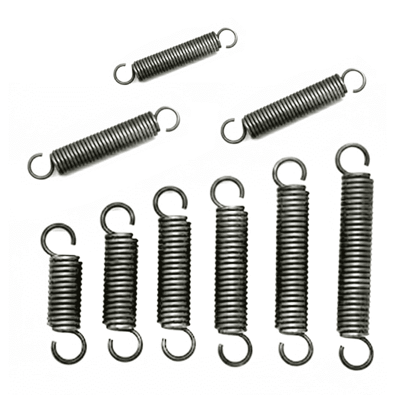
Extension Springs: Hook Formation Without Failure Points

Built to resist tensile loads, but the hooks are where most failures occur

if not formed correctly.

Extension Springs-2

Manufacturing Focus:

  • Hook/Loop Forming: After coiling, the ends must be bent into hooks or loops. This is a secondary operation that requires specialized tooling to avoid creating stress risers at the transition point.

  • Pre-Stress: Extension springs are often coiled with initial tension between coils. The coiling machine must maintain this "pre-load" consistently, or the spring will have uneven force characteristics.

  • Hook Inspection: We use optical measuring systems to verify hook angle and gapcritical dimensions that determine how the spring mounts in the assembly.


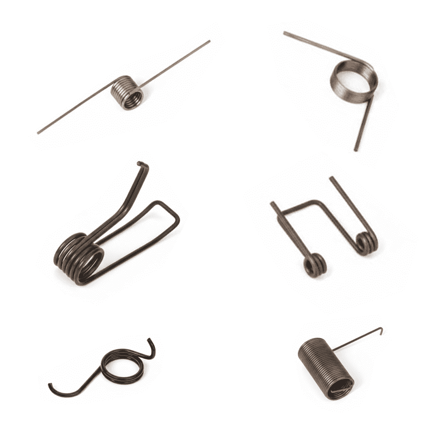
Torsion Springs: Leg Angles and Mandrel Challenges

These resist rotational forces, which means the "legs" (the straight ends)

must be positioned at exact angles.


Torsion Springs-2

Manufacturing Focus:

  • Leg Positioning: The CNC coiler must stop the wire at a precise rotational angle before forming the legs. A 5-degree error here can make the spring unusable in the final assembly.

  • Mandrel Size: Torsion springs are coiled around a mandrel, and the ID (inner diameter) must account for springback when the mandrel is removed. Experienced manufacturers adjust mandrel diameter based on material type.

  • Stress Direction: Unlike compression springs, torsion springs experience bending stress (not compressive). Heat treatment temperatures and durations may differ to optimize for this load type.

Spring Type

Main Challenge

Key Equipment

Common Failure

Compression

End flatness

Horizontal/vertical grinders

Buckling under load

Extension

Hook formation

Secondary bending tooling

Hook fracture

Torsion

Leg angle precision

Precision CNC

Leg misalignment


The Bottom Line: Why Manufacturing Quality Matters

Spring manufacturing is where metallurgy meets precision engineering.

From selecting the right alloy to the final shot peening cycle, each step determines whether your spring lasts 100,000 cycles or 10 million.

When choosing a manufacturer, look beyond price. A quality partner should provide:

  • Material traceability (proving that's actual Chrome Silicon, not generic steel)

  • CNC precision (tolerances within ±0.001")

  • Metallurgical expertise (suggesting the right alloy for your temperature range)

Ready to discuss your spring requirements? Contact us within 48 hours for priority engineering review.


Top 10 Spring Manufacturers and Suppliers (2026)

Top 10 Spring Manufacturers and Suppliers (2026)

In my years as a mechanical engineer, I’ve learned that a spring is often the most deceptive component in a bill of materials. On a CAD model, it is...
Read More
What Are Springs? Focusing on Industrial Springs

What Are Springs? Focusing on Industrial Springs

If you asked a child what a spring is, they’d probably point to a clicking pen or a trampoline. But in the world of heavy machinery and precision...

Read More
A Comprehensive Guide to Factors Affecting Spring Performance

A Comprehensive Guide to Factors Affecting Spring Performance

All precision spring manufacturers recognize that spring performance is a critical concern. If a spring lacks reliability, the equipment it supports...

Read More