

What Are Pillow Block Bearings? Types, Parts & How to Choose (2026)
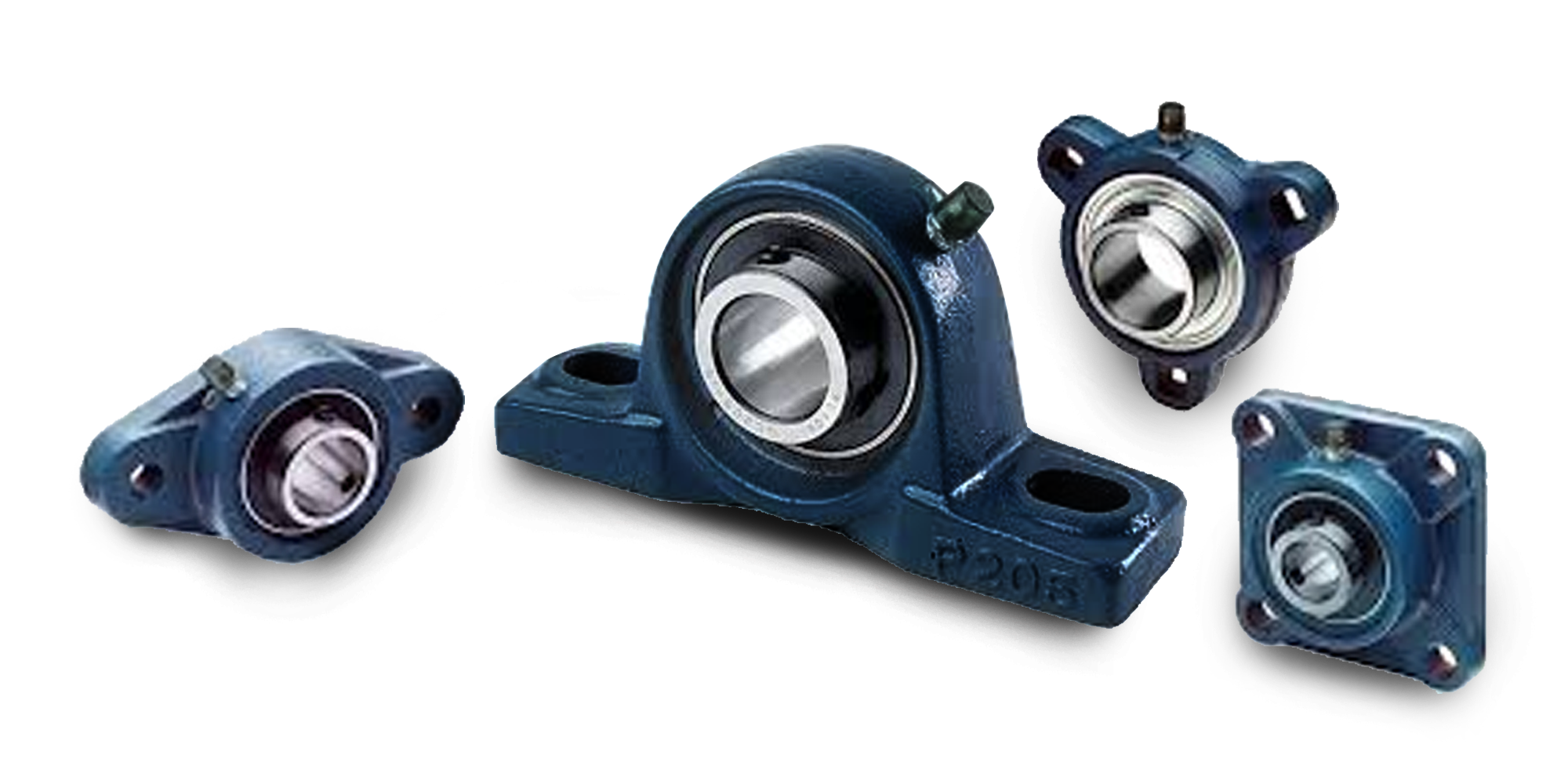
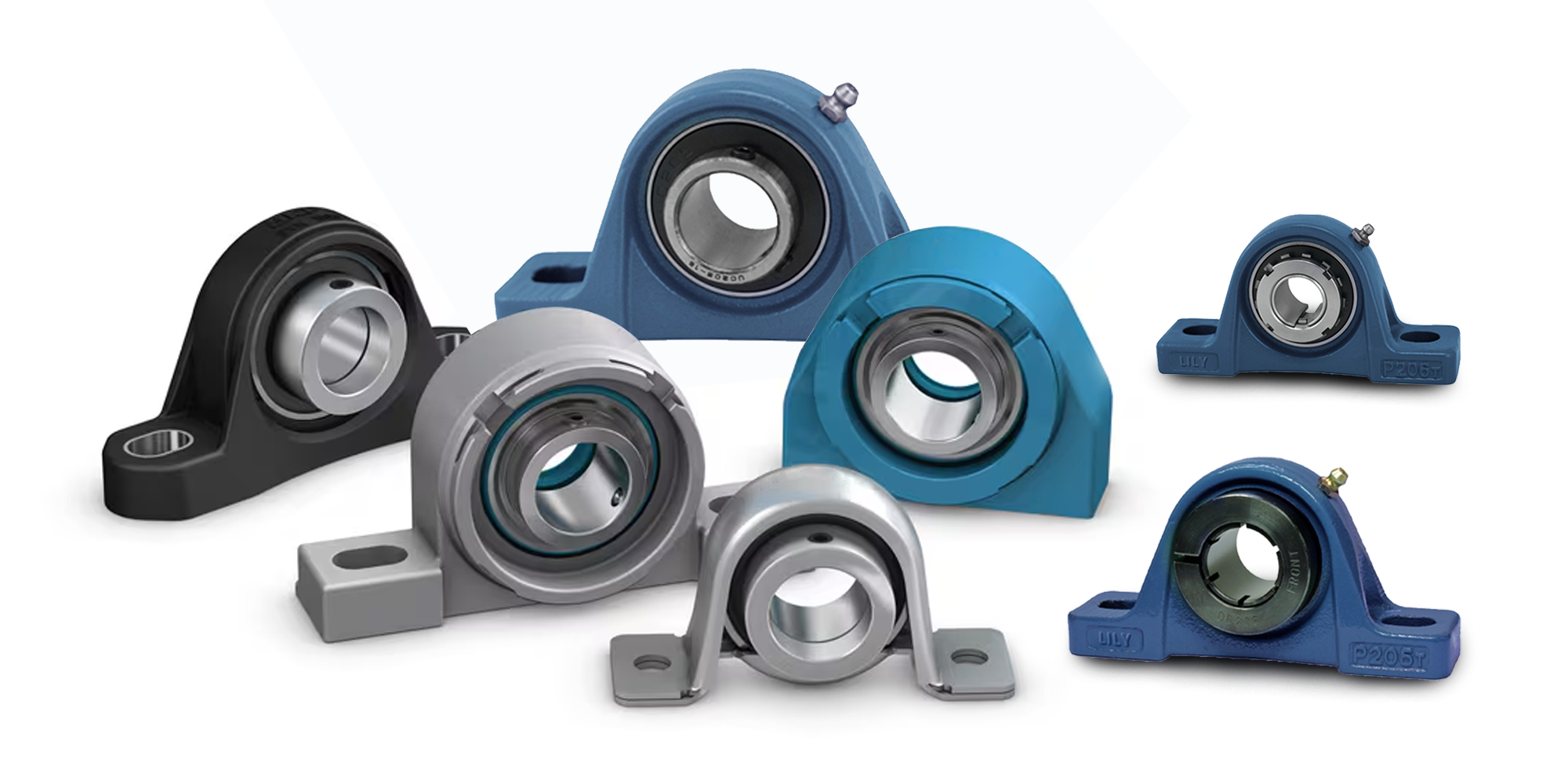
A pillow block bearing is a pre-assembled unit that mounts a bearing insert into a housing, ready to bolt directly onto a machine frame. Unlike...
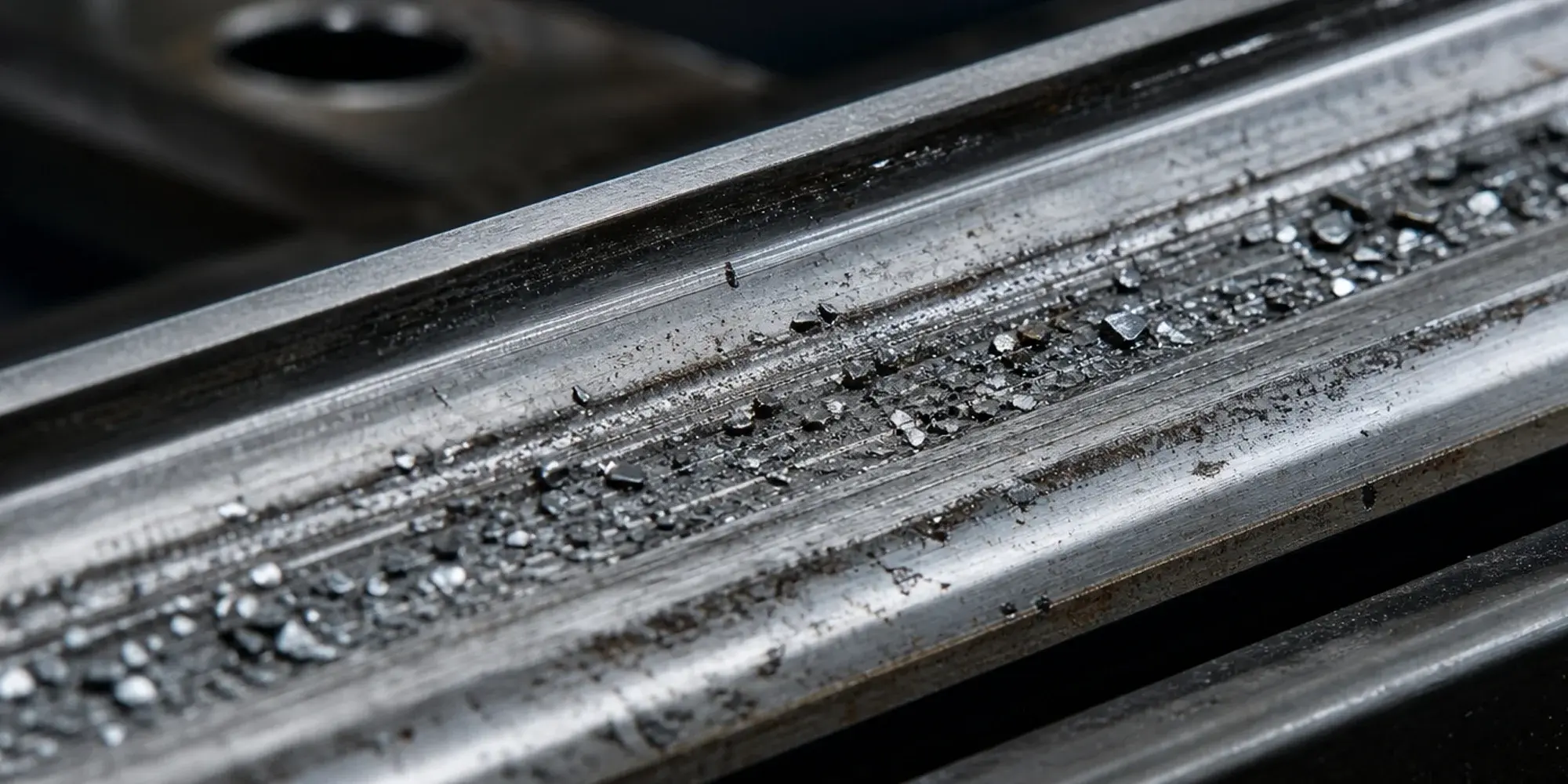
Proper lubrication is paramount for the optimal performance and extended lifespan of pillow block bearings.
Without it, these critical components are more prone to faster wear and higher friction — leading to early bearing failure, costly downtime, and reduced efficiency.
This guide offers practical tips for choosing the best grease for pillow block bearings, covering key lubrication properties, 15+ brand recommendations, and application techniques.
Need help selecting the right bearing unit first? Pillow Block Bearing Size Chart →
Quick Answer
For most bearings, NLGI 2 lithium complex grease with EP additives is the best starting point. It handles temperatures from −30°C to +140°C, resists water washout, and works across load ranges.
For food-grade, high-speed, or extreme-temperature applications, the answer changes — see the full breakdown below.
Choosing the right grease hinges on understanding a few critical technical parameters. Selecting the optimal lubricant ensures maximum protection and significantly extends bearing life.
Base oil viscosity determines the lubricant's film strength under different operating conditions.
The NLGI (National Lubricating Grease Institute) number indicates grease consistency, ranging from 000 (extremely fluid) to 6 (exceptionally hard).
NLGI 2 is widely recommended for most pillow block bearings — it offers an excellent balance of pumpability and retention across a variety of applications. Specific conditions may call for a different grade.
Consistency should not change unduly with temperature or mechanical work:
Grease formulations often include additives to enhance specific performance characteristics:
Understanding grease types by thickener is crucial for selecting the optimal lubricant for rolling element bearings:
Table 1: Common Grease Types by Thickener
| Grease Type | Key Performance Attributes |
|---|---|
| General Lithium-based | Excellent all-rounder: superior mechanical stability, water & oxidation resistance, rust prevention |
| Calcium-based | Reliable water & oxidation protection; good resistance to water washout |
| Complex Calcium-based | High-temperature & humid condition specialist; ideal for demanding environments |
| Calcium-Sodium-based | Balanced stability: good mechanical and colloidal stability |
| Sodium-based | Heat-resistant but water-sensitive; performs well under heat, lacks water resistance |
| Synthetic Sodium-based | Water-sensitive, heat-tolerant; not suitable for water exposure despite heat resistance |
Grease must maintain its lubricating properties across the full temperature spectrum encountered by the bearing.
Table 2: Grease Characteristics by NLGI Grade and Base Oil
| Feature | NLGI 2 (General) | NLGI 3 (Stiffer) | Synthetic (High Temp) | Mineral Oil (Standard) |
|---|---|---|---|---|
| Pillow Block Suitability | Excellent for general use | Good for vertical shafts, vibration | Excellent for high temps | Good for standard temps |
| High-Temp Environment | Good, limited by base oil | Good, limited by base oil | Superior thermal stability | Limited, prone to oxidation |
| Pumpability | Good | Moderate | Good across wide temp range | Varies with base oil viscosity |
| Cost | Moderate | Moderate | Higher | Lower |
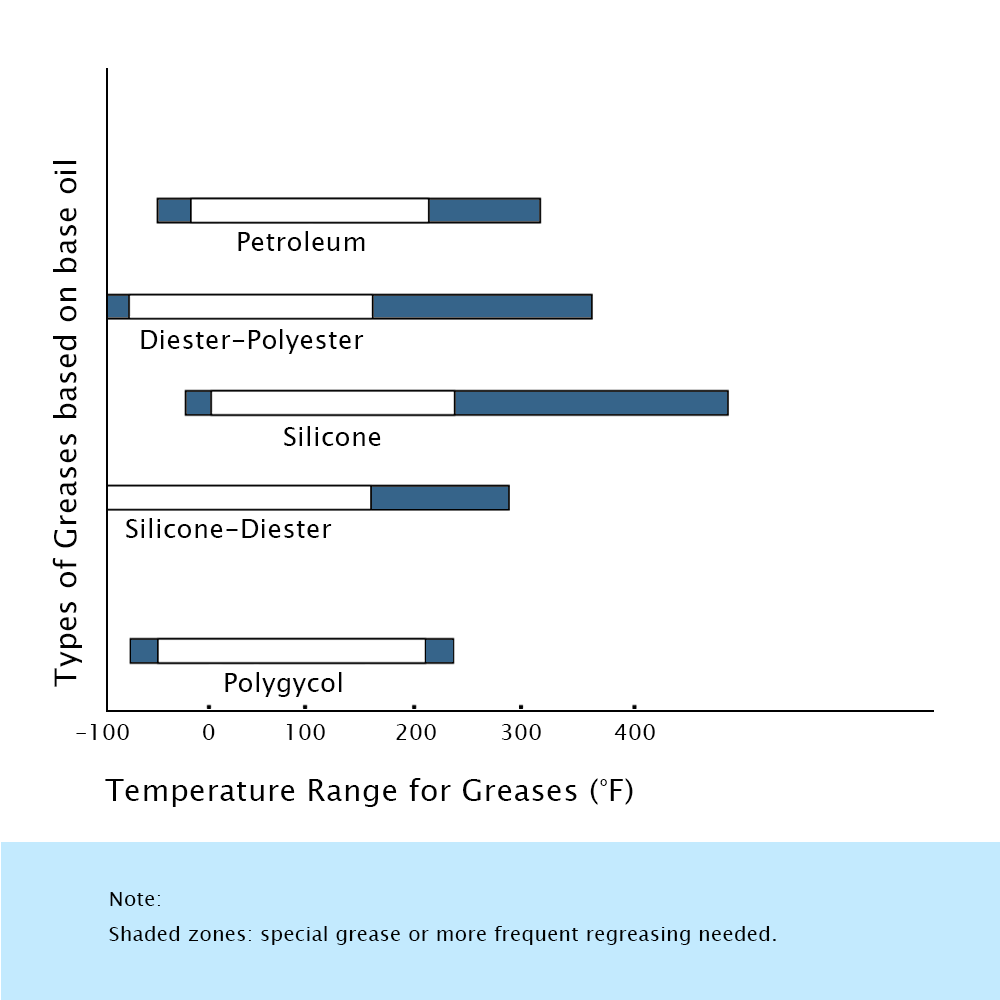
To visualize the temperature capabilities of different grease types by base oil:

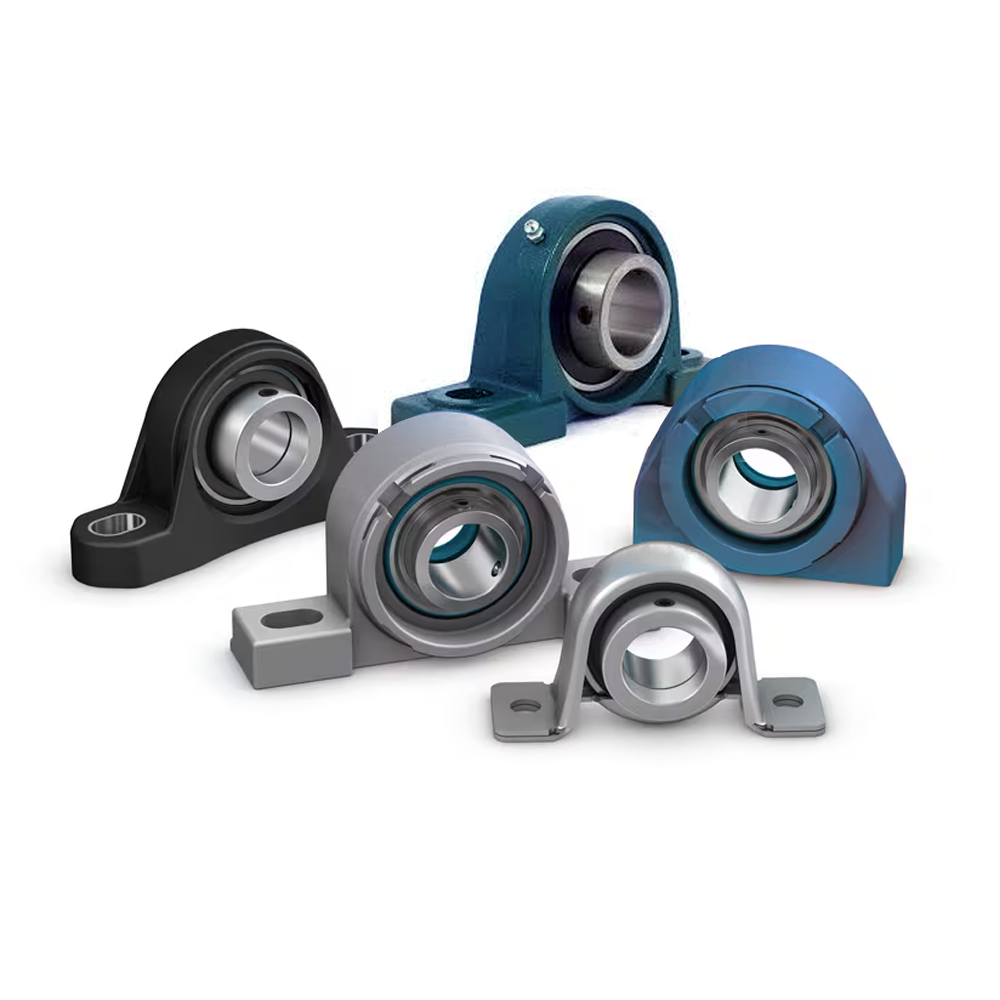
Pillow block bearings typically use ball or roller bearing inserts, so the grease requirements largely overlap. However, there are a few distinctions worth noting:
| Application | Grease Consideration |
|---|---|
| Pillow block (ball insert) | NLGI 2 lithium complex with EP additives; standard viscosity; focus on sealing and contamination resistance |
| Pillow block (roller insert) | Slightly higher viscosity base oil recommended to maintain film under higher radial loads; EP additives essential |
| Open roller bearings (non-housed) | Same EP and viscosity principles apply, but without the housing seal system — contamination management shifts entirely to grease type and re-lubrication frequency |
High-speed applications place unique demands on bearing grease. Churning, heat buildup, and oil separation become critical failure modes that standard NLGI 2 mineral grease may not adequately address.
Key Rule: As speed increases, switch to lower viscosity base oil and consider polyurea or synthetic (PAO/ester) thickeners for better thermal stability and reduced churning losses.
| Speed Range | Recommended Grease Type | Example Products |
|---|---|---|
| Standard (<3,000 rpm) | NLGI 2, mineral, lithium complex | SKF LGMT 2, Shell Gadus S2 V220 |
| Medium-High (3,000–10,000 rpm) | NLGI 1–2, polyurea or synthetic base oil | Chevron SRI Grease 2, Klüber BEM 41-141 |
| High (>10,000 rpm) | NLGI 1, synthetic PAO or ester base, polyurea thickener | NSK Clean Grease LGU, Klüber BEM 41-141 |
For HVAC fans and blowers using pillow block bearings, polyurea-thickened greases are the industry standard — they handle continuous rotation at elevated speeds while resisting oxidation over long re-lubrication intervals.
Speed and load interact directly in grease selection — heavier loads require higher viscosity even at elevated speeds. For load rating calculations, see our Load Capacity & Performance Analysis.
The table below organizes grease recommendations by manufacturer, detailing key properties to assist in your selection.
Table 3: Top Grease Recommendations by Manufacturer for Pillow Block Bearings
| Manufacturer | Grease Model | NLGI | Temp Range (°C) | Base Oil | Thickener | Color | Key Features |
|---|---|---|---|---|---|---|---|
| SKF | LGWA 2 | 2 | −30 to +140 (peaks +220) | Mineral | Lithium Complex | Amber | Excellent EP |
| SKF | LGFG 2 | 2 | −30 to +140 | White mineral | Aluminum Complex | Brown | Food grade; water resistance |
| SKF | VT307 | 000–00 | −25 to +80 | Mineral | Lithium | Brown | Semi-fluid |
| SKF | LGMT 2 | 2 | −30 to +120 | Mineral | Lithium | Amber | Oxidation stability |
| SKF | LGMT 3 | 3 | −30 to +120 | Mineral | Lithium | Amber | Stiffer consistency |
| Timken | Industrial Grease | 2 | −29 to +177 | Mineral | Lithium Complex | Red | Excellent EP |
| Timken | Automotive Grease | 2 | −40 to +177 | Mineral | Lithium Complex | Red | Superior wheel bearing protection |
| Timken | Rail Grease | 2 | −40 to +121 | Mineral | Lithium Complex | Dark Brown | Railway specific |
| Chevron | SRI Grease 2 | 2 | −29 to +177 | Mineral | Polyurea | Green | High temp stability |
| FAG | Arcanol | 2 | −30 to +140 | Mineral | Lithium Complex | Yellow / Brown | Optimized for Schaeffler bearings |
| Fuchs | Renolit CX-EP | 2 | −30 to +140 | Mineral | Calcium Sulfonate | Blue | Water resistance |
| Klüber | BEM 41-141 | 1/2 | −30 to +150 (short-term +180) | Synthetic (Ester) | Polyurea | Beige | High-speed bearings |
| Mobil | Mobilgrease XHP 222 | 2 | −20 to +140 | Mineral | Lithium Complex | Blue | Excellent water washout resistance |
| Molykote | Longterm 2 Plus | 2 | −25 to +110 | Mineral | Lithium soap | Black | High load, solid lubricants, anti-wear |
| Molykote | Multilub | 2 | −25 to +120 | Mineral | Lithium soap | Yellowish-Beige | EP additives, corrosion protection, medium-heavy loads |
| NSK | Clean Grease LGU | 2 | −30 to +130 | Synthetic (PAO) | Polyurea | White | Low dust generation; cleanroom environments |
| NSK | Clean Grease LG2 | 2 | −20 to +110 | Mineral | Lithium | Cream / Yellow | Low particle emissions, low torque, long life |
| Shell | Gadus S2 V220 AD2 | 2 | −25 to +130 (peaks +180) | Mineral | Lithium Complex | Red | High-performance EP; heavy duty; water resistant |
For a broader comparison of SKF, Timken, NSK, and other manufacturers across bearing product lines, see our Top Pillow Block Bearing Manufacturers in 2026.
Properly greasing pillow block bearings is as important as selecting the correct lubricant. Adhering to the right techniques ensures grease effectively protects the bearing, extending its lifespan and preventing premature failure. If you haven't yet fitted the bearing, see our step-by-step Pillow Block Bearing Installation Guide first.
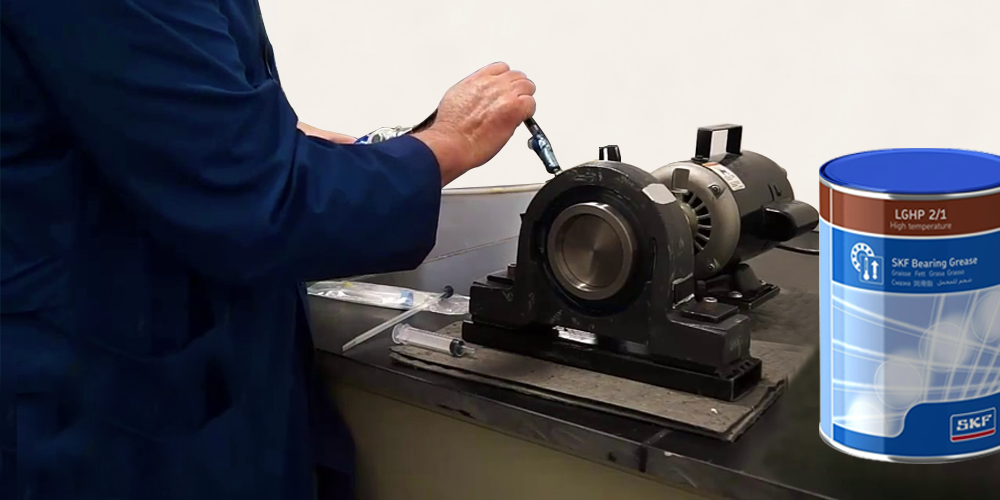
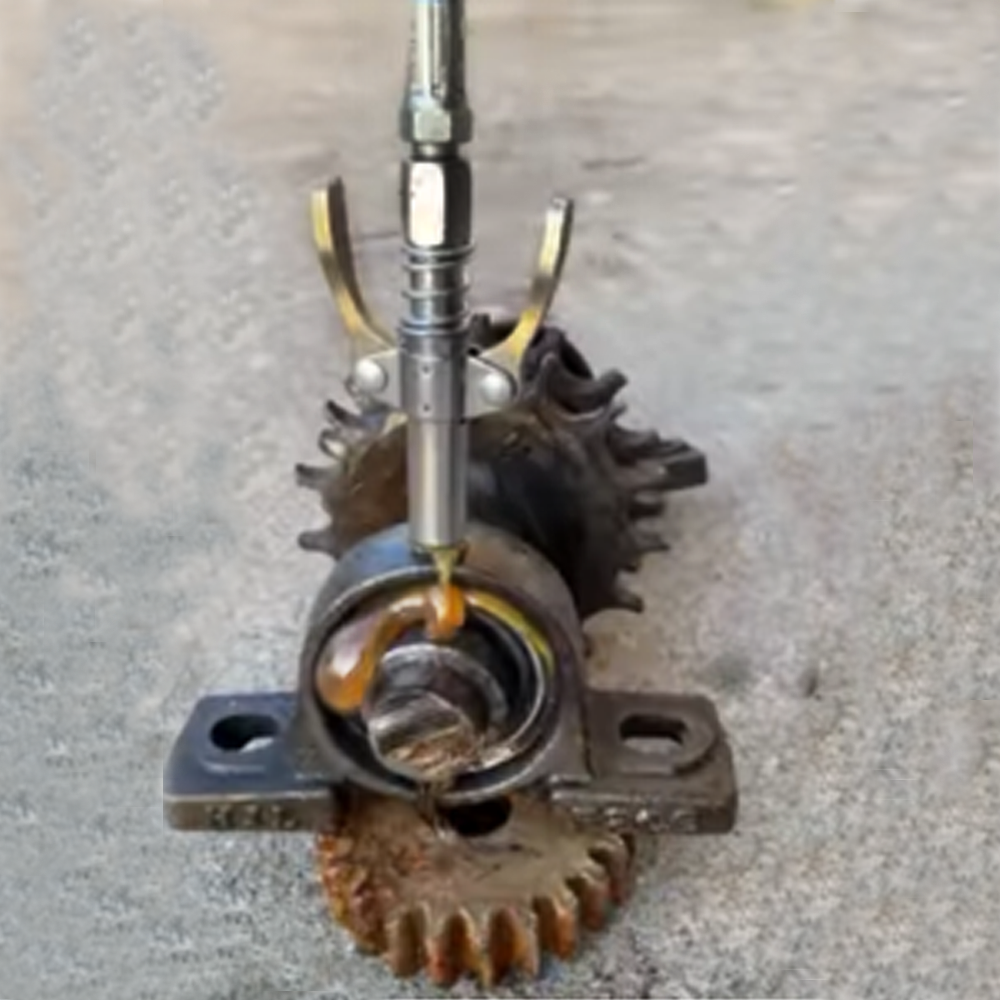
This method uses a grease gun and is the most common way to lubricate pillow block bearings across industries.
Over-greasing is a common mistake that can be as detrimental as under-greasing. Excess grease leads to:
General guidelines:
The frequency of lubrication depends on several factors:
Methods for determining frequency:
Table 4: Recommended Greasing Interval by Condition
| Environment | Operating Temp | Interval | Notes |
|---|---|---|---|
| Fairly Clean & Dry | 0°C to 49°C | 6–12 months | General purpose grease |
| 49°C to 71°C | 1–2 months | General purpose grease with good oxidation stability | |
| 71°C to 93°C | 1–4 weeks | Excellent thermal stability and oxidation resistance required | |
| Moderate to Extremely Dirty | 0°C to 93°C | 1–4 weeks | High purity grease with good contaminant purging ability |
| Heavy Moisture & Direct Water | 0°C to 93°C | 1 week | Superior water resistance and corrosion protection required |
| Very Low Temperature | Below 0°C to −40°C | Consult manufacturer | Specialized grease for cold environments (low-temp flowability) |
| Extreme Temperatures | Above 93°C or below −40°C | Consult manufacturer | Highly specialized grease or alternative lubrication (e.g., oil). May require different bearing type. |
Proper greasing also depends on having the right seals in place. If your bearing is losing grease faster than expected, worn seals may be the cause — see our Pillow Block Bearing Seals Guide for seal type selection.
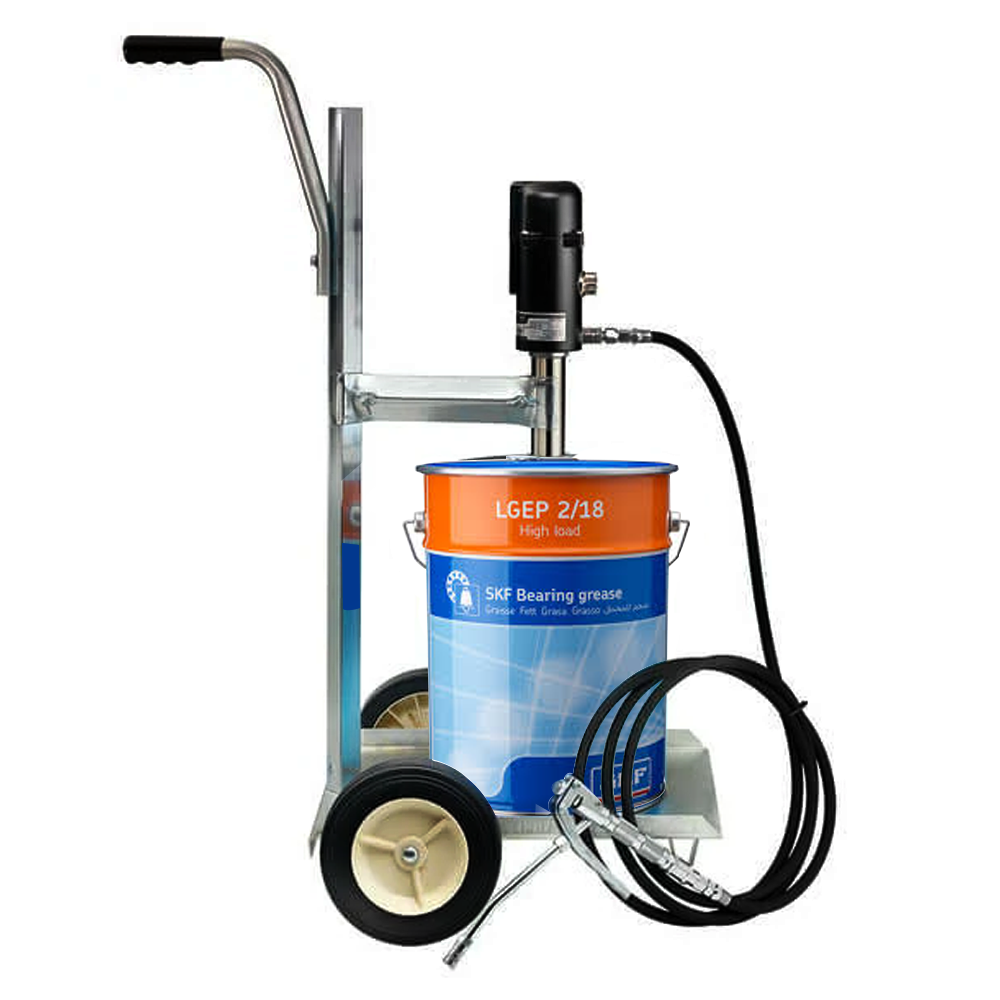
For extensive bearing arrays, complex machinery, or hazardous environments, centralized grease supply systems offer an efficient, precise, and automated lubrication solution. These systems use a pump to deliver metered grease to multiple lubrication points simultaneously.
Key advantages:

For most general-purpose bearings, NLGI 2 lithium complex grease with EP additives is the best starting point. It covers temperatures from −30°C to +140°C, resists water washout, and handles a wide range of loads. For food-grade applications, switch to an FDA-compliant aluminum complex grease (e.g., SKF LGFG 2). For high-speed bearings above 10,000 rpm, use a synthetic PAO or ester-based grease with a polyurea thickener.
NLGI 2 lithium complex grease with EP additives is the standard recommendation for most pillow block bearing applications. For demanding conditions — high contamination, elevated temperatures, or food processing environments — specific grease types are required. See the full recommendations table above for 15+ brand-specific options.
In clean, dry environments operating between 0°C and 49°C, re-lubrication every 6–12 months is typically sufficient. In dirty or wet conditions, this drops to 1–4 weeks. In dusty agricultural settings, re-greasing every 200 operating hours is standard. Always follow the bearing manufacturer's specific interval recommendations for your application.
Over-greasing is one of the most common causes of pillow block bearing failure. Excess grease causes churning, which generates heat that degrades the lubricant and accelerates wear. It can also build up pressure that blows out seals, allowing contaminants to enter. For re-lubrication, use the formula: 0.005 × D × B grams, where D is the outside diameter and B is the width of the bearing in millimeters.
No. Using the wrong grease can shorten bearing life significantly. Different applications require different base oil viscosities, NLGI grades, and additive packages. Mixing incompatible greases (e.g., lithium with calcium-sodium) can cause the thickener structure to break down, resulting in loss of lubrication. Always verify compatibility before switching grease types and purge old grease thoroughly if changing products.
Effective lubrication is crucial for maximizing pillow block bearing performance and lifespan. For most general uses, NLGI 2 grease with EP additives is the best starting point — it offers strong protection against wear and tear across a wide range of conditions.
Always consider specific operating conditions such as temperature extremes, high speed, or food-grade requirements to make the optimal choice. Proper lubrication will significantly cut downtime and extend machinery life. For a full overview of bearing types, materials, and sealing options, see our Complete Pillow Block Bearing Guide.
Browse Pillow Block Bearings →
A pillow block bearing is a pre-assembled unit that mounts a bearing insert into a housing, ready to bolt directly onto a machine frame. Unlike...
A linear bearing that's failing doesn't always give you much warning. Sometimes it starts with a subtle grinding sound at one end of the stroke. ...
Mounted bearings are pre-assembled units that combine an insert bearing (such as a ball or roller bearing) with a housing. They are designed to...