







What Are Springs? Focusing on Industrial Springs
If you asked a child what a spring is, they’d probably point to a clicking pen or a trampoline. But in the world of heavy machinery and precision...
In my years as a mechanical engineer, I’ve learned that a spring is often the most deceptive component in a bill of materials.
On a CAD model, it is a simple helix; in reality, it is a dynamic energy storage device where a 0.05mm deviation can shift your spring rate by 15%.
Much like selecting precision bearing manufacturers, finding a partner who hits tight tolerances while managing volatile lead times is the real challenge.
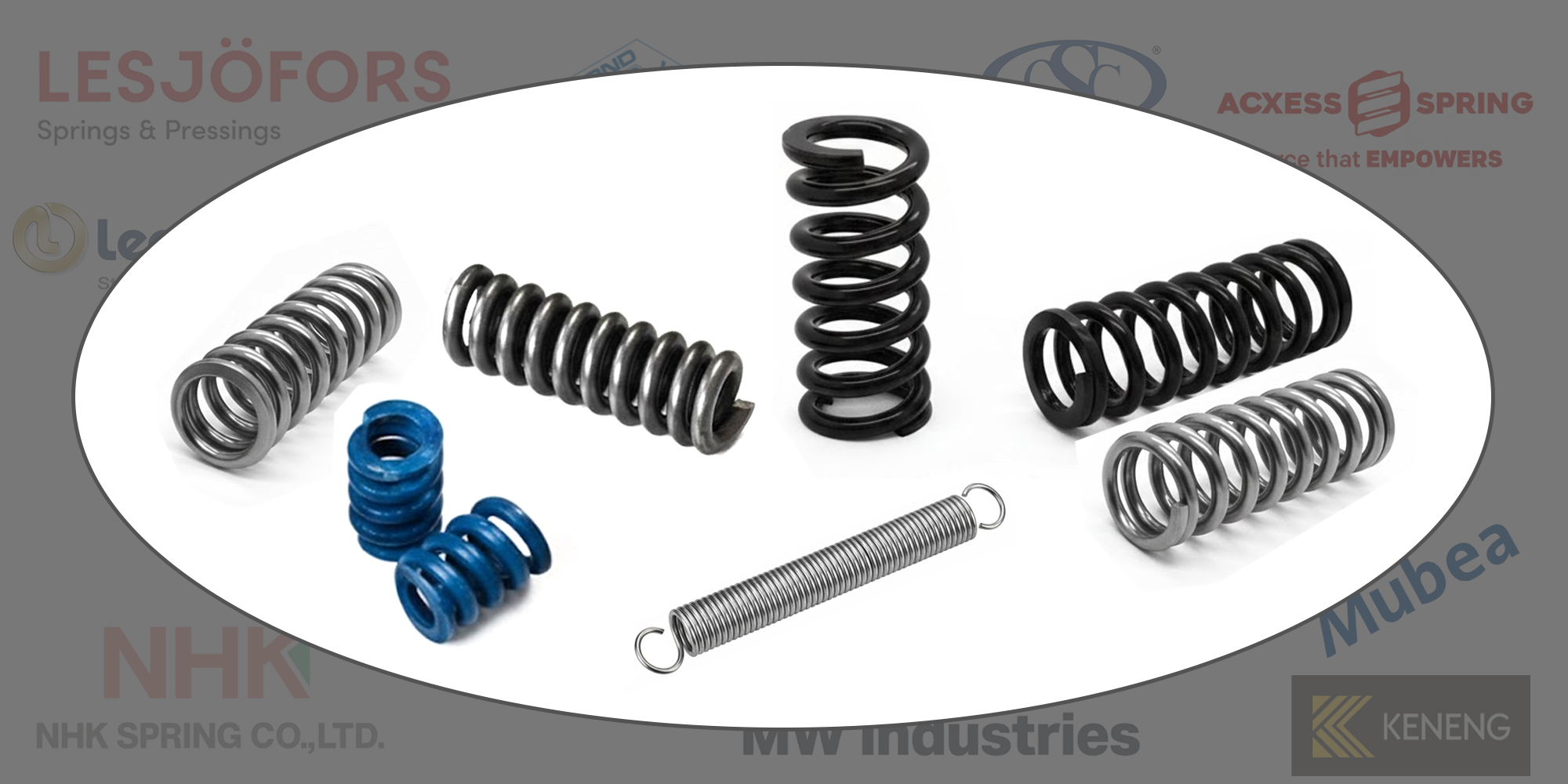
Whether you're sourcing compression springs, extension springs, or specialized die springs, understanding your supplier's capabilities is critical.
Here is my technical shortlist of the top 10 spring manufacturers leading the field in 2026, based on a weighted analysis of material innovation and precision reliability.
If your BOM includes exotic alloys like Inconel 718 or Elgiloy, MW Components is the standard choice.
With over 20 specialized facilities, MW Components leads the way in cryogenic-grade springs and vacuum-compatible components.

The company provides some of the most robust fatigue testing data in the industry.
If you're designing for aerospace or medical implants, their FEA (Finite Element Analysis) support is essential—though expect lead times of 8-12 weeks and pricing at a premium compared to commercial suppliers.
The quality documentation justifies the cost for regulated industries.
Lee Spring is essentially the infrastructure of the spring world.

With tens of thousands of catalog SKUs (the company lists over 20,000 standard parts), this is the first place I go when I need to validate a design.
The latest digital portal is intuitive—you filter by hole diameter and rod size, download the CAD, and the part is on your desk in 48 hours.
For stock parts, lead times here are unmatched. Lee Spring remains the benchmark for design-for-speed.
When the spring is just one part of a complex sub-assembly, Keneng offers a distinct advantage.
What sets Keneng apart is the ability to combine spring wire products with custom CNC machining and precision stamping.

This integration capability has made them a favorite for robotics and haptic device manufacturers—handling the wire forms, the housing, and the precision pins all in one place.
By managing the entire sub-assembly, they significantly reduce the tolerance buildup that happens when sourcing from multiple vendors.
However, minimum order quantities typically start at 500 pieces, which may not work for early-stage prototypes.
NHK isn't just a manufacturer; it's a material science house.
With a dominant share in the automotive OEM sector, NHK's new high-tensile steel alloys enable significant weight reduction in suspension springs—up to 20% in some applications—without sacrificing cycle life.
Ideal for massive production runs where you need a supplier that owns the entire value chain—from the steel mill to the coating line.
Their engineering support is excellent, but expect 12-16 week lead times and MOQs in the tens of thousands.
Newcomb specializes in intricate, high-volume parts that require secondary operations.
Their mastery of CNC multi-slide forming means complex wire forms can be produced that would require three separate setups elsewhere.

The company's automated vision inspection systems flag defects at the sub-micron level, which is critical for the high-density electronics we're designing today.
Quality is consistently high, though their focus on complex geometries means simpler springs might be faster to source elsewhere.
Based in Germany, Mubea is pushing the boundaries of what a spring can be made of.

As the world leader in GFRP (Glass Fiber Reinforced Plastic) springs, Mubea offers one of the most effective ways to reduce unsprung mass as we push for more EV range.
R&D investment here is massive, and the company holds some of the most critical patents in composite energy storage.
The technology is impressive, but composite springs typically cost 2-3x more than steel equivalents.
For weight-critical applications, the investment makes sense.
Lesjöfors has a Technical Center of Excellence that functions more like a research lab than a factory.

As the first to mass-produce springs using SSAB's fossil-free steel, Lesjöfors is your primary partner if your project has strict carbon-footprint requirements.
Capabilities span everything from 0.03mm wire for watches to massive industrial dampers.
Their European manufacturing base means longer lead times for North American customers—factor in 10-14 weeks—but the sustainability credentials are unmatched.
CSC is the backbone of the industrial repair world.
The focus is on high-availability catalog parts with extremely reliable specs.
The online Spring Configurator is still the most efficient tool for calculating spring rates on the fly.
.png?width=414&height=414&name=Century%20Spring%20Corp%20(CSC).png)
When a production line is down and you need a replacement coil spring that matches the original's force curve exactly, CSC delivers consistently.
Their strength is reliability over innovation—don't expect cutting-edge materials, but you will get dependable replacements fast.
Through The Spring Store, Acxess has built a front-end that speaks an engineer's language.

They offer a Spring Finder and custom quoting engine that gives you a price and a lead time in seconds.
For custom coil springs with non-standard ends or variable pitches, turnaround speed is significantly faster than the traditional quoting cycle.
I've used them multiple times for prototype runs under 100 pieces.
Pricing is higher per unit than production suppliers, but when speed matters more than cost, they're worth it.
Diamond Wire handles projects where failure isn't just an inconvenience—it's a catastrophe.
The company specializes in large-diameter, hot-wound springs for heavy infrastructure.

Their expertise in heat-treating massive wire gauges ensures that these springs don't set (lose height) even under constant, heavy loads in mining or power generation environments.
Not the right choice for standard compression springs, but if you're specifying wire diameters over 25mm, their deep experience in heavy-gauge work is hard to find elsewhere.
Technical Comparison Table
|
Manufacturer |
Core Competency |
Digital Support |
Best For |
|
MW Components |
Metallurgy/Custom |
Advanced (FEA) |
Aerospace & Medical |
|
Lee Spring |
Catalog Breadth |
Excellent (CAD) |
Fast R&D/Prototypes |
|
Keneng Hardware |
Component Integration |
High (Custom) |
Robotics & Electronics |
|
NHK Spring |
Material Science |
Enterprise Link |
Global Automotive OEM |
|
Newcomb Spring |
Multi-Slide Tech |
Automated Quotes |
High-Volume Consistency |
|
Mubea |
Composites/GFRP |
Advanced Simulation |
EV Weight Reduction |
|
Lesjöfors Group |
Green Steel/ESG |
Regional Centers |
Sustainable Industrial |
|
Century Spring |
Catalog/MRO |
Intuitive Search |
Maintenance & Repair |
|
Acxess Spring |
Online Configuration |
Instant Quotes |
Small-Batch Custom |
|
Diamond Wire |
Heavy-Duty Loading |
Performance Testing |
Infrastructure/Mining |
Beyond the quote, choosing the right partner requires a deep dive into their technical stability.
Based on my experience, here are the three non-negotiable factors you should audit before finalizing your PO:
Check the Cpk (Process Capability Index).
Industry best practice calls for a Cpk of 1.33 or higher on critical dimensions—anything lower typically leads to assembly friction and increased defect rates.
The fatigue life of a spring is directly linked to the purity of the spring wire.
Always ask for a Material Test Report (MTR). High-quality valve-grade wire from a reputable mill will always outlast generic wire, regardless of the winding quality.
A spring rarely works in a vacuum. Its lifecycle is often determined by the friction it encounters with mating parts.
For instance, in high-speed reciprocating assemblies, the interface between the spring and its bearing is a common point of failure.
I always cross-reference my spring axial loads with precision bearing data from specialists to ensure the entire motion system is frictionless and optimized for longevity.
Sourcing is about finding the spring manufacturer whose manufacturing limits match your design requirements.
Whether you prioritize the massive inventory of Lee Spring or the integration capabilities of Keneng Hardware, ensure your choice is backed by data, not just a quote.
You can browse our full spring inventory to compare technical limits before reaching out to the manufacturers.
My Final Recommendation:
Looking to shorten your lead times or improve component reliability?
I recommend reaching out to 2-3 of the spring suppliers mentioned above to request a sample of their SPC (Statistical Process Control) data before committing to a full production run.
If you asked a child what a spring is, they’d probably point to a clicking pen or a trampoline. But in the world of heavy machinery and precision...
All precision spring manufacturers recognize that spring performance is a critical concern. If a spring lacks reliability, the equipment it supports...
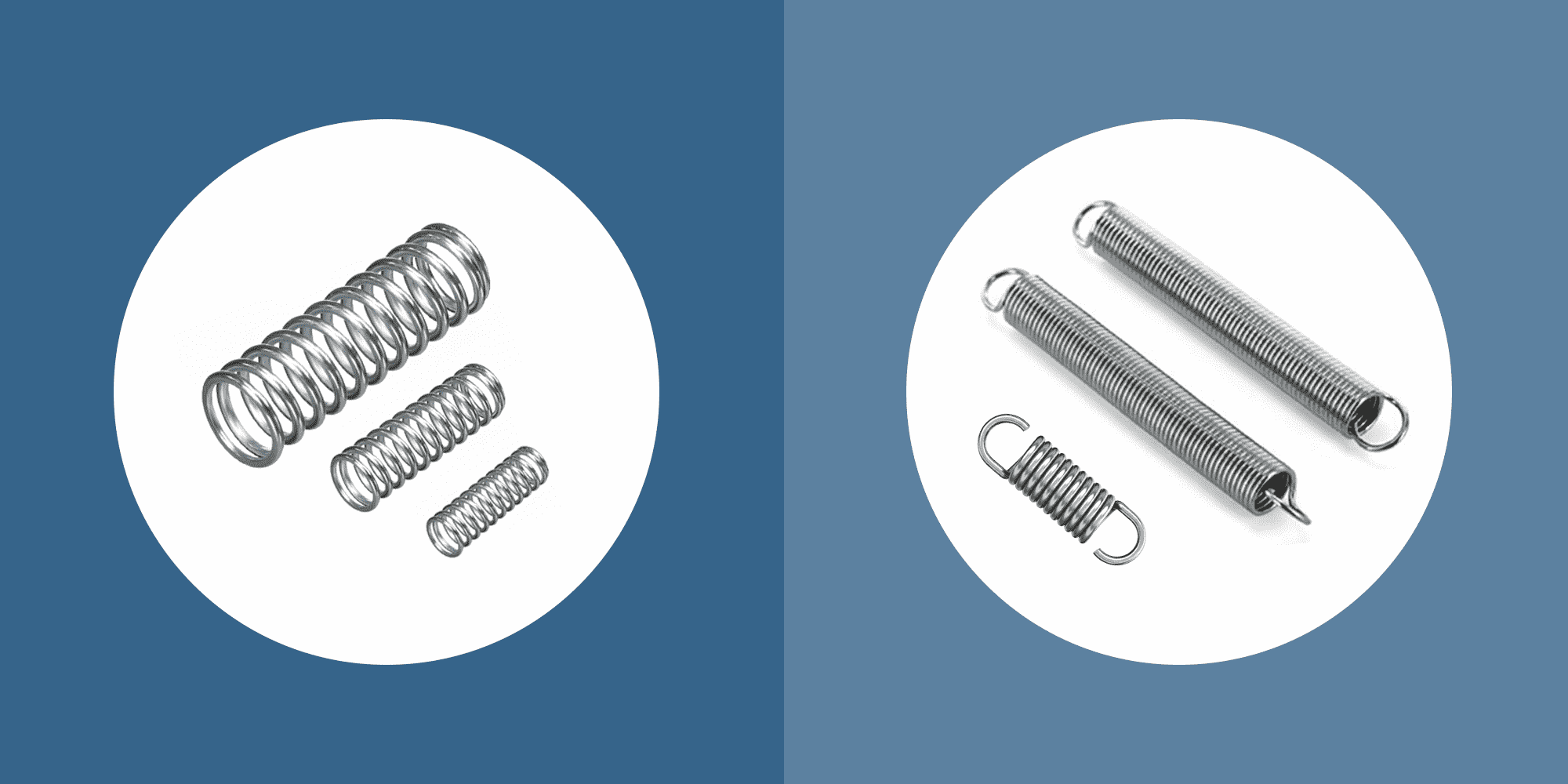
Compression vs. extension springs? One pushes, one pulls. Both store and release mechanical energy—just in different directions. Selecting the...