

Home/
Blog/
Qualifying a Polyurethane Roller Supplier: Technical & Commercial Criteria

9 min read

Qualifying a Polyurethane Roller Supplier: Technical & Commercial Criteria

Qualifying a Polyurethane Roller Supplier: Technical & Commercial Criteria
20:25

6

Core qualification dimensions

30+

Evaluation criteria covered

100

Point weighted scoring system

~40%

Cost variance between suppliers


Why Supplier Qualification Matters

Not all polyurethane roller suppliers are created equal. Walk any trade show floor or browse any industrial catalog, and you will find dozens of manufacturers claiming identical capabilities — premium bonding, tight tolerances, full-range durometers, fast lead times. The truth is that performance gaps between suppliers can be enormous, and the consequences of choosing the wrong one go far beyond a bad unit price.

A roller that delaminated under load. A batch shipped outside specified Shore hardness. A 14-week lead time on a part quoted at 4 weeks. These are the real-world outcomes of unqualified supplier selection — and in a production environment, they translate directly into downtime, warranty claims, and engineering firefighting.

This guide provides a structured, repeatable framework for qualifying polyurethane roller suppliers across six dimensions: manufacturing capability, quality management, technical expertise, material traceability, commercial terms, and service & support. Each section includes specific questions to ask, data to request, and red flags to watch for — giving your team the tools to make informed, defensible sourcing decisions.


Who This Guide Is For: Design engineers specifying custom PU rollers, procurement managers issuing RFQs, and quality teams running supplier audits.

How To Use It: Work through each section sequentially, score your candidate suppliers using the weighted scorecard at the end, and use the red-flag list to filter out high-risk vendors early.


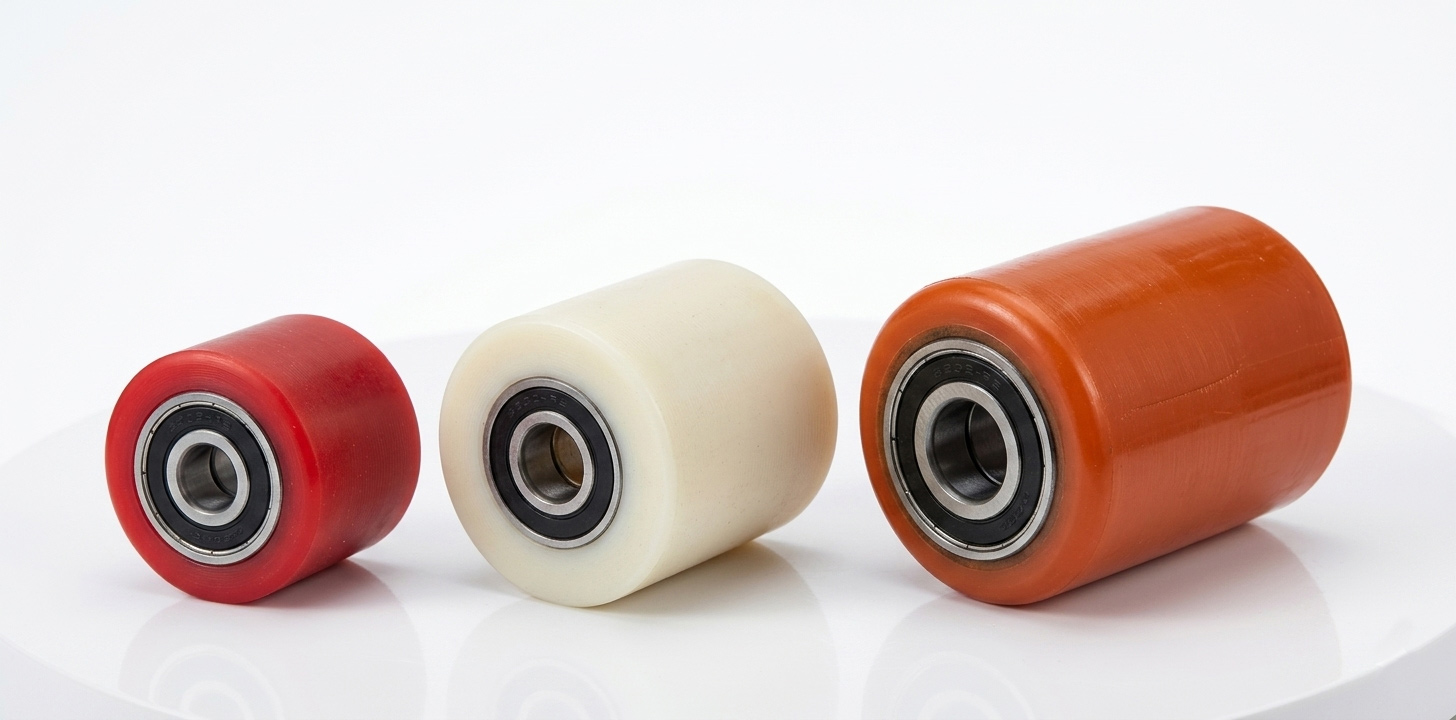
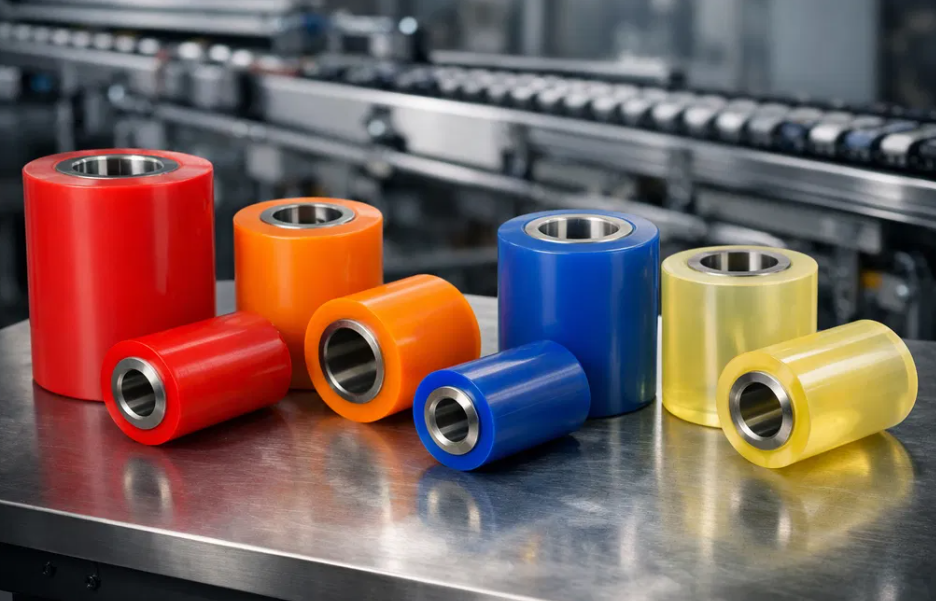
polyurethane rollers


Manufacturing Capability Assessment

Manufacturing capability is the foundation of supplier qualification. A supplier may have an impressive website and competitive pricing, but if their production process cannot reliably hold your specified tolerances or process the right PU formulations, none of the rest matters.


Core Production Processes

Polyurethane rollers can be produced by several distinct processes, each with different capability profiles. Understanding which processes a supplier operates — and which are most appropriate for your application — is the first step.

Process

Key Advantage

Best Suited For

Open Cast Molding

Low tooling cost, large parts

Custom prototypes, large-diameter rollers

Closed Pour / Injection

High dimensional consistency

Series production, tight OD tolerances

Spray / Flow Coat

Complex profiles, rebonding

Roller recoating, irregular core shapes

Compression Molding

High density, precise geometry

Thin-wall sleeves, Shore D grades

Centrifugal Casting

Uniform wall thickness

Large conveyor rollers, drum rollers


Equipment & Dimensional Capability

Ask suppliers to provide documented evidence of their dimensional capability — not just stated specifications. Key data points to request:

CNC grinding equipment: confirm the supplier uses precision OD grinding (not just turning) to hold tight tolerances on the PU surface

Cpk data for OD tolerance on a recent production run (target Cpk > 1.33 for critical applications)

Maximum and minimum roller diameter and face length that can be processed on their equipment

Concentricity / TIR (Total Indicator Runout) capability: request values achieved on standard production parts

Balancing capability for high-speed rollers (above 500 RPM surface speed typically requires dynamic balancing)


Key Question to Ask: 'Can you provide a process capability study (Cpk) for OD tolerance on a recent production run that matches my specification?' A credible manufacturer will have this data on file. If they cannot produce it, that is a significant red flag.


Quality Management System Evaluation

A robust quality management system (QMS) is what separates consistent suppliers from lucky ones. ISO 9001 certification is the minimum baseline you should accept for production-critical components. However, certification alone does not guarantee performance — you need to look inside the QMS to understand how it functions in practice.


Certifications & Standards

Certification / Standard

Scope

Minimum Requirement

Premium Indicator

ISO 9001:2015

Quality management system

Required

Current cert

IATF 16949

Automotive sector QMS

Optional

If auto supply

ISO 14001

Environmental management

Optional

Preferred

RoHS / REACH Compliance

Substance restrictions

Required EU/US

With DoC

FDA 21 CFR (Food Contact)

Food-grade materials

Application-specific

If food/pharma


Incoming Material & In-Process Controls

Ask suppliers specifically about their controls on raw material receipt and in-process monitoring. Strong suppliers will describe:

Incoming inspection of PU prepolymer and curative batches — including hardness verification on test plaques before production release

Pot life monitoring and temperature/humidity controls during casting (PU chemistry is highly sensitive to ambient conditions)

In-process Shore hardness checks using calibrated durometers at defined intervals

Adhesion / bond strength testing methods — ideally ASTM D429 peel or lap-shear testing on bonded assemblies

Final inspection records including dimensional report, hardness test, and visual inspection on 100% of units or on defined AQL sampling plan


Red Flag: A supplier who cannot describe their raw material incoming inspection process — or who admits that PU batches are used without pre-production hardness verification — is operating without adequate process control. Shore hardness variation between PU batches from the same formulation can be as wide as ±5 Shore A without proper controls.


Technical Expertise & Engineering Support

Polyurethane chemistry is genuinely complex. A supplier's ability to engage technically — recommending the right formulation, advising on adhesion systems, and troubleshooting field failures — is a significant differentiator between commodity vendors and true manufacturing partners.


Formulation Knowledge

During qualification, present your supplier with a realistic application scenario and evaluate the quality of their technical response. A knowledgeable supplier should be able to address:

The distinction between polyester-PU and polyether-PU and when to specify each based on chemical exposure, humidity, and temperature profile

The trade-off between hardness (durometer) and hysteretic heat buildup at high surface speeds — and the durometer ceiling appropriate for your application

Adhesion primer selection for your specific core material (steel, stainless, aluminum, nylon each require different adhesion systems)

The impact of compression set on roller performance over time, and how their formulations perform in compression set testing (ASTM D395)

Tear strength and abrasion resistance data for their standard formulations at the specified hardness


Application Engineering Capability

Engineering Service

What to Look For

Red Flag

Application review

Engineer reviews your load/speed/chemistry requirements before quoting

Sales team quotes without asking application questions

Prototype / first article

Documented FAI with dimensional report and hardness data

First article shipped without documentation

Failure analysis support

Can interpret wear patterns and delamination causes from returned parts

No technical resource available post-sale

Design-for-manufacture advice

Proactively flags profile or geometry risks before tooling

Builds to drawing without design review

Custom formulation development

Has in-house R&D or established formulation library

Dependent on single PU system supplier


Interview Tip: Ask the supplier to walk you through the last failure analysis they conducted on a field-returned roller. A strong technical team will recall the case clearly — root cause identified, corrective action implemented, and outcome documented. Vague or evasive answers signal limited technical depth.


Material Traceability & Documentation

In industries where product liability, safety certification, or regulatory compliance is relevant — automotive, food processing, medical devices, mining — full material traceability from raw material batch to finished roller is non-negotiable. Even in lower-stakes industrial applications, traceability dramatically simplifies failure investigation and corrective action.


Raw Material Documentation

Request the following documentation from your candidate supplier and evaluate the completeness and specificity of what they provide:

Certificate of Conformance (CoC) for the PU prepolymer and curative — including batch number, isocyanate index, and cure date

Safety Data Sheets (SDS) for all chemical inputs, current and accessible

Material Test Reports (MTR) with hardness test results on production test plaques from the same batch used for your order

Core material certification (mill cert for steel cores, material confirmation for aluminum or polymer cores)

For food-grade or FDA applications: letter of compliance from the PU raw material supplier confirming compliance with 21 CFR 177.2600 or equivalent


Finished Part Documentation

Document

Standard Supplier

Qualified Supplier

Premium Supplier

Certificate of Conformance

Yes

Yes + batch link

Yes + full traceability

Dimensional Inspection Report

On request

With each shipment

100% with CMM data

Hardness Test Record

Rarely

On request

With each shipment

Bond Strength Test Data

Not available

Periodic

Per batch / ASTM D429

Nonconformance Records (NCRs)

No system

Internal only

Shared with customer


Commercial Terms & Supply Chain Risk

Technical capability and quality systems are necessary but not sufficient conditions for a good supplier relationship. Commercial terms, supply chain resilience, and business stability directly determine whether a supplier can actually deliver what they promise — at the right time, in the right quantity, at a sustainable price.


Pricing Transparency & Structure

Polyurethane roller pricing is multi-layered. Ensure you understand all cost components before comparing quotes across suppliers:

Tooling / mold amortization: custom rollers require dedicated molds; confirm tooling cost, ownership, and amortization schedule. Are molds stored indefinitely or only for active part numbers?

Setup / NRE charges: first-article inspection, test plaques, and process qualification may carry one-time fees — confirm these are disclosed upfront

Volume break structure: request pricing at your projected annual volume, plus brackets above and below, to understand the price sensitivity

Raw material escalation clauses: PU prepolymer pricing is linked to MDI (methylene diphenyl diisocyanate) commodity markets. Understand how price changes are passed through — and over what lag

Currency exposure: for offshore suppliers, confirm the invoice currency and whether pricing is hedged or spot-based


Lead Time & Capacity Reliability

Lead Time Category

Typical Range

Acceptable

Requires Justification

Standard reorder (existing tool)

2–4 weeks

Up to 5 weeks

Over 6 weeks

First article (new design)

3–6 weeks

Up to 8 weeks

Over 10 weeks

Custom mold + first article

6–10 weeks

Up to 12 weeks

Over 14 weeks

Emergency / expedite

1–2 weeks

With surcharge

Not available = risk


Beyond stated lead times, assess the supplier's capacity risk. Key questions:

What is your current production utilization rate, and what headroom exists at your standard lead time commitment?

Do you operate single-source for your PU raw materials, or do you maintain approved alternates?

What is your finished goods or work-in-progress inventory policy for high-volume repeat programs?

Have you had any supply disruptions in the past 24 months? How were they communicated and managed?


Supply Chain Risk Note: Suppliers sourcing PU prepolymers exclusively from a single chemical distributor represent a concentrated supply chain risk. The global MDI supply chain experienced significant disruptions in 2021-2022. Ask specifically about supplier diversification and safety stock policies for raw materials.


After-Sales Service & Long-Term Partnership

The final dimension of supplier qualification is often the most neglected — and the one that becomes most visible once the relationship is underway. A supplier's responsiveness to non-conformances, their willingness to engage on continuous improvement, and the quality of their technical support post-delivery distinguish transactional vendors from genuine manufacturing partners.


Warranty & Non-Conformance Process

Request the supplier's written warranty policy — specifically, what defects are covered, for how long, and what the return/replacement process entails

Ask how many warranty claims or non-conformances they processed in the last 12 months and what the average resolution time was

Confirm whether corrective action reports (CARs) are issued for non-conformances — and whether root cause analysis is documented and shared with the customer

Evaluate the ease of reaching a technical contact after a shipment is received: is there a named engineer, or does every inquiry route through a general inbox?


Continuous Improvement & Development Partnership

For long-term supply programs, look for evidence that the supplier actively invests in improvement — not just maintains the status quo:

Have they improved dimensional capability, cycle time, or material consistency on an existing program in the past 2 years? Ask for a specific example

Do they conduct periodic supplier business reviews (QBRs) to share performance metrics and improvement plans?

Are they actively developing new PU formulations or bonding systems? A supplier standing still technically will eventually fall behind application requirements

Will they participate in value engineering discussions to optimize part design for manufacturability and cost without compromising performance?


Supplier Qualification Scorecard

Use this weighted scoring matrix to evaluate and compare candidate suppliers objectively. Score each criterion 1–5 (1 = unacceptable, 3 = adequate, 5 = best-in-class). Multiply by the weight factor to calculate the weighted score. Maximum total = 100 points.

Evaluation Criterion

Weight

Score (1–5)

Weighted Score

Notes / Evidence Required

Manufacturing Capability


Production process fit for application

×4

___

___

Process audit or documentation

Dimensional capability (Cpk data)

×4

___

___

Request capability study

Equipment range / max roller size

×2

___

___

Equipment list or catalog

Quality Management System


ISO 9001 certification (current)

×4

___

___

Certificate + audit date

In-process controls (hardness, bond)

×4

___

___

Control plan or procedure

Final inspection documentation

×2

___

___

Sample inspection report

Technical Expertise


Formulation knowledge (PU chemistry)

×4

___

___

Technical interview

Application engineering support

×3

___

___

Reference case or interview

Failure analysis capability

×3

___

___

Request example case

Material Traceability


Raw material batch documentation

×3

___

___

Sample CoC or MTR

Finished part documentation package

×3

___

___

Sample dimensional report

NCR / corrective action process

×2

___

___

NCR procedure document

Commercial Terms


Pricing transparency and structure

×3

___

___

Detailed quote breakdown

Lead time reliability (reference data)

×4

___

___

OTD metric or reference

Supply chain risk (raw material)

×3

___

___

Supplier diversity interview

Service & Support


Warranty and non-conformance process

×3

___

___

Written warranty policy

Responsiveness & technical access

×2

___

___

Trial inquiry / test call

Continuous improvement evidence

×2

___

___

QBR or improvement case

TOTAL WEIGHTED SCORE

÷100

___

___ / 100

Min. qualifying score: 65/100


Score Interpretation

Total Score

Qualification Status

Recommended Action

85–100

Preferred Supplier

Approve for qualification; negotiate long-term agreement

70–84

Conditional Approval

Approve with corrective action plan for gaps; re-audit in 12 months

55–69

Development Required

Pilot order only; formal improvement plan required before full qualification

Below 55

Do Not Qualify

Do not proceed; fundamental capability or system gaps identified


Consolidated Red Flag Reference

Use this list during initial supplier screening to filter out high-risk candidates before investing time in a full qualification process. Any single red flag warrants a deeper investigation; two or more are typically disqualifying.

#

Red Flag

Why It Matters

1

Cannot produce ISO 9001 certificate on request

No documented QMS means no consistent process control

2

No incoming hardness verification on PU batches

Shore hardness variation of ±5A is possible without batch testing

3

Cannot explain polyester vs. polyether PU difference

Signals commodity reseller, not a manufacturing partner

4

No Cpk or dimensional capability data available

Tolerance conformance is claimed, not proven

5

Quotes without asking application questions

Correct material selection requires knowing speed, load, chemistry

6

Lead time quoted verbally with no written commitment

Verbal lead times carry no accountability

7

Single PU raw material supplier with no alternative

Concentrated supply chain risk — one disruption stops production

8

No documented corrective action / NCR process

Defects will recur without structured root-cause investigation

9

Cannot produce a sample First Article Inspection Report

Dimensional conformance at FAI is the basic minimum standard

10

No technical contact — all queries through sales

Post-sale technical support will be slow or absent


Conclusion

Qualifying a polyurethane roller supplier is not a one-time checkbox exercise — it is an ongoing process of evidence gathering, relationship building, and performance monitoring. The six-dimension framework in this guide is designed to give your team a consistent, repeatable methodology that produces defensible sourcing decisions backed by documented evidence rather than gut feel or lowest-price logic.

The suppliers who will serve you best over the long term are those who welcome this level of scrutiny — who can produce documentation, answer technical questions with specificity, and engage constructively on improvement. Those who resist, deflect, or cannot demonstrate basic capability are telling you something important: that the risk of a downstream failure is higher than the appeal of their price.

Use the weighted scorecard to compare your shortlisted suppliers objectively, apply the red-flag checklist as an early-stage filter, and establish a formal re-qualification cadence — annually for critical suppliers, every two years for standard programs. Done consistently, this process will reduce supply chain disruptions, improve component quality, and ultimately lower the total cost of your roller procurement.


Next Step: Download the qualification scorecard, schedule site visits or video audits with your top 2-3 candidate suppliers, and plan to request sample first-article parts with full documentation before placing any production orders.

Recommended Audit Duration: Allow 3-4 hours for a thorough on-site qualification audit covering all six dimensions. Remote audits are acceptable for initial screening but are not a substitute for an in-person process review for critical suppliers.


Linear Guide: Key Factors That Influence Linear Rail Costs

Linear Guide: Key Factors That Influence Linear Rail Costs

For purchasing engineers or equipment manufacturers, the cost of linear motion guides is a key consideration when selecting products. However, the...

Read More
How to Choose the Bearing Manufacturer

How to Choose the Bearing Manufacturer

Bearings are important parts in machines. They help reduce friction and keep everything running smoothly. Industries like automotive, aerospace, and...

Read More
Ceramic Bearing Materials Compared: Si3N4 vs ZrO2 vs SiC vs Al2O3

Ceramic Bearing Materials Compared: Si3N4 vs ZrO2 vs SiC vs Al2O3

Most engineers arrive at 'ceramic bearing' and stop there. That's where the trouble starts. Si3N4, ZrO2, SiC, and Al2O3 share a category name but...

Read More