

How to Choose a Custom Bearing Supplier for OEM Projects (And Avoid a 6-Month Delay)
Off-the-shelf bearings solve most problems. But when your application pushes the limits of standard geometry, material, or tolerance — you need a...
Table of Contents
The wrong bearing supplier doesn't just delay your shipment — it can shut down your production line.
Here's a practical, field-tested framework for vetting suppliers before you sign anything.
| $50B | ~80% | 5–10% | $1.7B |
| Annual cost of unplanned downtime for industrial manufacturers | Of bearing failures trace back to improper lubrication | Of global bearing sales estimated to be counterfeit product | Annual economic damage from counterfeit bearings worldwide |
| Deloitte, 2023 | Multiple peer-reviewed studies | World Bearing Association | Intl. Chamber of Commerce |
A bearing failure at the wrong moment costs far more than the bearing itself.
You're looking at emergency repairs, idle labor, scrapped batches, and — in critical industries like aerospace or medical devices — potential liability.
Yet many procurement teams still choose suppliers primarily on price.
Having spent years sourcing industrial components across different manufacturing sectors, I can tell you: the cheapest supplier is rarely the most economical one over 12 months.
This guide gives you a structured way to evaluate bearing suppliers so you make a decision you won't regret when something goes wrong at 2 a.m. on a Friday.
You cannot evaluate a supplier until you know exactly what you need.
Vague inquiries attract vague answers — and suppliers who are good at telling you what you want to hear.
Before reaching out to any vendor, document the following:
| Parameter | Example values |
|---|---|
| Bearing type | Deep groove ball, cylindrical roller, tapered roller, thrust |
| Precision grade | ABEC-1 (standard) through ABEC-9 (ultra-precision) |
| Material | Chrome steel (52100), stainless, ceramic hybrid |
| Load profile | Static C0, dynamic C, combined load ratios |
| Operating environment | High temp, washdown, vacuum, food-grade |
| Annual volume / MOQ | 50 pcs/year vs. 50,000 pcs/year |
| Lead time requirement | Off-the-shelf: 1–5 days | Custom: 8–16 weeks |
A supplier quoting $0.80/unit on an ABEC-1 bearing when your application needs ABEC-5 isn't offering value — they're mis-quoting.
Precision in your spec is precision in your evaluation.
Neither model is universally better. The right choice depends on your volume, customization needs, and risk tolerance.
| Factor | Direct manufacturer | Authorized distributor |
|---|---|---|
| Unit price | Lower (no middleman) | 5–20% markup typical |
| Min. order quantity | Usually high (500–5,000+) | Low or none |
| Stock availability | Limited to production runs | Wide range in stock |
| Customization | Full capability | Limited or none |
| Delivery risk buffer | Single source — no backup | Multi-brand inventory hedge |
| Counterfeit risk | Low (direct source) | Low if authorized; high for gray market |
| Technical support | Variable | Usually stronger (brand-backed) |

Rule of thumb:
Under ~2,000 units/year, an authorized distributor typically offers better economics and lower risk.
Above that — especially with custom specs — a direct manufacturer relationship starts to pay off.
A useful middle path: larger distributors sometimes carry manufacturer-level application engineers, giving you technical depth without the high MOQ.
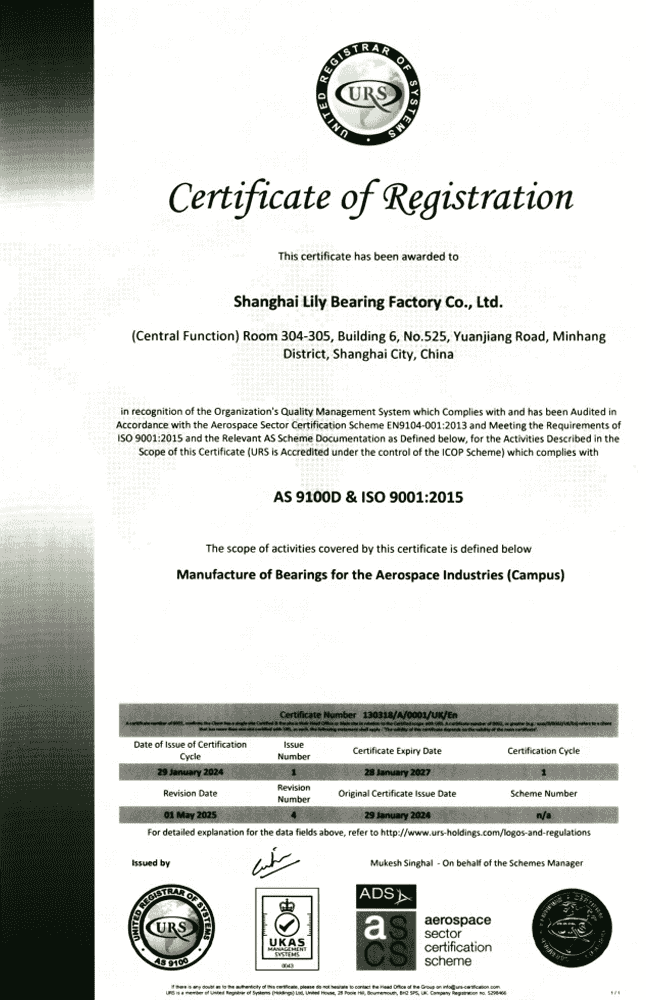
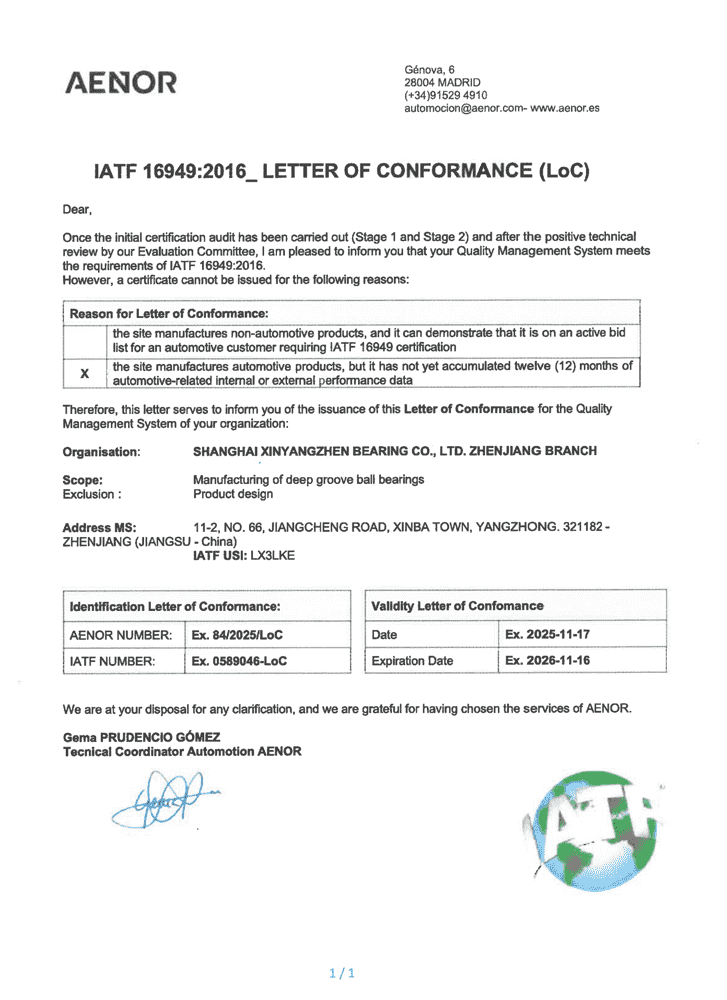
Certifications are a floor, not a ceiling. They confirm minimum competence — not excellence.
| Certification | Sector | What it means in practice |
|---|---|---|
| ISO 9001:2015 | All industries |
Baseline quality management. For standard industrial applications, treat this as non-negotiable — a hard stop, not a yellow flag. Always verify the certificate with the issuing registrar. |
| IATF 16949 | Automotive supply chain |
Replaces ISO 9001 for auto supply chains. Adds defect prevention and continuous improvement protocols. |
| AS9100 | Aerospace & defense |
Safety-critical standard. Don't accept partial compliance or substitutions. |
| Brand authorization | SKF, NSK, FAG, NTN, Timken |
Time-limited and brand-specific. Verify directly with the brand — not through the supplier. |


Counterfeit scale:
The World Bearing Association estimates 5–10% of global bearing sales involve counterfeit product — a market the International Chamber of Commerce values at $1.7 billion annually in economic damage.
Schaeffler and SKF alone crushed over 66 metric tons of seized fake bearings between 2007 and 2012.
Visual inspection is increasingly unreliable; verify certificates directly with the brand.
Certifications tell you about a supplier's systems. Physical verification tells you about their product. Do both.

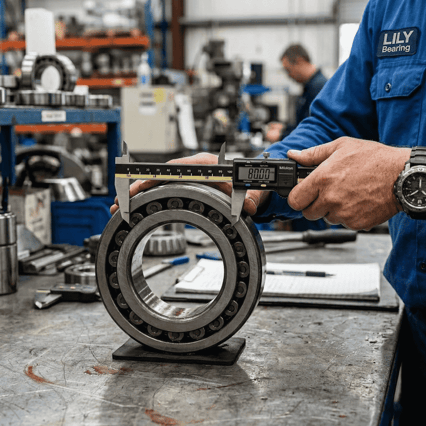
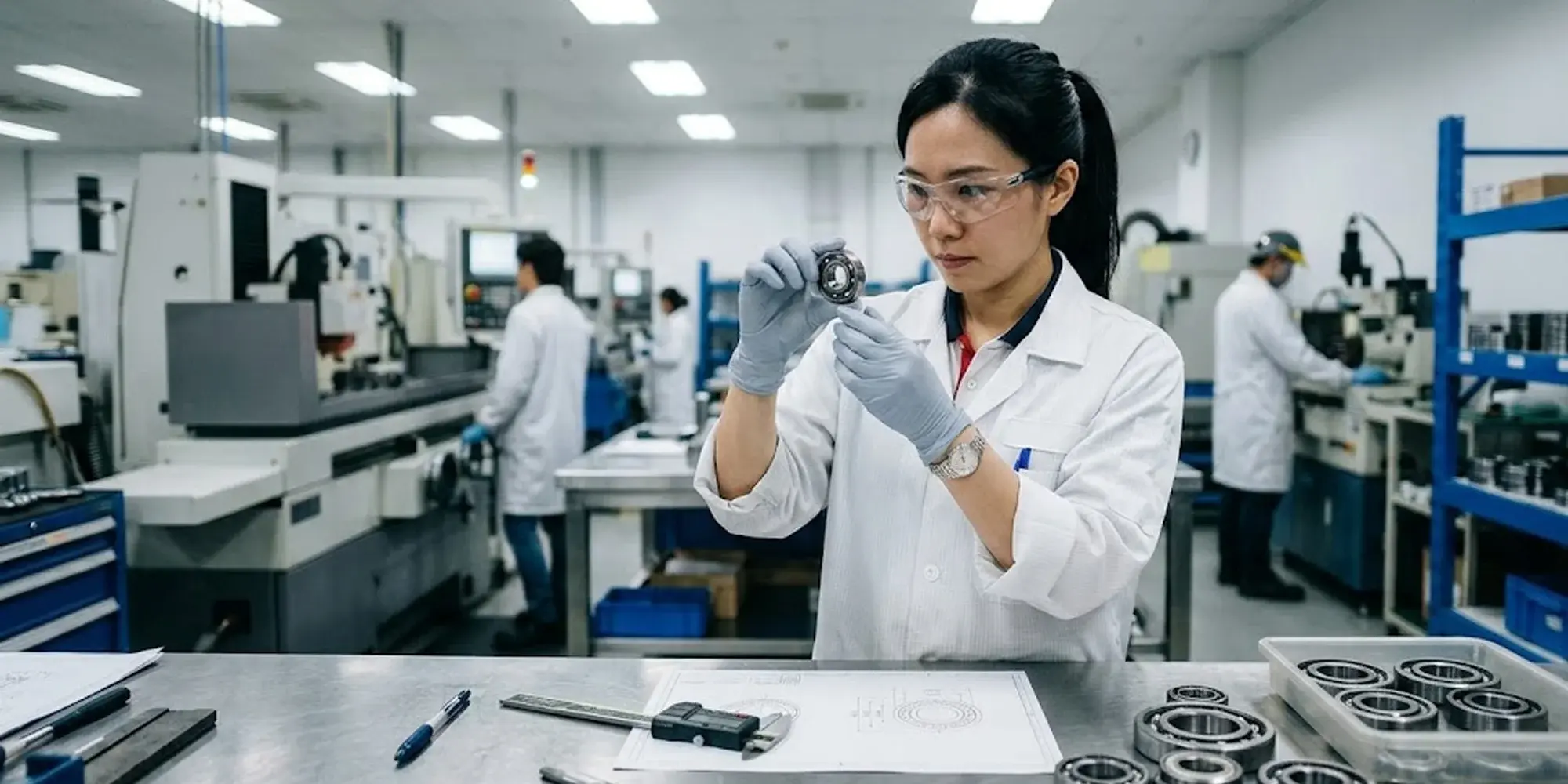
Any reputable supplier will provide samples (free for standard stock, sometimes at cost for custom items).
Refusal or sustained delay is a warning sign. When samples arrive, check:
For engineered applications, ask for the material test certificate (MTC) confirming steel chemistry and heat treatment.
For safety-critical uses — aerospace, medical, rail — full lot traceability is non-negotiable.
An independent metrology lab typically charges $200–800 per sample set for dimensional and metallurgical verification.
Against the cost of a field failure, that's cheap insurance.
A supplier who folds or loses their factory lease six months into your contract is a real operational risk — one most procurement teams underweight.
| What to check | How to verify | Risk if absent |
|---|---|---|
| Years in operation | Company registration records, LinkedIn history | Medium |
| Financial health | D&B PAYDEX score — look for 70 or above as a baseline threshold | Medium |
| Reference customers | Ask for two accounts in your industry you can call directly | High |
| Factory ownership | Owned facilities carry lower disruption risk than leased | Medium |
| Supply disruption plan | Ask what happened to their customers during 2020–2022 shortages | High |
| Inventory visibility | Can they show real-time stock levels and lot numbers? | Medium |
When you call a reference, ask these three questions
A supplier with two references who answer all three positively is worth significantly more confidence than any certification alone.
If a reference hesitates on question three, treat that as a yellow flag.
Practical test:
Call their main line without identifying yourself as a buyer and ask a technical question about a specific bearing type. Speed, accuracy, and willingness to engage tells you more about real capability than any sales deck.
Also consider a factory audit for relationships above $50,000/year — a one-day site visit typically costs less than a single production stoppage caused by supplier failure.
| Red flag | What it usually signals |
|---|---|
| Price 30%+ below market on branded product | Counterfeit, gray-market, or misspecified product |
| Cannot produce ISO 9001 certificate on request | No documented quality system |
| No physical address or PO box only | Broker with no supply chain control |
| Refuses or indefinitely delays sample provision | No confidence in product quality |
| Cannot name the manufacturing facility | Multi-hop supply chain, no traceability |
| Verbal-only delivery commitments | No accountability for missed dates |
| 100% upfront payment, no LC or escrow option | Financial instability or intent to underdeliver |
%20and%20counterfeit%20bearing%20(right)%20showing%20inconsistent%20laser%20markings%20and%20poor%20surface%20finish.png?width=435&height=435&name=Side-by-side%20comparison%20of%20genuine%20bearing%20(left)%20and%20counterfeit%20bearing%20(right)%20showing%20inconsistent%20laser%20markings%20and%20poor%20surface%20finish.png)
On price:
A 15–20% gap between comparable suppliers often reflects genuine economies of scale. A 35–50% discount on a named brand almost never does. The bearing industry has well-documented counterfeit supply chains specifically designed to exploit price-first procurement decisions.
Ask in writing — you want a paper trail. How they answer matters as much as what they say.
That last question is particularly revealing. A supplier who can't describe what they learned and what changed hasn't thought seriously about your risk exposure.
Request a Quote from LILY Bearing
Compare marking font, spacing, and depth against the brand's authentic samples. SKF, NSK, and other major brands publish authentication guidance on their websites.
For volume purchases, independent metrology verification is the most reliable approach — visual inspection alone is increasingly unreliable as counterfeiting technology improves.
Yes, with appropriate vetting. China produces a significant share of the world's bearings, including for major international OEMs.
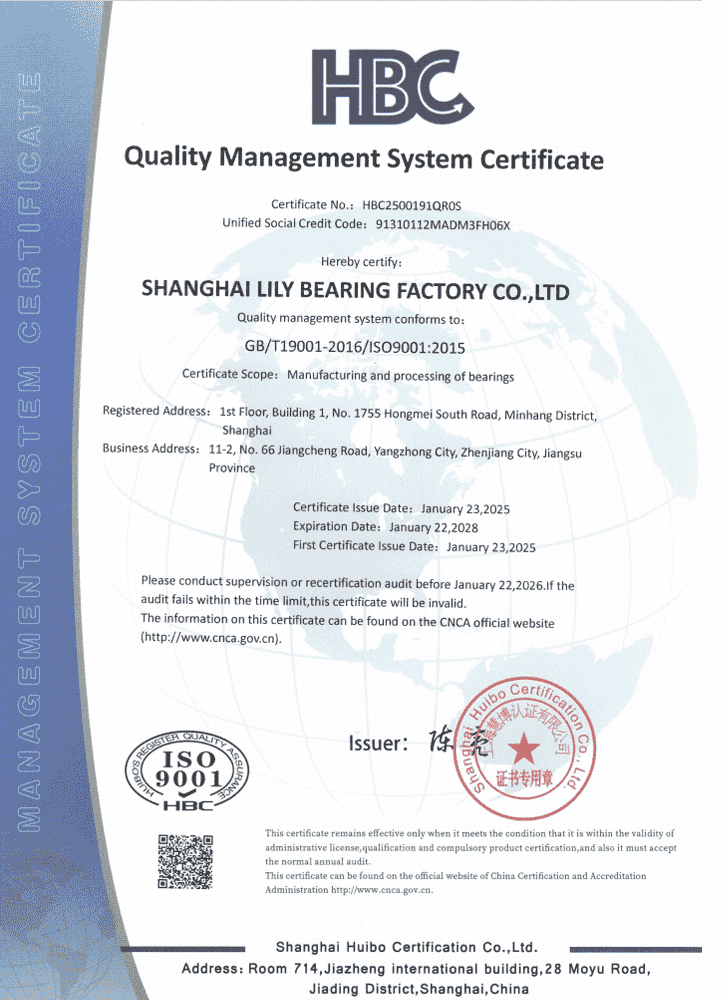
Tier-1 manufacturers like LILY Bearing — which holds ISO 9001:2015, IATF 16949, and AS9100 certifications — C&U Group and LYC export globally to major OEMs.
Apply the same framework you would to any supplier — certifications, samples, references, financial check.
For standard catalogued sizes (e.g., 6200–6310 series), an established distributor should deliver within 1–5 business days from stock.
Custom sizes, high-precision grades (ABEC-7 and above), and specialty materials typically need 8–16 weeks production lead time.
For critical applications or high-volume usage, qualifying a backup supplier — even at 10–15% of purchase volume — is widely recommended.
The qualification cost pays for itself the first time your primary supplier hits a production constraint.
Multiple peer-reviewed studies consistently identify improper lubrication as the dominant bearing failure cause (~80%), with poor installation and incorrect specification accounting for most of the remainder.
This matters for procurement: it shifts focus toward supplier technical support and application guidance — not just product quality alone.
Data sources: Deloitte (2023), World Bearing Association, International Chamber of Commerce, multiple peer-reviewed bearing failure studies.
Download the LILY Bearing product catalog for full specifications.
Off-the-shelf bearings solve most problems. But when your application pushes the limits of standard geometry, material, or tolerance — you need a...
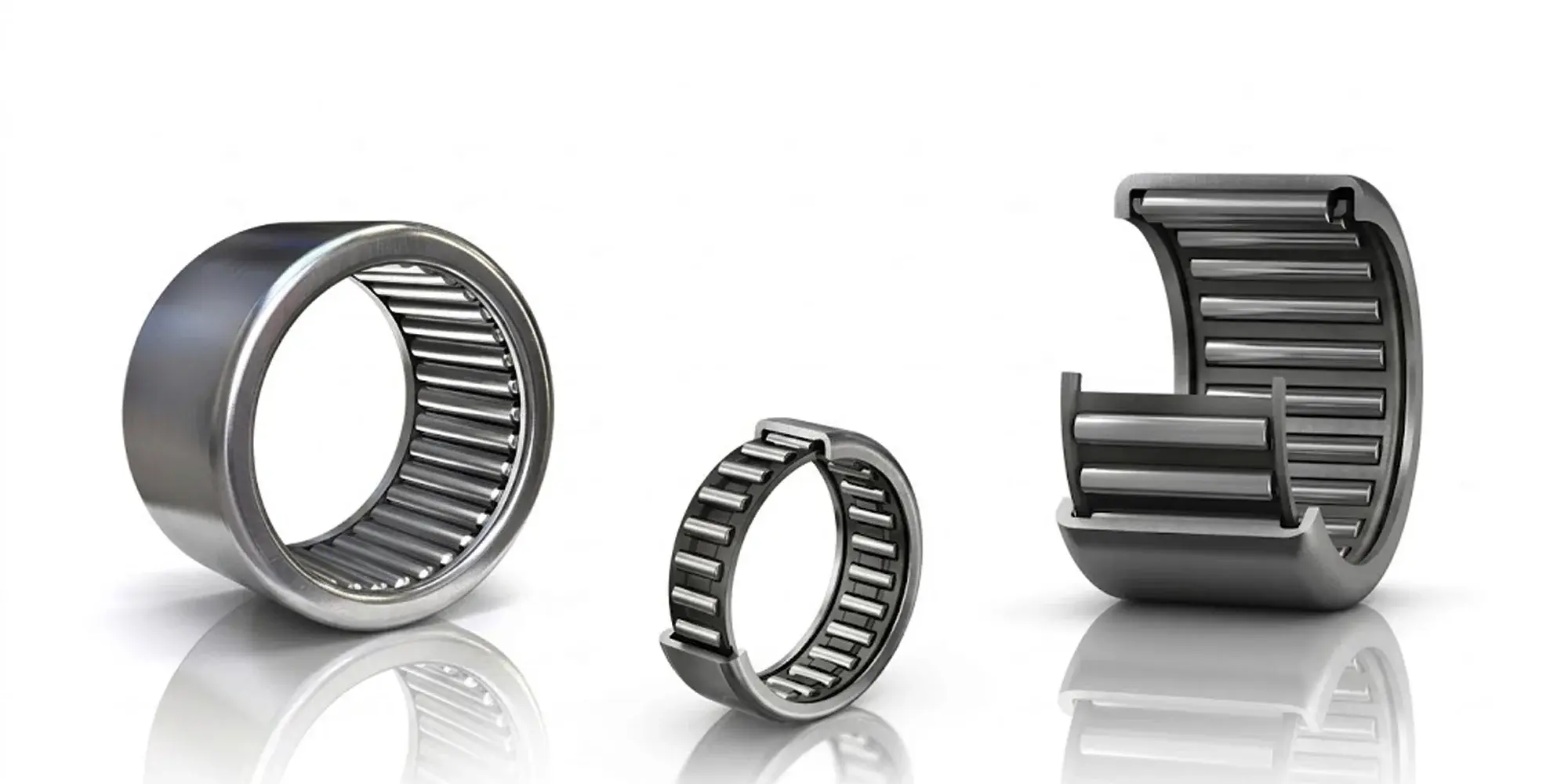
A good tapered roller bearings supplier does more than list products and send back a number. For industrial buyers, the real question is whether the...
"Choosing the right bearing supplier isn't just about price — it's about finding a partner who can deliver consistent quality, technical support, and...