





What Is a Compression Spring? Types, Design & Applications
A compression spring is an open-coil helical spring that resists compressive axial forces. When load is applied, it shortens and stores potential...
8 min read
Richard
:
Apr 7, 2026 5:00:45 AM
Table of Contents
The short answer: no single person invented the spring.
But if you want the name most associated with turning springs from a crude mechanical trick into a precision engineering component, it's Richard Tredwell — a British inventor who received Patent No. 792 in 1763 for the first coiled spring design.
And if you want the name behind the science that made modern springs possible, that's Robert Hooke, who in 1676 published the law of elasticity that still governs spring design today.
The full story is longer and more interesting than either name alone.
Springs are energy storage devices.
They store mechanical energy when deformed and release it when allowed to return to their original shape.
By that definition, springs have existed since prehistoric times — a drawn bow is a spring.
A bent branch used to trigger a trap is a spring.
But the coiled metal spring we recognize today — the kind found in a car suspension, a ballpoint pen, or a garage door — is a more recent invention with a clearer origin point.
And the scientific framework that allows engineers to design springs precisely came later still.
Here's how the story unfolds, in rough chronological order.
The oldest known non-coiled spring is the bow.
Archaeological evidence places the use of bows and arrows in southern Africa at least 64,000 years ago.
When an archer draws a bowstring, the limbs of the bow flex and store energy — releasing it to propel an arrow when the string is let go.
This is Hooke's Law in action, thousands of years before Hooke was born.

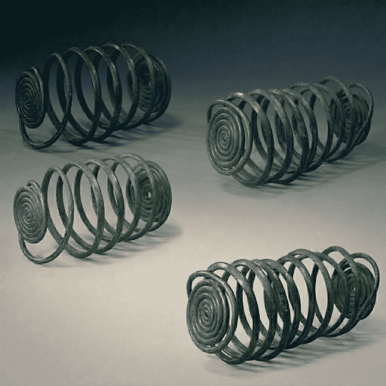
Archaeologists have found coiled, helical wire objects in the Balkans and across Europe dating to approximately 4,000 BC.
These weren't springs in the mechanical sense — they were likely decorative or used as jewelry fastenings — but they demonstrate that humans understood how to shape metal into coils very early on.

The Tutankhamun-era chariot, dating to approximately 1,333 BC, incorporated a sophisticated suspension system that used flexible components to absorb shock.
These non-coiled leaf spring-like elements gave the vehicle better ride quality and structural performance.
It's one of the earliest known examples of a spring being integrated into a larger mechanical system rather than being the object itself.

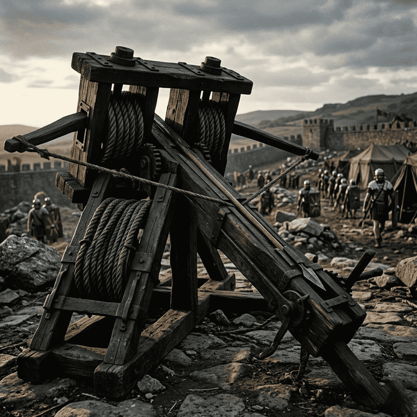
Roman military engineers used torsion springs — twisted rope or sinew wound under tension — to power catapults and ballistae.
The stored energy in the twisted material was released suddenly to launch projectiles.
Greek engineer Archimedes is credited with refining these mechanisms during the Siege of Syracuse in 214–212 BC.

The first coiled springs in a recognizable mechanical sense appeared in Europe in the early 15th century, initially in door locks.
Flat metal springs — made by bending hardened steel — provided the tension needed to hold lock mechanisms in place.
The bigger development came with clocks.
Spring-powered clocks appeared in the 15th century, replacing heavy counterweights with a coiled flat spring — called a mainspring — as the power source.
This made portable timepieces possible for the first time.
By the 16th century, these clock springs had been miniaturized enough to appear in the first large pocket watches.

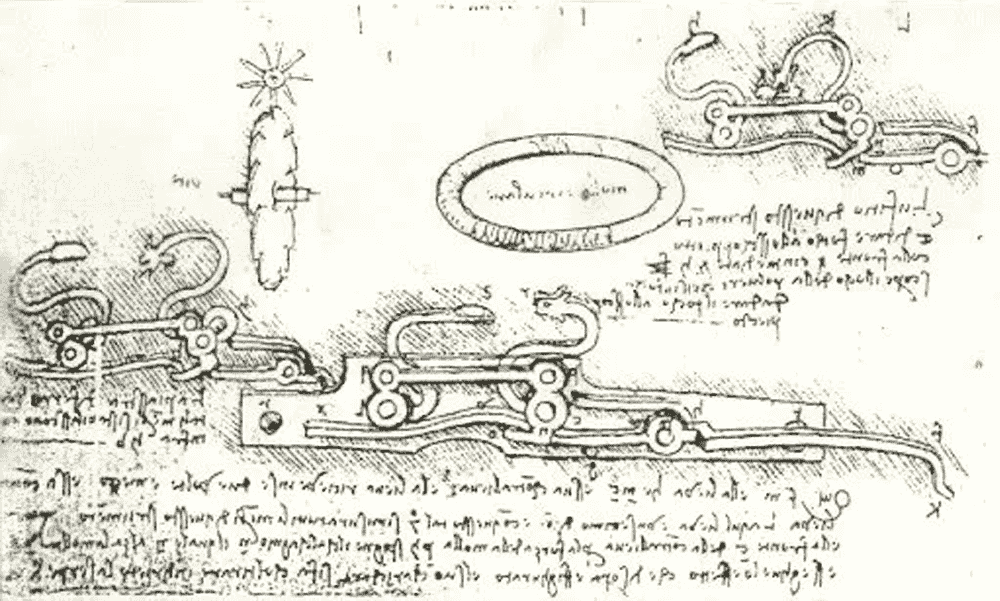
In 1493, Leonardo da Vinci incorporated a spring mechanism into a pistol design, making it possible to fire the weapon with one hand.
The spring held a firing mechanism under tension and released it on trigger pull — a concept that would define firearm design for centuries.

Springs existed long before Robert Hooke.
But Hooke — born in 1635 on the Isle of Wight, England — was the first person to describe mathematically how they behave.
In 1676, Hooke published his law of elasticity, initially as a Latin anagram: "ceiiinosssttuv."
Two years later, in his 1678 work Lectures de Potentia Restitutiva (On Spring Explaining the Power of Springing Bodies), he revealed the solution: "ut tensio, sic vis" — "as the extension, so the force."
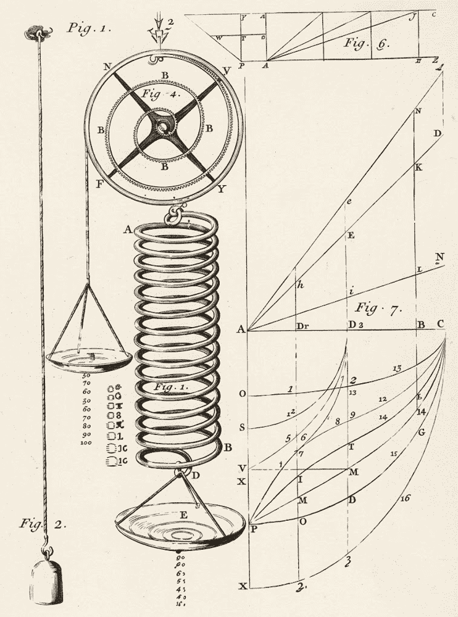
What this means in plain terms: the more you stretch or compress a spring, the more force it pushes back with, and that relationship is linear — up to the spring's elastic limit.
In modern notation:
F = −kx
Where F is the restoring force, k is the spring constant, and x is the displacement.
This equation is still used in every spring calculation today, from the hairspring in a mechanical watch to the suspension springs on a truck.

Hooke also applied his law practically, designing balance springs for pocket watches — making them significantly more accurate than anything that had come before.
His work laid the foundation for the spring scale, the galvanometer, and the mechanical clock's balance wheel.
→ External reference: Encyclopædia Britannica — Robert Hooke
If Hooke gave springs their scientific foundation, Richard Tredwell gave them their modern form.
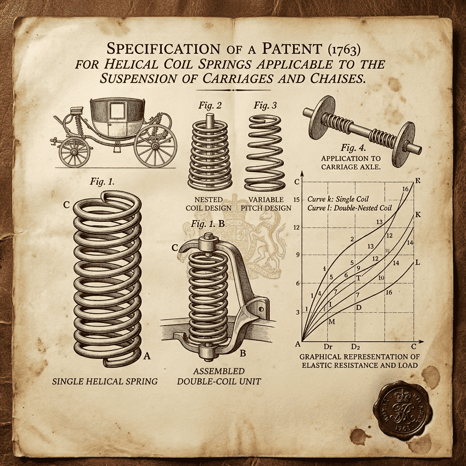
In 1763, Tredwell — a British inventor from Rotherham, Yorkshire — received Great Britain Patent No. 792, titled "Springs For Carriages."
The four-page patent included nine iterations of a helical suspension system, with language that made its novelty clear: "my new method of making and constructing springs for the hanging of coaches."
The coiled spring was a significant improvement over the leaf springs it replaced.
Leaf springs required regular separation and lubrication to prevent squeaking and seizing.
Tredwell's coiled design needed neither.
It was also more compact, more consistent in its force output, and easier to replace when worn.
Tredwell had actually filed an earlier patent in 1762 for a leaf spring for carriages — Patent No. 792 the following year represents a clear progression in his thinking toward the helical form.

Tredwell's spring was a significant invention, but the material of the era limited its performance.
The steel coil spring — harder, more elastic, and more durable — was first patented in America in 1857, initially for use in chair seats.
Steel's superior tensile strength allowed springs to store more energy without permanent deformation, opening up a much wider range of applications.
German inventor Heinrich Westphal incorporated coil springs into the first innerspring mattress in 1871.
His invention transformed the furniture and bedding industry, though Westphal himself died in poverty, never profiting from it.
The Industrial Revolution didn't just create demand for springs — it created the manufacturing infrastructure to produce them at scale.
In the early 1900s, hand winding gave way to machine winding, and a series of patents in rapid succession established automatic coiling, conical spring production, and torsion spring machines.
In less than five years, the spring industry went from artisanal to industrial.
The automobile made precision springs a mass-market necessity.
Suspension springs, valve springs, and return springs appeared in virtually every moving part of a car.
By the mid-20th century, over 90% of everything mechanically produced was estimated to require a spring of some kind.
| Date | Milestone |
|---|---|
| ~64,000 BC | Bow and arrow — earliest known spring application |
| ~4,000 BC | Coiled wire objects found in the Balkans (decorative/fastening use) |
| ~1,333 BC | Tutankhamun-era chariot uses flexible suspension elements |
| 3rd century BC | Roman torsion spring catapults refined by Archimedes |
| 15th century | First flat clock springs enable portable timepieces |
| 1493 | Leonardo da Vinci incorporates spring into pistol design |
| 1676 | Robert Hooke publishes law of elasticity (as anagram) |
| 1678 | Hooke publishes full explanation: ut tensio, sic vis |
| 1763 | Richard Tredwell patents first coiled spring (GB Patent No. 792) |
| 1857 | Steel coil spring patented in America for chair seats |
| 1861 | Julien Belleville patents the disc spring (French Patent No. 52399) |
| 1871 | Heinrich Westphal invents the innerspring mattress |
| Early 1900s | Automatic spring coiling machines enable mass production |
| 1968 | Smalley develops the first edgewound wave spring |
| 1970s | Nitrogen gas springs adopted industrially, starting with automotive applications |
| Today | CNC spring manufacturing produces springs from microscopic to industrial scale |
The history of springs isn’t just one invention — it’s a series of them, each solving a different problem.
Here they are in rough chronological order.
Robert Hooke applied his law of elasticity to the design of balance springs for watches in the 1670s — one of the first practical applications of his theoretical work.
These spiral torsion springs control the oscillation of the balance wheel in a mechanical watch, directly governing its accuracy.
Most modern movements run at 3–4 Hz, or 21,600–28,800 vibrations per hour.

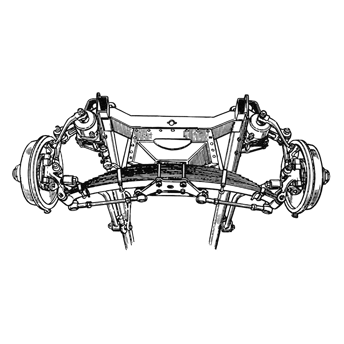
French carriage makers introduced the arc-shaped plate leaf spring in the 18th century to better support coach weight and absorb road shocks.
Richard Tredwell himself patented a leaf spring design in 1762, the year before his famous coiled spring patent — which shows how the two technologies developed in parallel.
Leaf springs are still standard on heavy-duty truck and trailer suspensions today.

Descended directly from Tredwell’s 1763 patent.
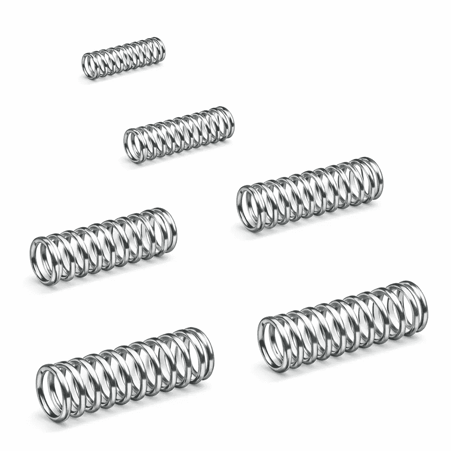
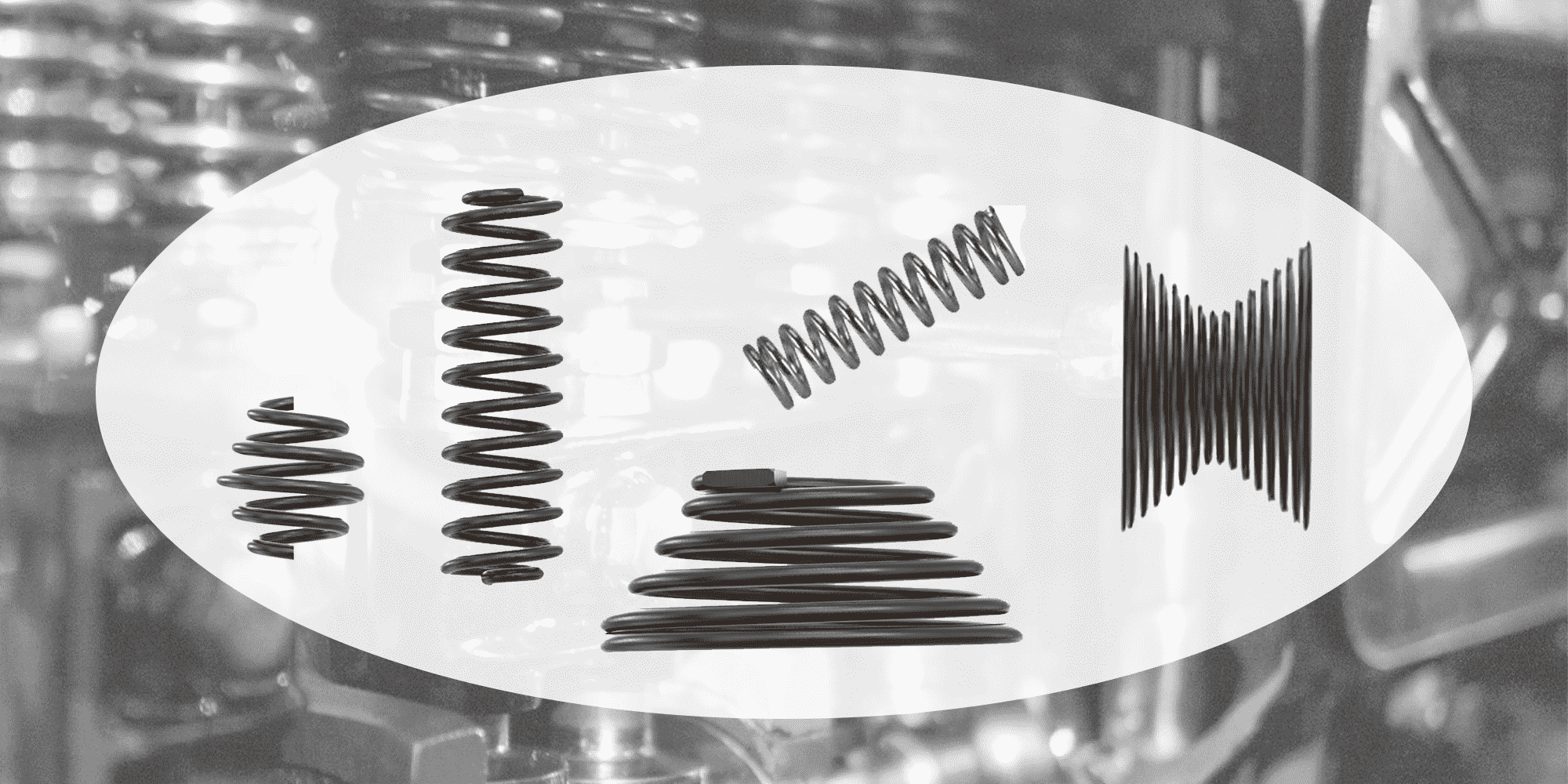
When most people picture a spring, this is it — a helical coil that shortens under load and pushes back.
The steel version arrived in 1857, and by the 20th century compression springs had become the most common spring type in industrial and consumer applications worldwide.

Extension springs developed alongside compression springs through the 19th century.
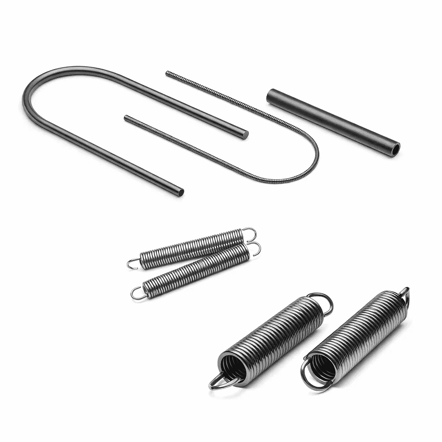
Where a compression spring pushes, an extension spring pulls — it stores energy by stretching and uses that energy to draw two components back together.
Screen doors, trampolines, and exercise equipment all rely on this principle.
Looping machines in the 1950s made them faster and cheaper to produce, cementing their place in mass manufacturing.

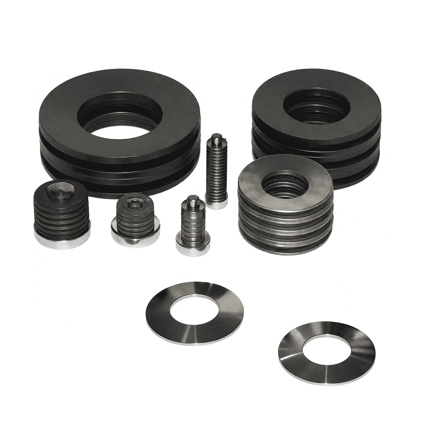
In 1861, French engineer Julien François Belleville of Dunkirk filed French Patent No. 52399 for a conical disc-shaped spring — the design that still carries his name.
The Belleville disc spring solves a specific problem: delivering very high load capacity in minimal axial space, something a coil spring cannot do efficiently.

In the early 1930s, engineers Almen and Laszlo formalized the design theory and established the DIN 2092 and DIN 2093 standards, which remain the global reference for disc spring specification today.
Modern applications range from aerospace and Formula One cars to bearing preload systems and high-pressure valve assemblies.
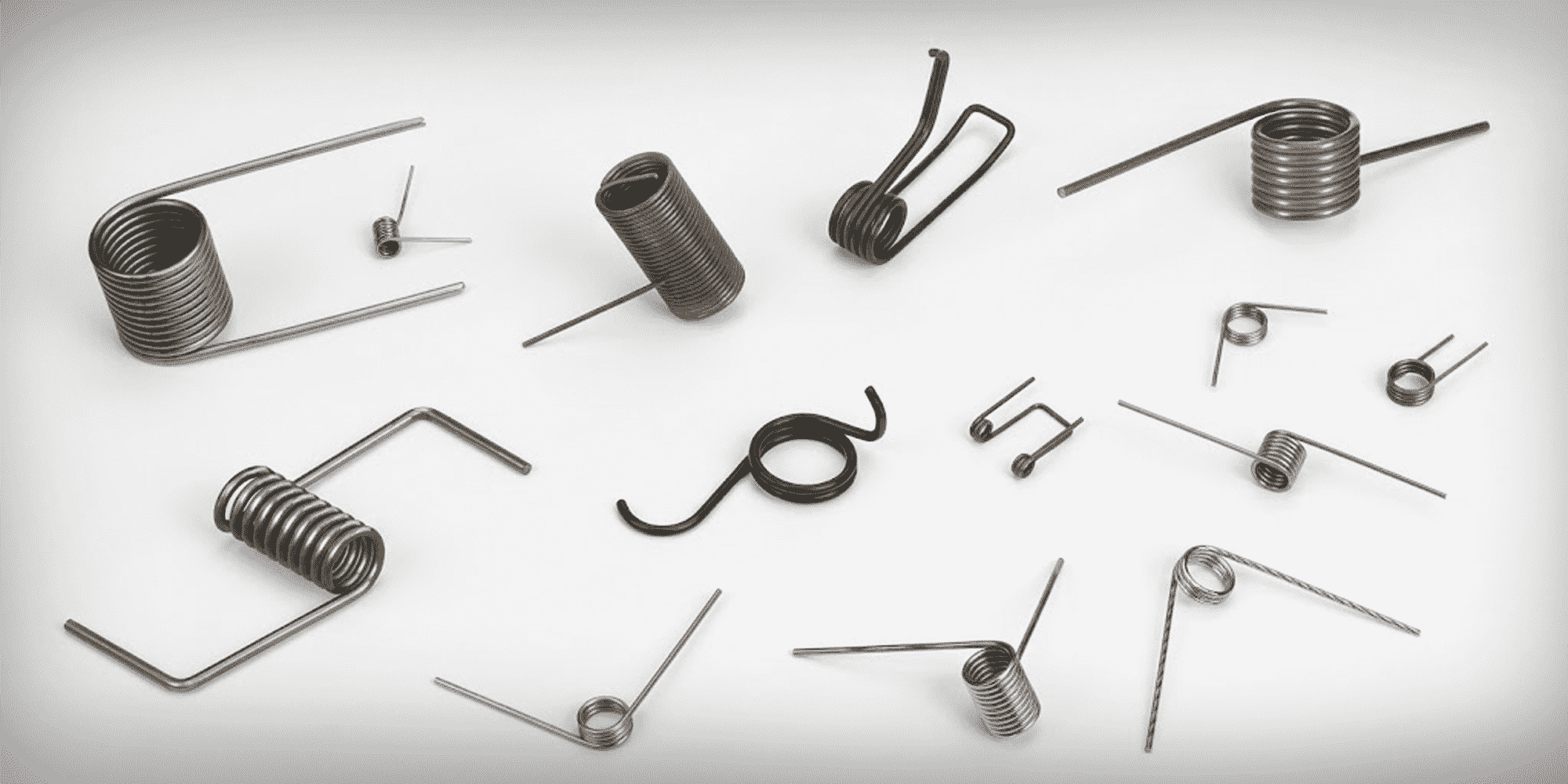
The torsion principle goes back to Roman catapults, which used twisted rope and sinew to store and release energy.
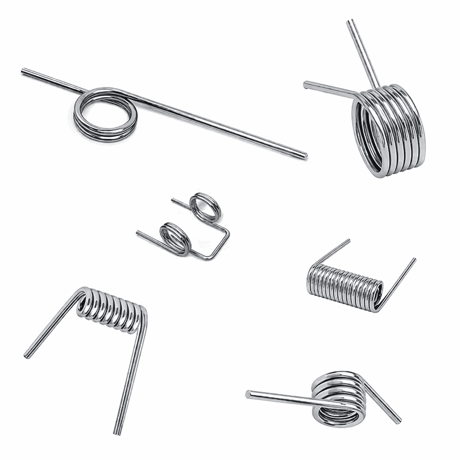
The modern helical torsion spring — coiled wire that stores energy through rotation rather than linear compression — became a standard engineering component in the 19th and early 20th centuries, helped by the same advances in steel wire production that drove compression spring development.
Today torsion springs appear in garage doors, clothespins, mousetraps, automotive seat recliners, and hundreds of other mechanisms requiring controlled rotational force.

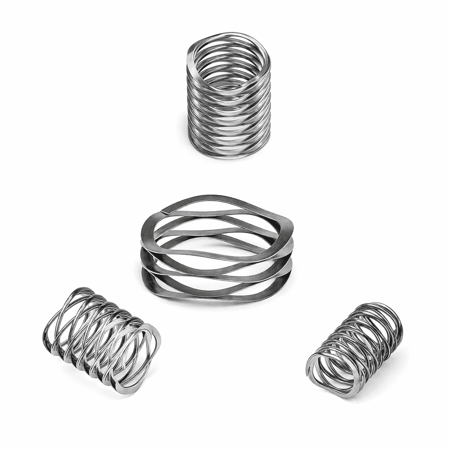
Smalley Steel Ring Company developed the first edgewound wave spring in 1968, initially to solve a load tolerance problem in Bayonet Connectors.
The wave spring’s key advantage is space: it delivers comparable force to a coil spring while occupying roughly half the axial height.
That matters in precision assemblies where every millimeter counts.
Wave springs have since appeared in medical instruments, aerospace equipment, and even on the Mars rover.

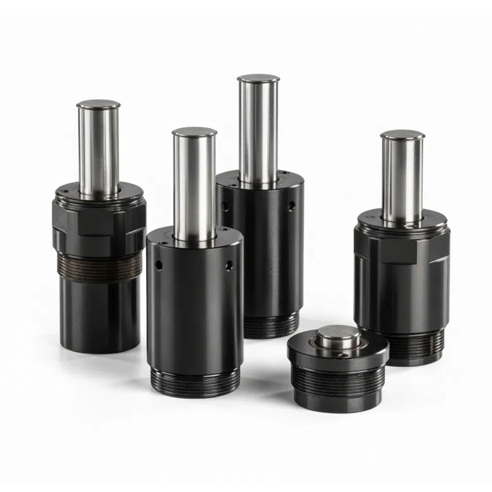
The gas spring concept was patented in the United States at the end of the 19th century, but it didn’t reach widespread industrial use until the 1970s, when automotive engineers adopted nitrogen gas springs for car hoods and trunk lids.
Unlike metal springs, a gas spring uses compressed nitrogen inside a sealed cylinder — a piston moves against the gas pressure, generating a smooth, near-constant force throughout its stroke.
This makes them particularly useful where controlled, predictable motion matters more than raw energy storage.
Today nitrogen gas springs are found in machine tool presses, hospital beds, office chairs, aerospace hatches, and die stamping equipment.

No single inventor.
If you mean the coiled spring, Richard Tredwell received the first patent in 1763.
If you mean the scientific principles behind spring design, Robert Hooke published his law of elasticity in 1676–1678.
If you include non-coiled springs, humans have been using them since at least 64,000 BC in the form of the bow.
Richard Tredwell, a British inventor from Rotherham, Yorkshire, received Great Britain Patent No. 792 in 1763 — the first documented patent for a helical coiled spring, designed for carriage suspension.
Hooke's Law states that the force a spring exerts is proportional to its displacement: F = −kx.
Published by Robert Hooke in 1678, it is the mathematical foundation for every spring calculation in engineering.
Without it, springs could not be reliably designed or specified.
The first steel coil spring was patented in the United States in 1857, initially for use in chair seats.
Steel's superior elasticity and strength over earlier materials transformed spring performance and opened up industrial-scale applications.
The bow and arrow, used for hunting and protection, is the oldest known spring application — dating back at least 64,000 years.
The first use of a spring as a component within a larger mechanical system is generally attributed to leaf spring-like elements in ancient Egyptian chariots around 1,333 BC.
Springs don't have a single inventor because they evolved over thousands of years, each era contributing a new form or a new understanding.
The key figures are two: Robert Hooke, who in 1676–1678 gave springs their mathematical foundation with his law of elasticity; and Richard Tredwell, who in 1763 turned that understanding into a patented, practical coiled spring design that launched the modern spring industry.
From bronze tweezers in 4,000 BC to CNC-wound precision springs today, the spring has been one of the most consistently useful mechanical inventions in human history.
It stores energy and releases it — a deceptively simple idea that underlies everything from a torsion spring in a garage door to a suspension bridge.
If you’re choosing between spring types for your next application, see our guide to torsion springs vs. extension springs.
A compression spring is an open-coil helical spring that resists compressive axial forces. When load is applied, it shortens and stores potential...
Most spring failures we see at Lily Bearing trace back to the same root cause: the spring was treated as an afterthought. The bearing got carefully...
Here's something most people get wrong about torsion springs: despite the name, the wire inside one is never actually twisted. It bends. Every coil...