

Home/
Blog/
The Master Guide to Springs: 8 Essential Types and 5 Critical Selection Factors

8 min read

The Master Guide to Springs: 8 Essential Types and 5 Critical Selection Factors

The Master Guide to Springs: 8 Essential Types and 5 Critical Selection Factors
The Master Guide to Springs: 8 Essential Types and 5 Critical Selection Factors
17:38

A spring isn't just coiled wire—it's a critical energy-storage component where choosing the wrong springs means system failure.

Whether you're designing aerospace actuators cycling 10M+ times or stamping dies hitting 500 strokes/min, spring physics matters.

springs

I learned this the hard way in 2019. A client's injection mold kept jamming after 50K cycles—half the expected life.

Root cause?

We'd spec'd standard compression springs where gas springs were needed.

The constant-force curve would've prevented the progressive binding.

That $12K mistake taught me: spring selection isn't about catalogs, it's about force profiles.

This guide is written for engineers and designers who have moved beyond “What is a spring?” and need actionable data on “Which spring, and why?”

We’ll cut through basic theory to focus on practical selection and the manufacturing nuances that separate a prototype from a production-ready component.


8 Essential Industrial Spring Types: Selection & Decision Tools

Quick Selection Logic:

Need high, constant force in heavy-duty tooling?

Nitrogen Gas Springs

Minimal axial space (<50%) available?

Linear Wave Springs

Constant radial tension on a rotating shaft?

Garter Springs

High torque in compact radial space?

Rotor Springs

Need flat-profile force or electrical conductivity?

Strip Springs

Extreme load with minute deflection?

Disc Springs (Belleville)

Standardized high-impact stamping?

Die Springs (ISO 10243)

Standard axial push/pull/twist?

Compression, Extension, or Torsion Springs


With the physics established, we now turn to the practical toolkit.

The following eight spring types form the core solutions for industrial design.

Understanding their distinct force profiles and optimal applications is the key to moving from concept to reliable operation.


1. Nitrogen Gas Springs: Engineered Constant Force for Demanding Tooling

When your application demands a near-constant force over a long stroke within a compact envelope, mechanical coil springs reach their limit.

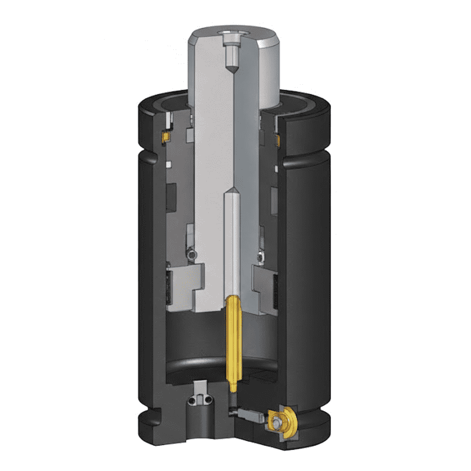
Nitrogen gas springs are the engineered solution.

Nitrogen Gas Springs

How They Work & Why They Excel:
Sealed within a precision cylinder and piston assembly is high-pressure nitrogen.

Unlike a coil spring whose force increases linearly (F=kx), a gas spring's force curve is far flatter, typically exhibiting less than a 10% force drop over its working stroke.

This is due to the gas compression law, where force rises gradually as volume decreases.


Key Engineering Advantages:

  • Truly Constant Force: Essential for consistent metal strip pressure in progressive dies, reliable part ejection, and uniform mold clamping in plastics. This eliminates the variable friction and part distortion caused by rising-force coil springs.
  • Extreme Force Density: A single, compact gas spring can replace a nest of 4-8 heavy coil springs, dramatically simplifying tool design, reducing parts count, and freeing up critical space within the die or mold.
  • Standardized Interchangeability: Stick to ISO 11901-compliant units from reputable manufacturers for global interchangeability. I've seen 3-week lead time disasters when clients spec'd proprietary gas springs that only one supplier makes.
  • Minimal Maintenance: As a sealed unit, they are not susceptible to fatigue failure in the same way as coiled wire, offering exceptionally long service life in high-cycle applications with proper lubrication.


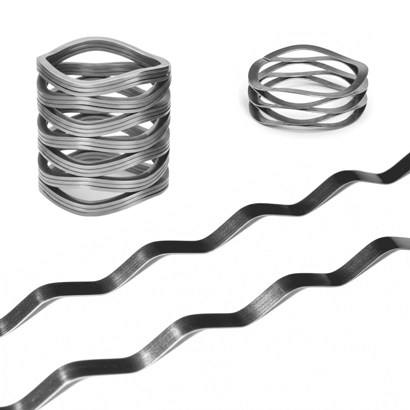
2. Wave Springs: Maximum Force in Minimum Axial Space

When axial space is the primary constraint, wave springs provide the optimal force-deflection solution where conventional round-wire springs cannot fit.

Wave Springs

The Space-Saving Principle:
A wave spring is manufactured from flat wire, pre-formed into a coil with multiple waves per turn.

When compressed, these waves flatten, generating force.

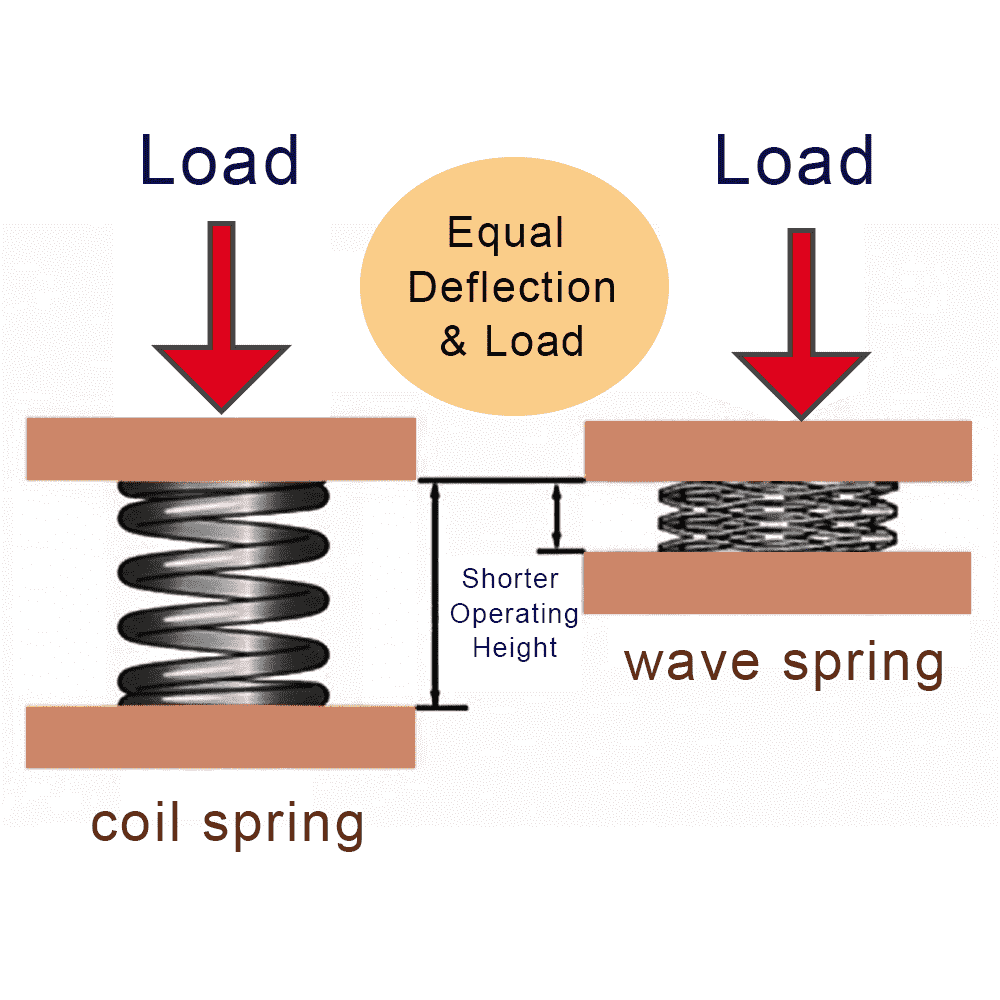
This geometry allows it to be up to 50% shorter in free height and solid height than a round-wire spring of equivalent force and deflection.

Comparison of coil spring vs wave spring same load, shorter operating height

Applications & Critical Design Note:

  • Ideal For: Preloading bearings in cramped housings, dynamic sealing in limited-length glands, and providing clamp load where solid height is the limiting factor.
  • Stress Consideration: The wave crests act as multiple, closely spaced points of bending. This creates a higher localized stress concentration factor compared to a round wire in torsion. Therefore, for high-cycle applications (>1 million cycles), the maximum allowable stress must be carefully calculated, often requiring a more fatigue-resistant material or a larger design margin.

Dimension

Round Wire Spring

Wave Spring

Space Saved

Free Height

25mm

12mm

52%

Solid Height

20mm

10mm

52%

Force @ 5mm defl.

100N

100N

Same

Max Cycles (steel)

10M

1M*

-90%

*Higher stress concentration at wave crests limits fatigue life


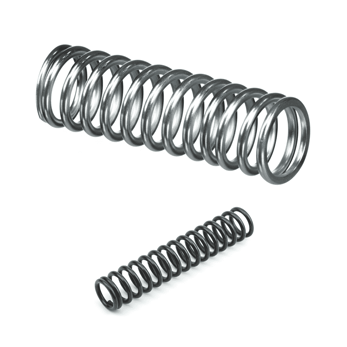
3. Compression Springs: Axial Load Management

As the most versatile and widely used spring, the compression spring is the benchmark. 

Performance is dictated by a specific mathematical balance:

Compression Springs

Key Spec: Spring Rate (k)

The spring rate, defined as the force required per unit of deflection, reveals the true behavior of the component:

k = (Gd⁴)/(8nD³)

Where:

G ≈ 80,000 MPa (for carbon steel),

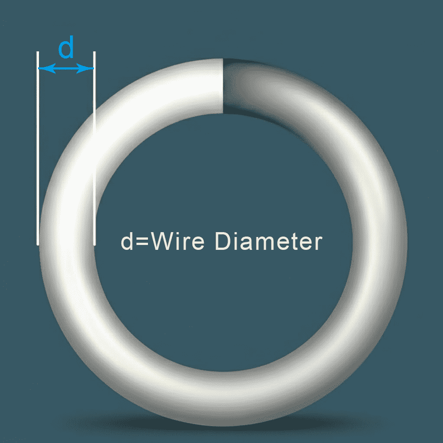
d= wire diameter,

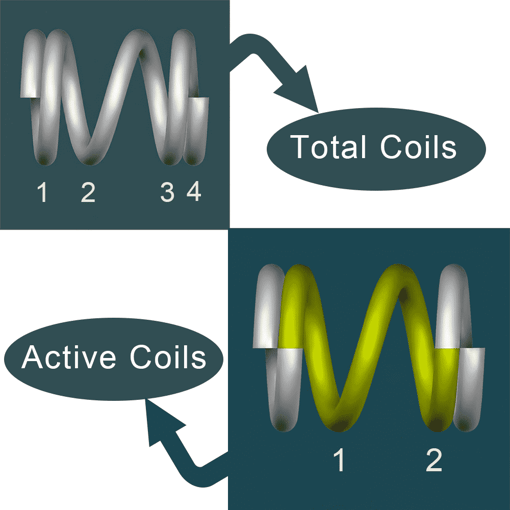
n= active coils,

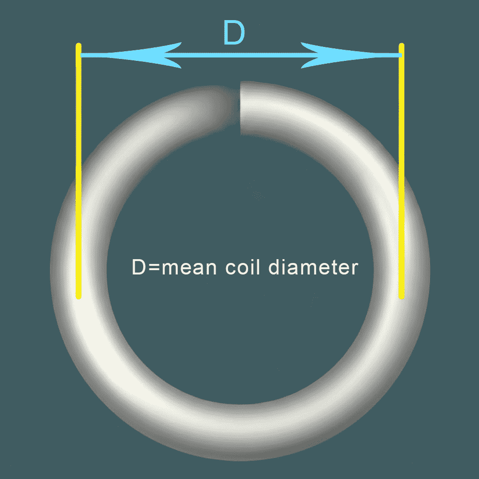
D= mean coil diameter

Wire Diameter of Compression Springs

Active Coils of Compression Springs

Mean Coil Diameter of Compression Springs

Why Wire Diameter Tolerance is Critical

  • d4Dominance: Because wire diameter is raised to the fourth power, it is the most critical variable in the assembly.
  • Force Variance: A mere 2% wire tolerance shift results in an 8% force variance. This explains why "identical" springs often show inconsistent field performance.
  • Buckling Risk: If the slenderness ratio (free length/D) exceeds 4:1, the spring risks buckling.


Decision Logic: Ground Ends vs. Open Ends & The Garter Spring Variant

  • Open Ends: Default for slenderness <4:1 or self-aligning seats
  • Ground Ends: Machine flat when ratio >4:1 (prevents buckling) or precision alignment needed (e.g., valve mechanisms)
  • Cost Impact: Grinding adds 15-30% to unit cost


Garter Springs – A Specialized Offshoot: 

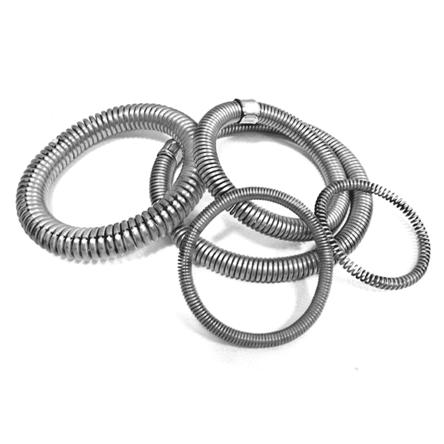
By joining the ends of a compression-style coil spring to form a continuous ring, you create a garter spring.

Garter Springs

Its primary function is to exert a consistent, inward-directed radial force.

This makes it indispensable for sealing applications (lip seals, shaft seals), where it provides the uniform tension that maintains the seal's contact with a rotating or reciprocating shaft.


4. Torsion Springs: Precision Rotary Force & Energy Storage

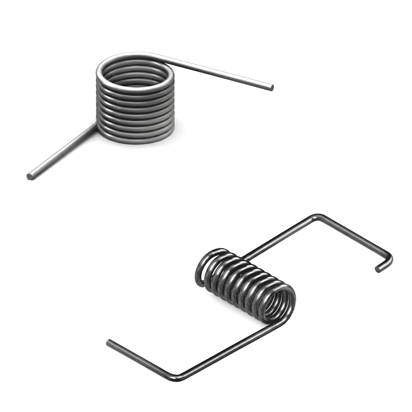
Torsion springs store and release energy by twisting about their central axis.

They are the go-to solution for returning components to a rest position (e.g., clip doors, counterbalanced lids) or providing a sustained rotational torque.

Torsion Springs

Critical Design Pitfall to Avoid:
As a torsion spring is wound (loaded), its body coil diameter decreases.

If designed around a mandrel, this causes binding—ask me how I know (spoiler: jammed door hinge on a production run).

Conversely, when unwound, the diameter increases and may jam in an outer housing. 

Always specify and verify the mandrel/housing clearance in both the loaded and unloaded states.


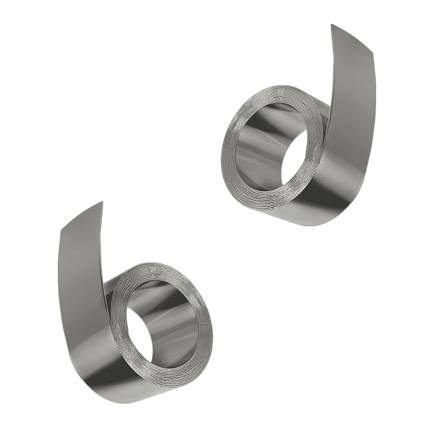
Advanced Application: Rotor Springs for High-Torque Energy Storage

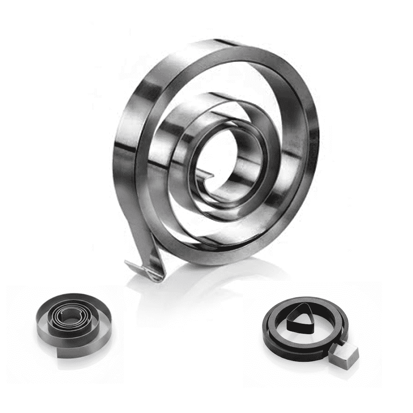
A rotor spring (or power spring) is a highly specialized torsion spring designed for maximum energy storage in a minimal radial space.

Rotor Springs

It consists of a long, pre-stressed flat strip wound tightly onto an arbor. When released, it delivers a high initial torque that decays as it unwinds.

  • Typical Use Case: Mechanical starter motors (lawnmowers, generators), retraction mechanisms for cables and hoses, and clockwork motors.
  • Key Specification: Total available work (energy), measured in in-lbs or Joules, based on material, cross-section, and total length of strip.


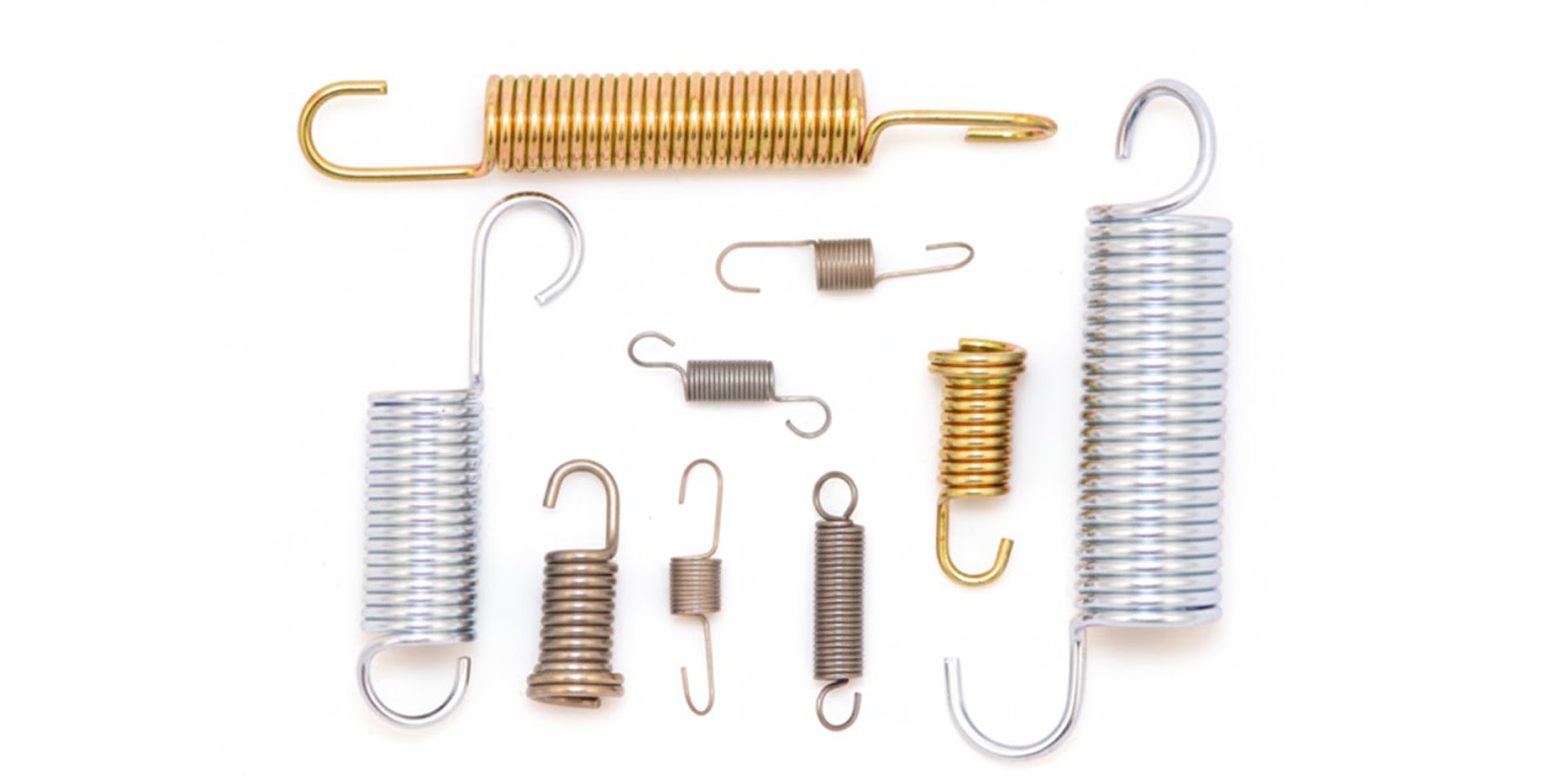
5. Extension Springs: Controlled Tension with Critical Hook Design

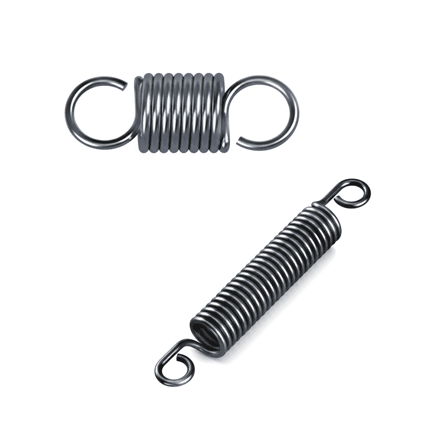
Extension springs are designed to resist a pulling force, with coils typically wound closed to provide initial tension.

Extension springs

The Two Pillars of Reliable Design:

  • Initial Tension: This is the built-in force that must be overcome before the coils begin to separate. It allows the spring to take up slack in an assembly without elongating, ensuring zero backlash.
  • Hook/End Form Integrity: Over 80% of extension spring failures initiate at the stress concentration where the hook meets the body. For any dynamic application:

Avoid sharp-bend German hooks for >10,000 cycles.

Specify full torsion loops or reduced-stress hooks (e.g., cross-over center hooks, side hooks) to distribute stress more evenly and dramatically extend fatigue life.


6. Disc Springs (Belleville): Extreme Loads in Microscopic Stroke

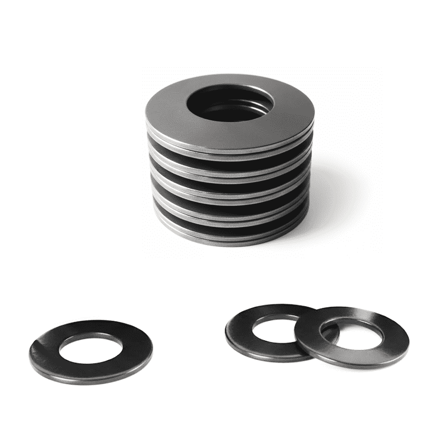
When you need immense force over a deflection measured in tenths of a millimeter, disc springs are the only solution.

These conical washers support loads orders of magnitude greater than coil springs of similar outer diameter.

Disc Springs

Engineering Through Stacking:
Their genius lies in modular configurability. By stacking multiple discs:

  • In Parallel: Load capacity multiplies. (3 discs in parallel ≈ 3x the load at a given deflection).
  • In Series: Deflection multiplies. (3 discs in series ≈ 3x the deflection at a given load).
  • In Series-Parallel Combinations: Precisely tailor both the load-deflection curve and the total height to meet exacting requirements, such as maintaining preload in bolted connections subject to thermal expansion or vibration.

Practical Example:

Need 10,000N load with 2mm deflection?

  • Option A: Single disc → 10,000N @ 0.5mm (too stiff)
  • Option B: 4 discs (each 10,000N @ 0.5mm) in series- 10,000N total @ 2.0mm deflection. ✓ 

The formula:

Loadtotal = Loadsingle × nparallel 

Deflectiontotal = Deflectionsingle × nseries


7. Die Springs: ISO-Standardized Resilience for Stamping Presses

The stamping press environment is a torture test: impact loads, contamination, and cycles numbering in the hundreds of millions.

General-purpose compression springs will fail prematurely here.


The ISO 10243 Standard is Your Blueprint:
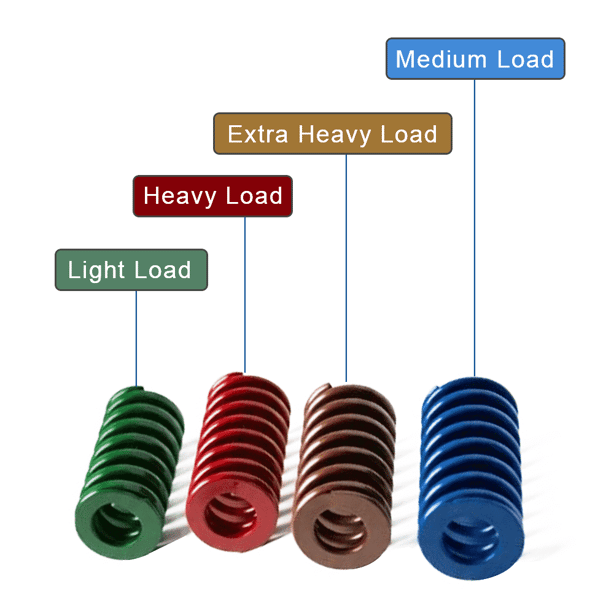
Die springs are classified by a universal color-coding system that defines their load capacity and ensures global interchangeability:

  • Light Load (Green)
  • Medium Load (Blue)
  • Heavy Load (Red)
  • Extra Heavy Load (Yellow)

color-coding system of die springs

Critical Practice: 

Always derate the static load rating for dynamic service.

A spring rated for 1000N static may only be suitable for 700N in a high-impact, high-cycle press application.

Material choice (typically chrome vanadium or silicon chromium) is optimized for shock resistance and fatigue life.


8. Flat & Custom Formed Springs: Integration Beyond Coiling

When helical springs fail to meet spatial or functional constraints, flat spring technology provides the answer.

By utilizing precision stamping and coining, we transform high-carbon steel and alloys (like 17-7 PH) into multi-functional mechanical components.


Strip Springs (Constant Force)

  • Stable High-Travel Force: Coiled pre-stressed strips provide stable force (±10%) over several meters—ideal for counterbalancing hospital beds or overhead doors.
  • Space Efficiency: Delivers long extension without the "bulky" solid height of large compression springs.

Strip Springs

Custom Flat Formed Components

Starting from high-carbon spring steel or specialty alloys like 17-7 PH, our precision stamping, coining, and heat-treating processes produce functional components impossible to achieve through coiling.

  • Multifunctional Integration: We integrate mounting holes, electrical contacts, and wear surfaces into a single spring. This reduces your Bill of Materials (BOM) and eliminates potential failure points in complex assemblies.
  • Complex 2D/3D Geometries: Precision-stamped shapes can fit into irregular footprints or provide multiple contact points, actuating in specific, multi-stage sequences.
  • Precision Force Profiles: Custom geometry allows for total control over the force-deflection curve, achieving non-linear rates or specific trigger points that standard wire springs cannot provide.


5 Critical Factors for How to Select the Right Spring

Before you email that RFQ, answer these 5 questions:

1. What's my solid height vs. available space?

2. Static or dynamic load? (Cycles: ____)

3. Operating temperature: ____ °C

4. Environment: □ Indoor □ Outdoor □ Chemical exposure

5. Tolerance needed: □ Commercial (±15%) □ Precision (±5%)

Miss even one, and you'll get springs that "technically meet spec" but fail in service.


Use this checklist before finalizing any specification.

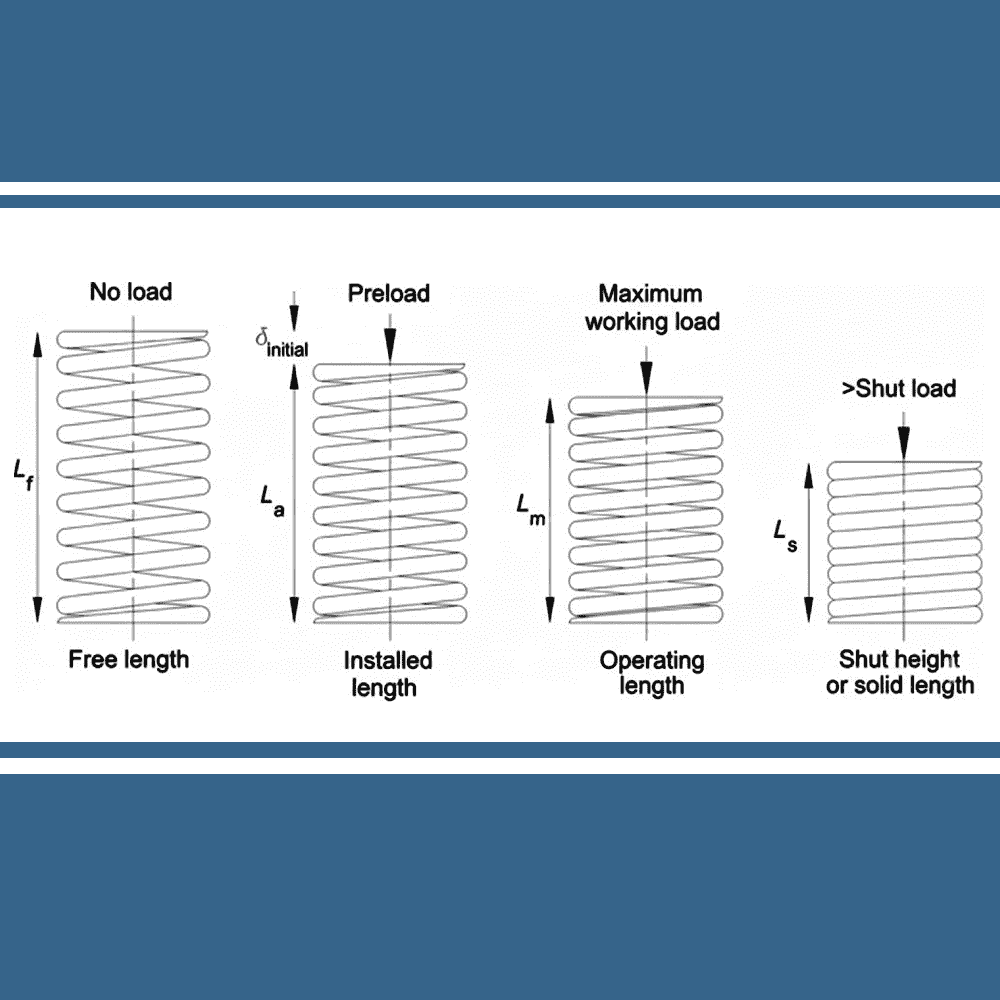
1. Spatial Constraints: Calculating the Working Envelope

Define the installed height and fully compressed (solid) height.

The solid height is calculated as (Total Coils) * (Wire Diameter) for compression springs. 

Always include a minimum “clash allowance” of 10-15% of the wire diameter to prevent coils from fully contacting, which causes stress to skyrocket and leads to immediate failure.

Technical diagram of a compression spring defining Free Length, Operating Height, and Solid Height with Clash Allowance

Key dimensional parameters defining the spring operating envelope


2. Force Requirements & Linearity

What is the required force at the installed height? At the operating height?

Is the application static (like a static preload) or dynamic (like a cycling mechanism)?

For dynamic applications: The consistency of the spring rate (k) is paramount. Specify tighter tolerance grades (e.g., ±10% instead of ±15% on k) to ensure repeatable machine timing and force output.


3. Material Metallurgy: From Stainless to 17-7 PH & Inconel

Material

Max Temp

Fatigue Life

Corrosion

Relative Cost

Best For

Music Wire

120°C

★★★★☆

★☆☆☆☆

1x (baseline)

Indoor, high-stress

SS 302/316

250°C

★★★☆☆

★★★★★

2.5-3x

Food, marine

17-7 PH

340°C

★★★★★

★★★★☆

8-12x

Aerospace

Inconel X-750

600°C

★★★★★

★★★★★

25-40x

Jet engines


4. Fatigue Life: The Goodman Diagram Approach

For springs designed for >10,000 cycles, you must perform a fatigue analysis.

The Modified Goodman Diagram is the standard engineering tool.

It plots the material’s alternating stress (from the cyclic load) against its mean stress (from the preload).

The goal is to keep the operating point well within the “infinite life” region (typically defined as 10^7 cycles for steel springs).

Factors like shot peening significantly expand this safe region.


Case Study: The 200K Cycle Surprise

Client spec'd a spring for "infinite life" at 50N mean load, 20N alternating.

Goodman chart showed we were safely in the green zone—until failures started at 200K cycles (target was 10M).

Root cause: They measured loads in a static test rig. Actual service had vibration-induced stress spikes hitting 90N peak.

The lesson? Always measure loads in the real operating environment, not on a bench.

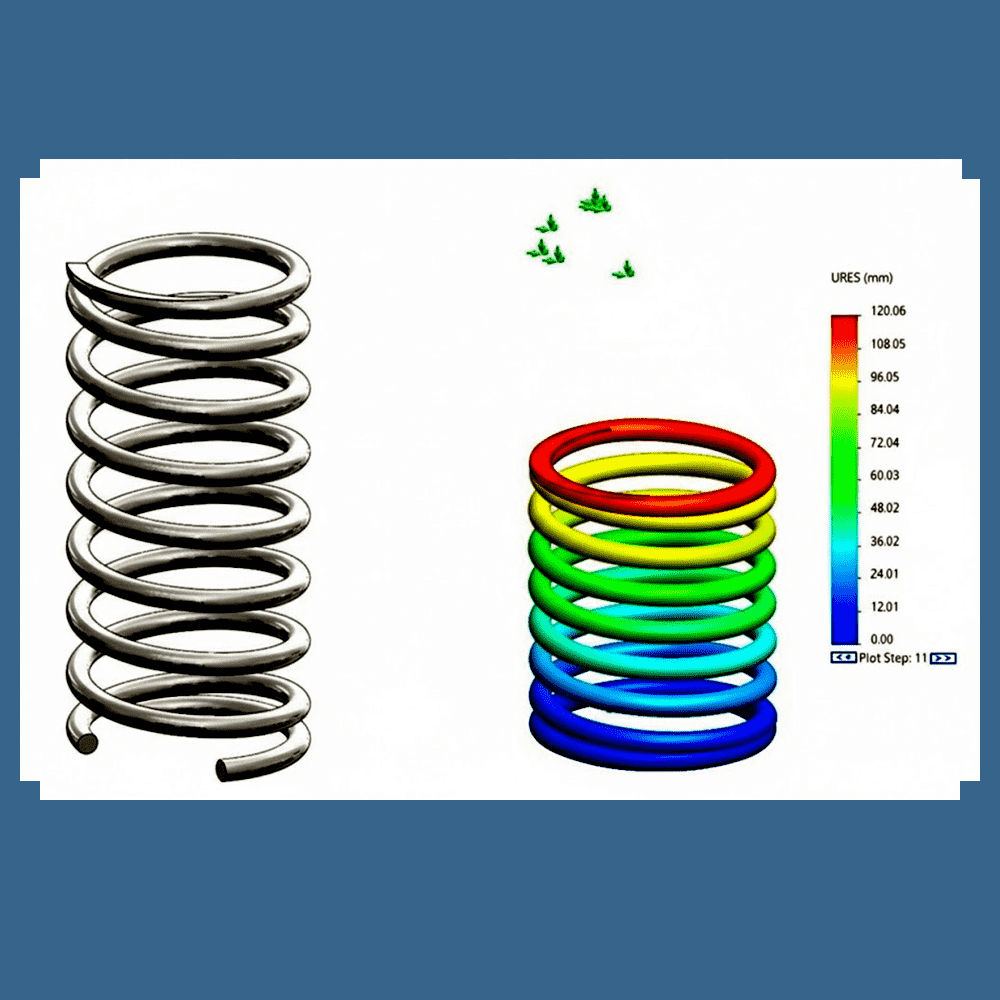
FEA stress analysis of a compression spring showing peak stress on inner coil diameter

As shown in the FEA stress analysis above, the peak stress (red zones) is concentrated on the inner diameter of the coils.

When vibration-induced spikes hit 90N, these localized stress points exceeded the fatigue limit, initiating micro-cracks that led to the 200K-cycle failure.


5. Tolerance Standards: Impact of DIN/ISO/ASTM Compliance

Never leave tolerances to chance. Reference published standards:

  • DIN 2095: Defines tolerance grades (1, 2, 3) for compression springs based on wire diameter and coil index. Grade 1 is high-precision; Grade 2 is the commercial standard; Grade 3 is for coarse applications.
  • ISO 10243: Standard for die spring dimensions and loads.
    Specifying “DIN 2095 Grade 2” communicates precise expectations for free length, spring rate, and load tolerances, ensuring fit and function in an automated assembly line.
  • ASTM: ASTM A125 (for heat-treated steel helical springs) or ASTM A228 (for music wire) define the material quality and tensile strength requirements essential for predictable performance.


Conclusion

Selecting the right industrial spring is a systems engineering challenge.

It requires balancing spatial limits against force requirements, material cost against lifecycle performance, and theoretical models against manufacturing realities.

By applying the decision frameworks in this guide—from choosing a wave spring for space constraints to specifying 17-7 PH and shot peening for fatigue-critical roles—you move from guesswork to engineered reliability.

This directly translates to increased system MTBF, reduced unplanned downtime, and lower total cost of ownership.

Need a second opinion on your spring sizing? 

The Lily Bearing engineering team provides complimentary load analysis—just send us your spatial envelope and force requirements. It’s faster and more reliable than trial-and-error prototyping.


A Comprehensive Guide to Factors Affecting Spring Performance

A Comprehensive Guide to Factors Affecting Spring Performance

All precision spring manufacturers recognize that spring performance is a critical concern. If a spring lacks reliability, the equipment it supports...
Read More
How Are Springs Made? Your Technical Guide to Spring Manufacturing

How Are Springs Made? Your Technical Guide to Spring Manufacturing

Turning a straight steel wire into a component that survives 10 million compression cycles isn't just a simple mechanical task. It takes precision...

Read More
What is a Compression Spring? A Comprehensive Guide to Design and Function

What is a Compression Spring? A Comprehensive Guide to Design and Function

When you think of a "spring," the image that likely comes to mind is a compression spring. As the most common type of metal spring, these devices are...

Read More