


Bearing Load Formulas for Spur, Helical & Herringbone Gears
Transmission methods for equipment include mechanical, hydraulic, electric, and magnetic. Mechanical transmission is further divided into friction...
Equipment noise complaints from customers? Production costs 40% over budget?
The choice between helical vs. spur gears affects everything from performance to your bottom line.
This guide provides a direct comparison to help you make the right choice.
Who This Guide Is For:
Design engineers selecting gears for new projects • Maintenance teams evaluating replacements • Procurement professionals comparing cost vs. performance
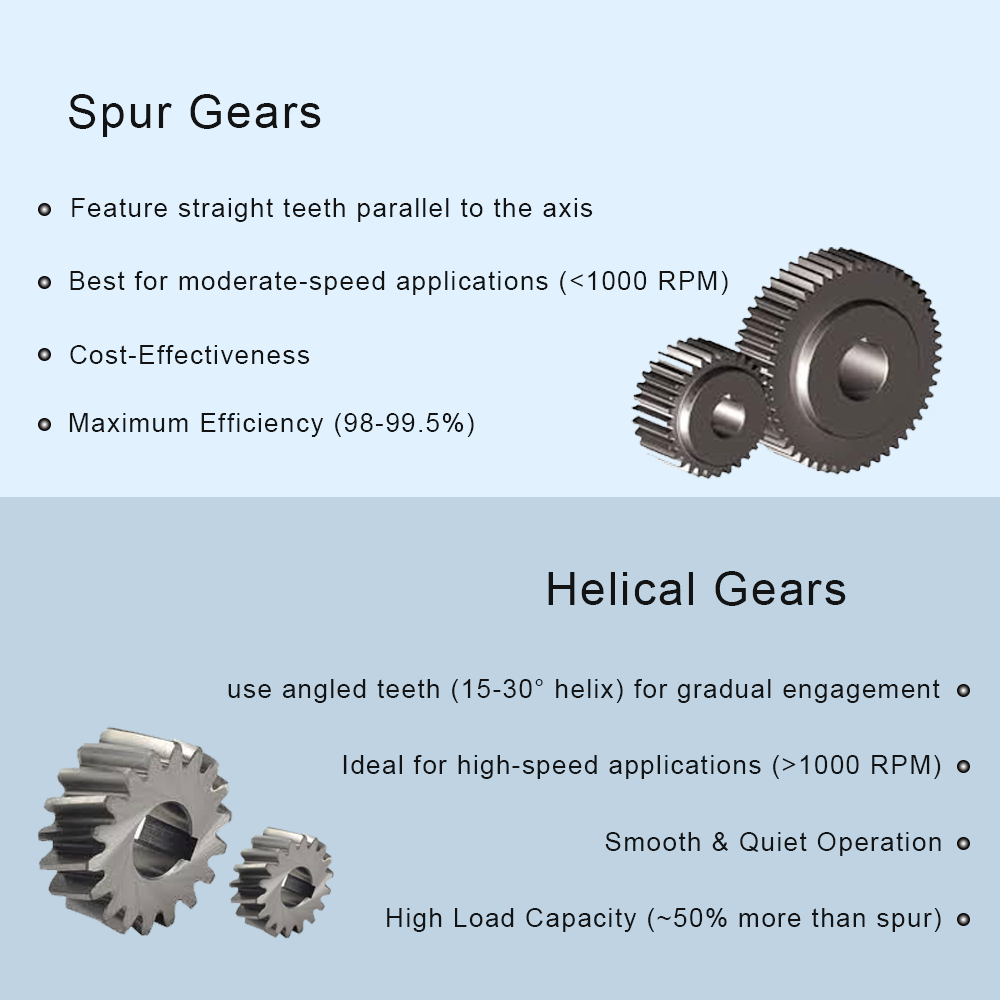
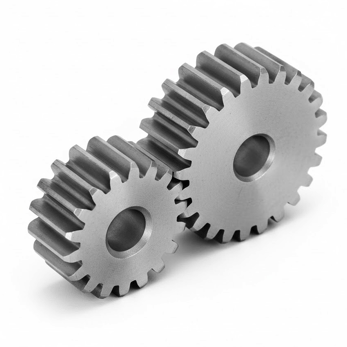
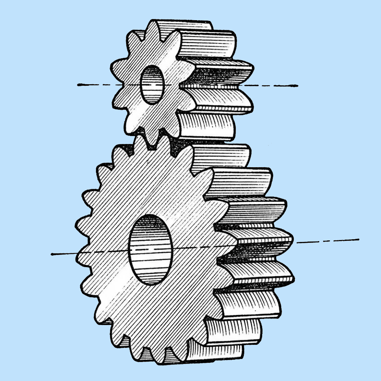
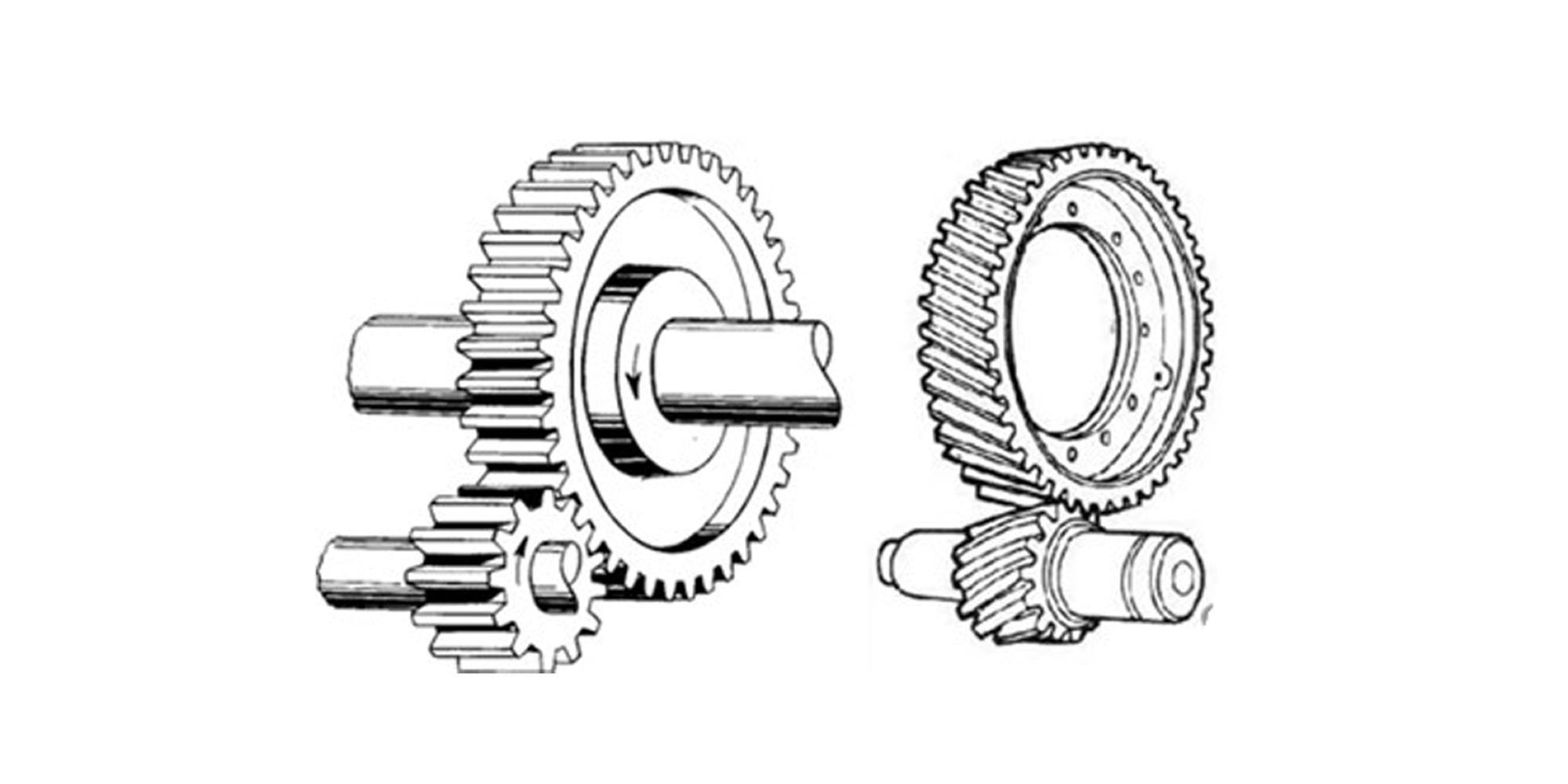
Spur gears feature straight teeth parallel to the axis.
Best for moderate-speed applications (<1000 RPM) where cost-effectiveness and maximum efficiency (98-99.5%) are priorities, but generate noise and vibration at higher speeds.

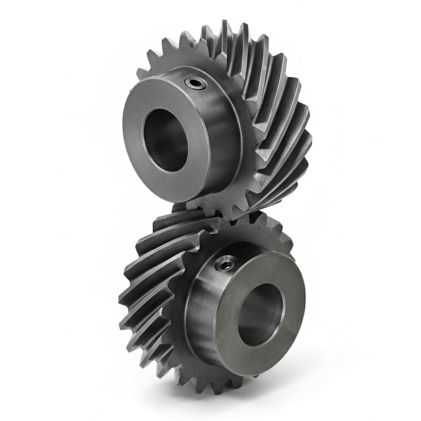
Helical gears use angled teeth (15-30° helix) for gradual engagement.
They excel in high-speed applications above 1000 RPM.
Key advantages include quiet operation and 50% higher load capacity than spur gears. However, they cost 30-40% more and need thrust bearings.
Structure: Teeth parallel to the gear axis, forming a simple cylindrical shape
Contact Mechanism: Full line contact across the tooth face. All teeth engage simultaneously, creating immediate impact and shock loading.

The Core Engineering Principle:
The simultaneous engagement results in a low contact ratio (around 1.2 to 1.6). This means fewer teeth are sharing the load at any instant. It is the fundamental reason for higher impact stress and the characteristic noise at high speeds. This principle is the primary constraint on their load capacity and acoustic performance.
Performance Characteristics:
Best Use Cases:
Cost-sensitive applications, low-moderate speeds, simple maintenance requirements
Structure: Teeth cut at a helix angle (typically 15-30°), forming a spiral pattern around the gear body.
Contact Mechanism: Point contact that moves diagonally across the tooth face. Progressive engagement with 2-3 teeth engaged simultaneously, building load gradually.

The Core Engineering Principle:
Gradual, overlapping engagement creates a high contact ratio (often exceeding 2.0). At any given moment, multiple teeth are in contact and share the load. This is the root cause of their superior smoothness, quiet operation, and significantly higher load-bearing capability.
Performance Characteristics:
Best Use Cases: High-speed applications, noise-sensitive environments, high-load requirements, premium products
Winner: Helical Gears

Spur Gears
Winner: Spur Gears
Helical Gears:
The helix angle generates significant axial (thrust) load along the shaft. This is a direct trade-off for smooth operation and high load capacity.
This thrust load necessitates the use of thrust bearings, such as angular contact ball bearings or tapered roller bearings. Consequently, bearing costs rise by 30–50%, and the system requires stronger, more rigid housings.
Spur Gears:
Generate purely radial loads, allowing simple, cost-effective radial bearings and less complex housing designs.

Winner: Spur Gears
Winner: Helical Gears
Spur Gears
Helical Gears
Spur Gears
Helical Gears
|
Feature |
Helical Gears |
Spur Gears |
|
Tooth Design |
Angled (15°–30°), gradual engagement |
Straight, parallel, instantaneous engagement |
|
Load Capacity |
✅ Higher (~50% more) |
Standard |
|
Efficiency |
96–98% |
✅ 98–99.5% |
|
Noise & Smoothness |
✅ Quiet, smooth above 3000 RPM |
Noisy above 1000 RPM |
|
Thrust Loads |
Generates axial thrust → needs bearings |
✅ Only radial loads |
|
Shaft Flexibility |
Parallel or crossed (0–90°) |
✅ Parallel only |
|
Manufacturing / Cost |
More complex → higher cost |
✅ Simple → lower cost |
|
Space Requirement |
Needs axial space for bearings |
✅ Compact |
Operating Conditions:
Priorities:
Best Applications:
For a deeper look at spur gear types, materials, and hub configurations, see What Are Spur Gears?
Operating Conditions:
Priorities:
Best Applications:
Simple Framework for Choosing Between Helical vs. Spur Gears:
|
Feature |
Spur Gear |
Helical Gear |
|
Budget |
✅ Tight budget |
❌ Higher cost acceptable |
|
Speed |
✅ <1000 RPM |
✅ >1000 RPM |
|
Noise-sensitive |
❌ Not critical |
✅ Must be quiet |
|
Load demand |
Moderate |
✅ High |
|
Axial space |
✅ Compact required |
❌ Space for thrust bearings |
|
Maintenance |
✅ Simple preferred |
Complex acceptable |
Scoring: If 4+ checkmarks in one column → That gear type is likely your best choice
The helical vs. spur gears decision comes down to your specific application requirements.
Spur gears deliver simplicity, high efficiency, and cost-effectiveness for straightforward power transmission at moderate speeds.
Helical gears provide superior smoothness, quiet operation, and higher load capacity for demanding high-speed applications.
When choosing between helical vs. spur gears, prioritize your actual needs (speed, load, noise, budget) over maximum performance ratings.
Need Expert Advice? Contact us with your specifications—we'll recommend the optimal solution.
Q: Which is better, spur or helical gear?
A: There’s no single “better” option. Spur gears are simpler and more cost-effective, while helical gears are smoother, quieter, and handle higher loads. Choose based on your system’s speed, noise, load, and budget requirements.
Q: What is the main disadvantage of helical gears?
A: Helical gears are more expensive and generate axial thrust, which requires thrust bearings and stronger housings.
Q: Do helical gears transmit more power?
A: Yes. Helical gears can transmit roughly 50% more power than spur gears due to gradual engagement and multiple teeth sharing the load.
Q: Are helical gears noisier than spur gears?
A: No. Helical gears are quieter because gradual tooth engagement reduces impact and vibration, especially at high speeds.
Q: Can I directly replace spur gears with helical gears?
A: No. Helical gears produce axial thrust and need thrust bearings, stronger housings, and precise alignment, so a system redesign is required.
Transmission methods for equipment include mechanical, hydraulic, electric, and magnetic. Mechanical transmission is further divided into friction...

Gears remain fundamental components in mechanical systems worldwide, transferring motion and power between rotating shafts. Knowing which gear to...
In the world of robotics, the glory usually goes to the complex code and the vision systems. Flashy end-effectors also often take the spotlight. At...