


Home/
Blog/
Common Pillow Block Bearing Failures and How to Avoid Them

7 min read

Common Pillow Block Bearing Failures and How to Avoid Them

Common Pillow Block Bearing Failures and How to Avoid Them
15:54

Pillow block bearings are the backbone of rotating machinery across conveyors, fans, pumps, and agricultural equipment. Yet even these rugged components fail — often silently, often expensively.

Industry data suggests that over 70% of bearing failures are preventable with proper installation, lubrication, and maintenance practices. Understanding why pillow block bearings fail is the first step toward eliminating those failures entirely.

In this guide, we break down the six most common pillow block bearing failure modes, their root causes, early warning signs, and — most importantly — actionable prevention strategies backed by engineering best practices.

36%

Failures caused by inadequate lubrication

27%

Caused by misalignment during installation

18%

Attributed to contamination & corrosion

19%

Overload, fatigue & other causes


Understanding Pillow Block Bearing Anatomy

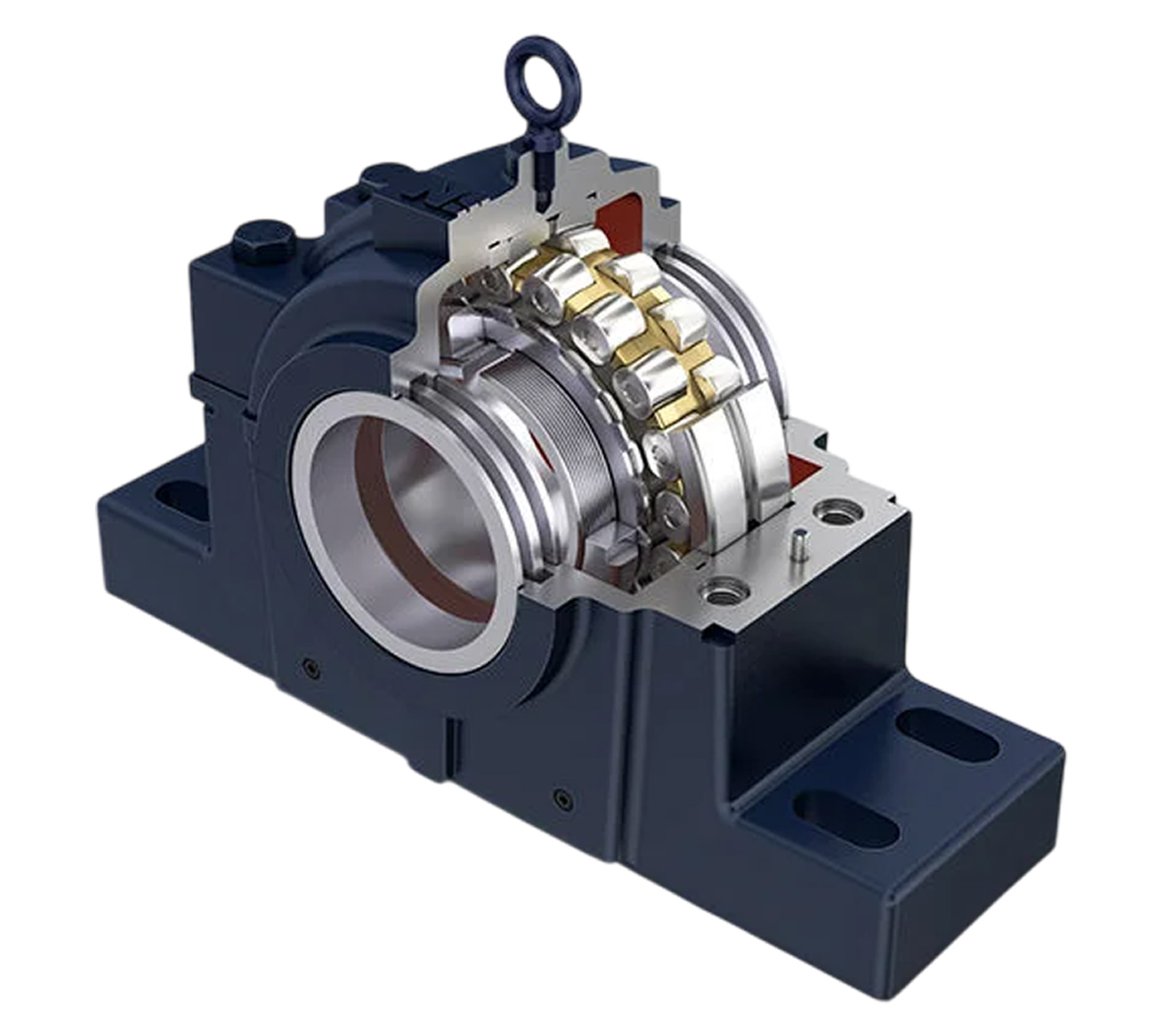
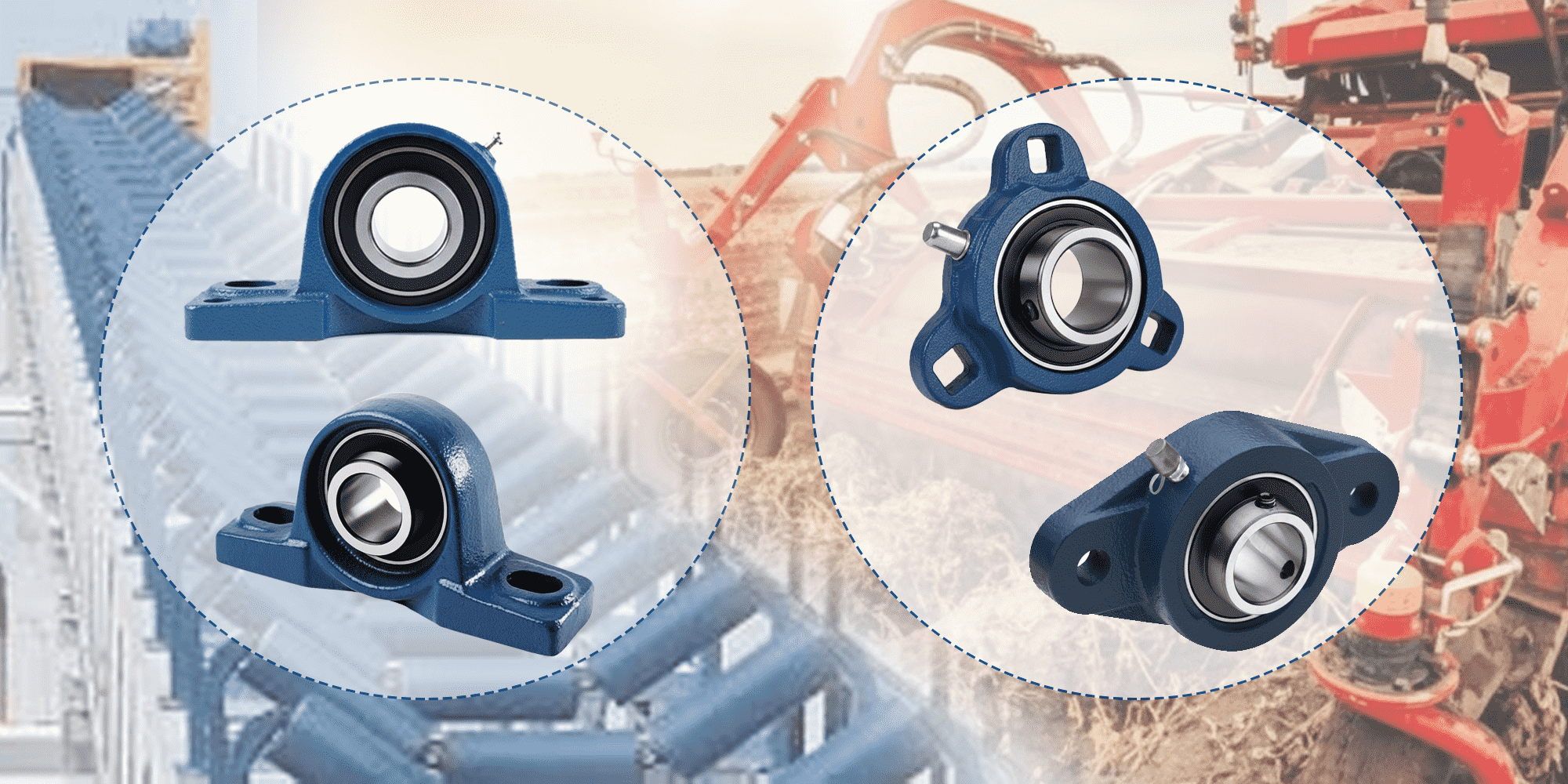
A pillow block bearing (also known as a plummer block or housed unit) consists of a cast iron or steel housing bolted to a surface, combined with an insert bearing — typically a deep groove or spherical ball bearing — seated within it.

The housing provides structural support and alignment compensation, while the insert bearing handles radial and axial loads on rotating shafts.

未标题-1-Mar-24-2026-02-51-09-6845-AM


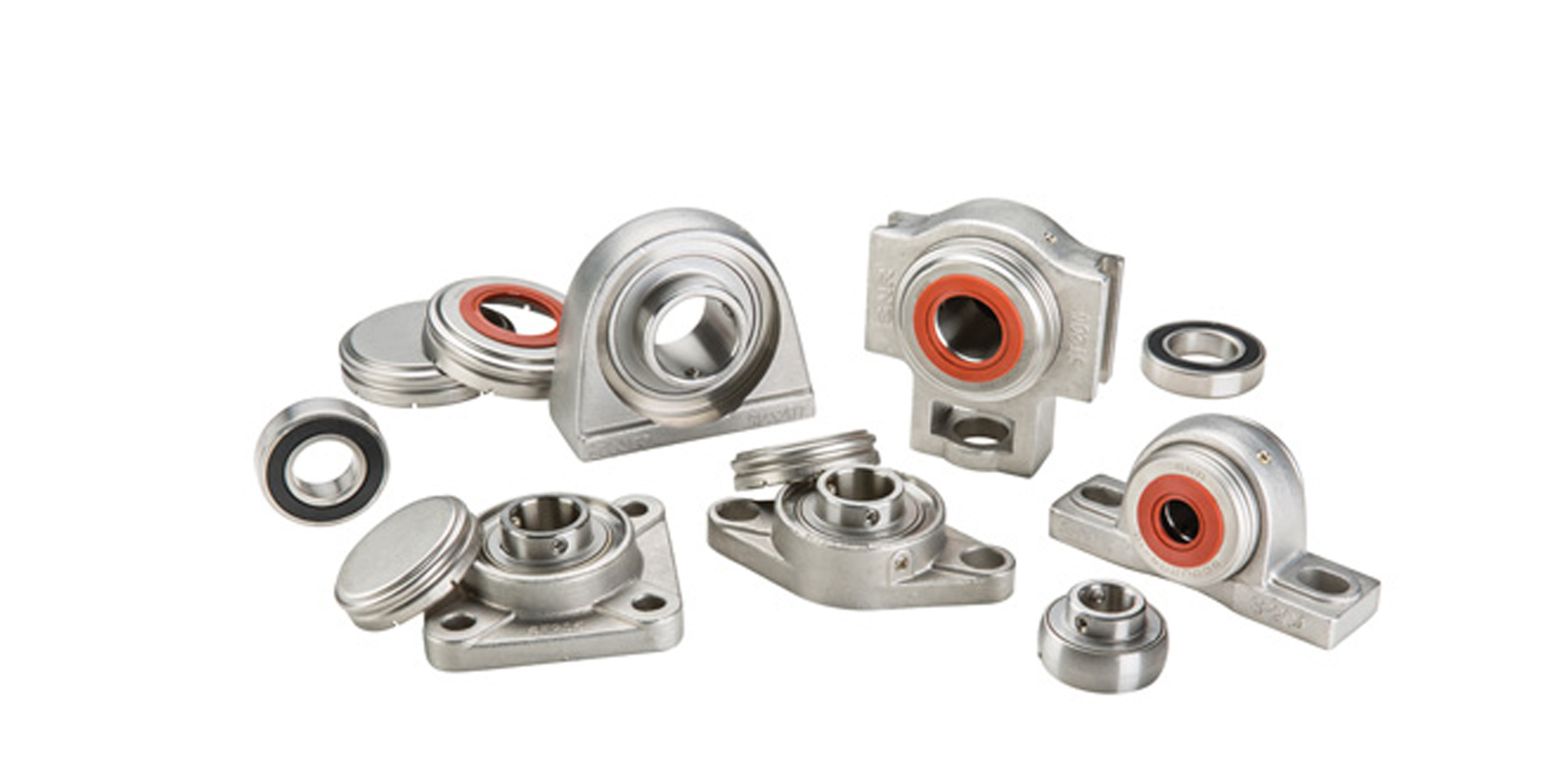
Common types include:

  • UCP (set-screw locking) — standard two-bolt pedestal mounting

  • UCF (four-bolt flange) — perpendicular wall/bracket mounting

  • UCFL (two-bolt oval flange) — lighter-duty flange applications

  • UCPA (adapter sleeve locking) — provides secure shaft locking with no shaft prep required


Failure #1: Lubrication Failure

Lubrication failure is the single most common cause of pillow block bearing damage, accounting for roughly 36% of all premature failures.

Without an adequate lubricant film, metal-to-metal contact between rolling elements and raceways generates intense heat, leading to surface fatigue, spalling, and ultimately seizure.


Root Causes

  • Under-lubrication: Insufficient grease quantity or regreasing intervals that are too infrequent for the operating speed and load.

  • Over-lubrication: Excess grease raises operating temperature through churning, degrading the grease prematurely.

  • Wrong lubricant type: Using the incorrect viscosity or incompatible grease base (e.g., mixing lithium and polyurea greases).

  • Lubricant degradation: Oxidation, thermal breakdown, or water ingress contaminating the grease.

⚠️ WARNING SIGNS: Elevated bearing temperature (>20°C above ambient baseline), burning smell, discoloration of housing, unusual noise such as squealing or grinding.


Prevention Strategy

Follow the bearing manufacturer's regreasing intervals calculated from the bearing's L10 life and operating speed.

A useful rule of thumb: regreasing quantity in grams ≈ 0.005 × D × B (where D = bore diameter in mm, B = bearing width in mm).

Always purge old grease via a relief fitting before adding new grease.

�� PRO TIP: Use a grease gun with a digital meter to avoid over-lubrication. Automatic lubrication systems (ALS) are ideal for hard-to-reach or high-cycle applications, ensuring consistent, measured doses every time.


Failure #2: Misalignment

Misalignment places uneven load distribution across the bearing's rolling elements and raceways. Over time, this creates fatigue stress concentrations that dramatically shorten service life. Even a 0.5° misalignment can reduce bearing life by over 50% under certain load conditions.


Types of Misalignment

Angular Misalignment

Shaft centerlines intersect at an angle rather than being parallel or colinear.

Parallel Misalignment

Shaft centerlines are parallel but offset horizontally or vertically.

Combined Misalignment

Both angular and parallel misalignment exist simultaneously — the most damaging scenario.


⚠️ WARNING SIGNS: Uneven wear pattern on one side of the raceway, increased vibration levels, premature seal wear on one side, asymmetric heat distribution across the housing.


Prevention Strategy

Use a laser alignment tool during installation to achieve shaft alignment within ±0.05 mm radially.

For applications with inevitable shaft deflection (e.g., conveyors, long shafts), select self-aligning pillow block bearings (spherical outer ring) that can accommodate up to ±3° of misalignment without stress concentration.

Recheck alignment after the first 24 hours of operation, as thermal expansion can shift shaft position.


Failure #3: Contamination & Corrosion

Solid particles (dust, metal debris, grit) act as abrasives inside the bearing, creating micro-pitting on raceways and rolling elements.

Water ingress accelerates corrosion of steel components, producing rust pits that initiate fatigue cracks.

Together, contamination and corrosion account for roughly 18% of bearing failures and are especially prevalent in food processing, marine, and outdoor environments.


Prevention Strategy

  • Specify double-sealed (2RS or ZZ) insert bearings for contaminated environments.

  • Use stainless steel (SS) or polymer housings in washdown or corrosive chemical environments.

  • Apply labyrinth seals or V-ring seals as secondary shaft sealing on housings open to contaminants.

  • Monitor grease color: darkening or gritty texture indicates contamination — regrease immediately.

�� PRO TIP: In food-grade or pharmaceutical plants, use NSF H1-approved, PTFE-based grease inside stainless steel pillow blocks with IP69K-rated sealing to meet hygiene standards and prevent corrosion failure.


Failure #4: Overloading & Rolling Fatigue

Every pillow block bearing has defined Static (C0) and Dynamic (C) load ratings. Sustained operation beyond these ratings compresses rolling elements into raceways, causing brinelling (permanent indentations) or classical fatigue spalling — surface material flaking off in characteristic shell-shaped fragments.


Root Causes

  • Undersized bearing selection based on nominal load without considering shock or dynamic load factors.

  • Shock loads from belt drive startup, press operations, or conveyor jams exceeding static capacity.

  • Machine redesign that increases shaft loads without upgrading bearings.

⚠️ WARNING SIGNS: Flaking or spalling on raceway surface visible in grease, increased vibration at running frequency harmonics, progressive noise increase under load.


Prevention Strategy


Failure #5: Improper Installation

Installation errors introduce stress concentrations and initiate failure long before rated service life is reached.

Common mistakes include hammer-blows on bearing rings, incorrect set-screw torque, and mounting on undersized or oversized shaft diameters.


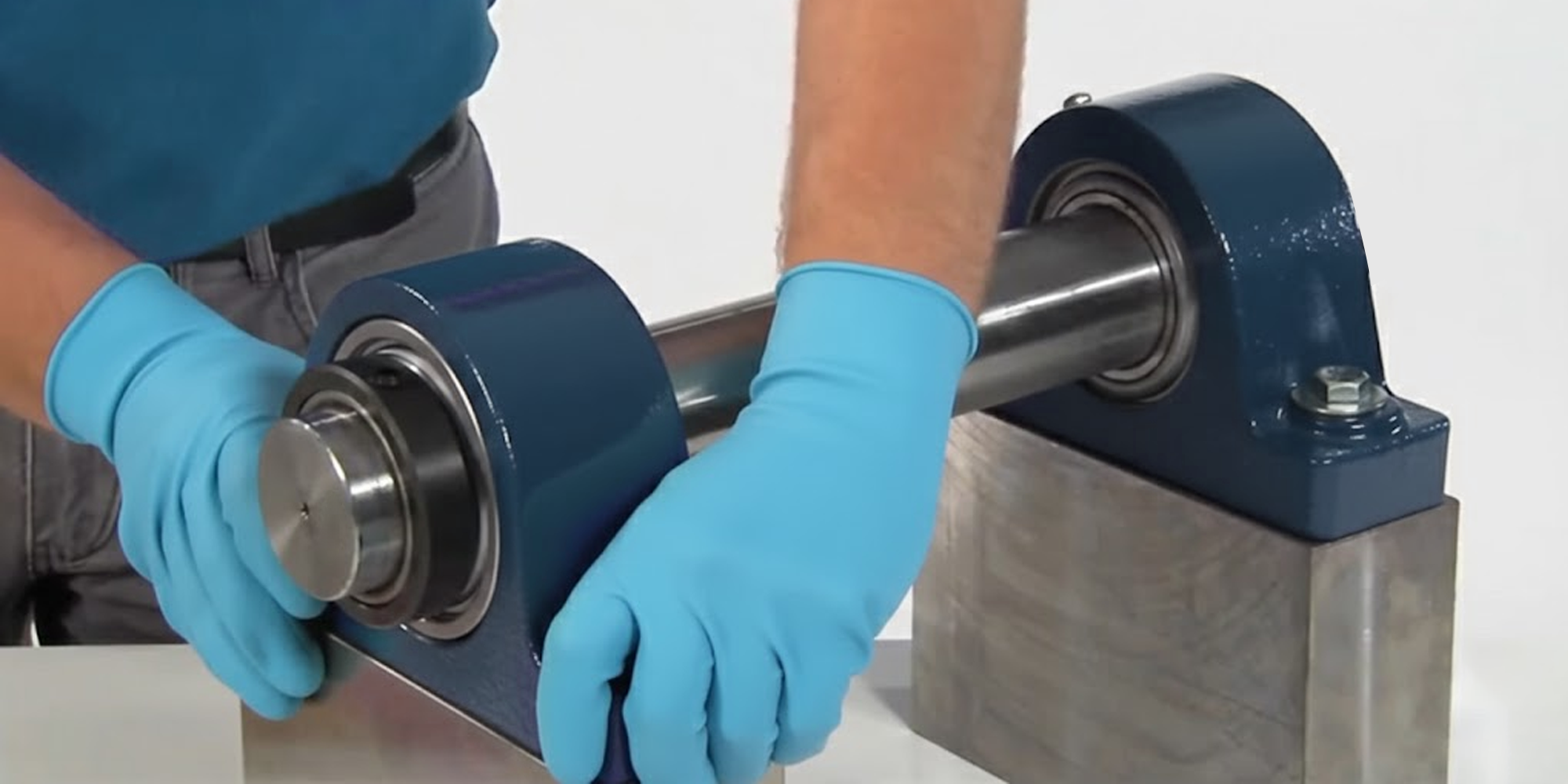
Correct Installation Procedure

1

Verify shaft diameter tolerance

Shaft should be h9 to j6 tolerance for standard UCP/UCF units. Measure with a micrometer — never assume nominal dimensions are accurate.

2

Clean shaft and housing bore

Remove all debris, rust, and old grease. Apply a thin oil film to the shaft to ease assembly and prevent fretting corrosion.

3

Mount bearing on shaft correctly

Use a bearing fitting tool or press to apply force only to the inner ring. Never strike the outer ring or housing. Heat the bearing to 80–90°C for interference fits using an induction heater.

4

Torque set screws correctly

For standard UCP set-screw locking, torque to manufacturer specification (typically 10–25 Nm depending on bore size). Use thread-locking compound to prevent loosening.

5

Align and secure housing

Snug-tighten housing bolts, confirm alignment, then torque to specification. Check that the bearing is free to self-align before final tightening.

6

Run-in lubrication

Add a small initial grease charge, run at low speed for 30 minutes, then add final grease quantity. This seats the grease throughout the raceway.


Failure #6: Vibration & Fretting Corrosion

When relative micro-motion occurs between mating surfaces (bearing inner ring and shaft, or outer ring and housing bore) under vibration — without full rolling motion — fretting corrosion develops.

The micro-slip disrupts the oxide layer, producing iron oxide (rust) debris that abrades contact surfaces, leading to fretting wear scars and eventual false brinelling.


Prevention Strategy

  • Ensure correct housing and shaft fit — avoid loose fits in high-vibration environments.

  • Apply anti-fretting paste (e.g., Molykote 1000) to shaft and housing bore interfaces.

  • Address the vibration source: imbalanced rotating components, resonant structures, or inadequate machine foundations amplify fretting risk.

  • Use adapter sleeve or eccentric locking collar variants that eliminate shaft-to-bore relative motion entirely.


Pillow Block Bearing Failure: Comparison Table

The table below summarizes all six failure modes, their primary causes, detection methods, and severity ratings to help maintenance teams prioritize action.

Failure Mode

Primary Cause

Detection Method

Severity

Prevention

Lubrication Failure

Wrong grease type, insufficient or excessive quantity

Thermography, vibration analysis, visual inspection

High

Scheduled regreasing; auto-lube systems

Misalignment

Installation error, thermal expansion, foundation settling

Vibration signature, uneven wear pattern, laser check

High

Laser alignment; self-aligning bearing units

Contamination & Corrosion

Inadequate sealing, water ingress, harsh environment

Grease analysis, visual corrosion, elevated vibration

High

Double-seal bearings; stainless housings

Overloading / Fatigue

Undersized bearing, shock loads, design changes

Spalling in grease, vibration at defect frequencies

Medium

Correct load calculation; adequate safety factor

Improper Installation

Wrong fit, incorrect torque, ring damage

Early overheating, excessive noise from first run

High

Follow installation procedure; use fitting tools

Vibration / Fretting

Micro-slip from vibration, loose fit

Fretting marks on shaft, rust-colored debris

Medium

Anti-fretting paste; adapter sleeve locking


Grease Selection Guide for Pillow Block Bearings

Selecting the correct grease type is critical to bearing life. The table below provides application-specific recommendations based on operating environment and temperature range.

Application

Grease Type

NLGI Grade

Temp Range

Interval

General industrial

Lithium complex

2

-20°C to +160°C

1,000–3,000 hrs

High temperature

Polyurea or calcium sulfonate

2–3

Up to +220°C

500–1,000 hrs

Food & pharmaceutical

NSF H1 PTFE-based / PAO synthetic

2

-40°C to +180°C

Per HACCP plan

Outdoor / marine

Marine EP-grade grease

2–3

-30°C to +130°C

500–1,500 hrs

Low temperature

Synthetic PAO, low-pour-point

1–2

-60°C to +120°C

2,000–4,000 hrs


Preventive Maintenance Checklist

A structured maintenance program is the most cost-effective investment in pillow block bearing longevity. Use this checklist as a minimum baseline for your maintenance intervals.


Monthly Checks

Inspect housing for cracks, loose bolts, or abnormal wear marks

Check operating temperature with infrared thermometer (alert if >70°C or >20°C above baseline)

Listen for unusual noise: grinding, squealing, or rumbling indicates internal damage

Inspect grease relief for signs of contamination or grease purge color change


Quarterly Checks

Perform vibration analysis on critical drive trains using a portable analyzer

Check and retorque set screws or adapter sleeve lock nuts to specification

Regrease per calculated interval (do not skip even if bearings appear to be running normally)

Verify shaft alignment has not shifted using dial indicator or laser system


Annual Checks

Full disassembly inspection on high-criticality units during planned shutdown

Replace seals on units exposed to heavy contamination environments

Submit grease sample for laboratory analysis on critical applications

Review bearing selection calculations if operating conditions have changed

Update maintenance records and MTBF (Mean Time Between Failures) tracking


Frequently Asked Questions


Q: How long should a pillow block bearing last?

Under ideal conditions, a properly selected, installed, and maintained pillow block bearing should achieve its rated L10 life — typically 20,000 to 50,000 hours. However, real-world factors like contamination, misalignment, and inadequate lubrication often reduce actual service life to 30–50% of the theoretical rating.


Q: What does a failing pillow block bearing sound like?

Early-stage fatigue produces a faint rumbling or rough texture to the vibration. As damage progresses, this becomes a distinct clicking or knocking at regular intervals corresponding to rolling element frequency. Lubrication failure typically produces a high-pitched squealing or screaming sound.


Q: Can I mix different bearing grease types?

No — mixing incompatible greases (e.g., lithium and polyurea) can cause rapid softening, bleeding, and loss of lubricating film. Always purge old grease completely when changing grease type, or use a compatible upgrade path confirmed by a lubricant supplier's compatibility chart.


Q: When should I replace the full pillow block unit vs. just the insert?

If the housing is undamaged and correctly sized, replacing only the insert bearing is cost-effective. However, if the housing bore is worn, corroded, or cracked, or if the housing has suffered impact damage, the entire pillow block unit should be replaced to ensure proper fit and seating.


Q: What is the difference between UCP and UCF pillow block bearings?

UCP bearings use a two-bolt pillow (pedestal) housing mounted on a flat surface parallel to the shaft. UCF bearings use a four-bolt flange housing mounted perpendicular to the shaft. UCP units are more common for conveyor and driveshaft support, while UCF units suit wall or bracket mounting where the shaft runs horizontally into the mounting surface.


Conclusion

Pillow block bearing failures are rarely sudden — they are almost always the result of accumulated, preventable stresses.

The six failure modes covered in this guide — lubrication failure, misalignment, contamination, overloading, improper installation, and fretting corrosion — each leave distinct evidence trails that allow proactive intervention before catastrophic breakdown occurs.

The most impactful investments a maintenance team can make are: (1) a disciplined, data-driven lubrication program, (2) precision alignment tools and skills, and (3) proper bearing selection that accounts for real operating loads, not just nominal values.

By combining these fundamentals with a structured inspection program and vibration monitoring, manufacturers and maintenance engineers can routinely achieve bearing service lives that meet or exceed the rated L10 design life — reducing unplanned downtime, lowering repair costs, and extending equipment reliability across the entire facility.

�� CONTACT US: Need expert bearing selection advice? Our engineering team provides free application consultation for industrial pillow block bearing specifications — from load calculations to environment-specific housing selection. Please Contact us


How to Install Mounted Bearings to h7 Standards (4-Phase Guide)

How to Install Mounted Bearings to h7 Standards (4-Phase Guide)

In the industrial world, an unplanned shutdown is a maintenance manager’s worst nightmare. Consider this: Install a $50 mounted bearing with just ...
Read More
Load Capacity and Performance Analysis of Pillow Block Bearings

Load Capacity and Performance Analysis of Pillow Block Bearings

Pillow block bearings are among the most widely deployed mounted bearing solutions in industrial machinery. Understanding their load capacity — from...

Read More
Pillow Block vs. Flange Bearing: Differences, Selection Guide & When to Use Each

Pillow Block vs. Flange Bearing: Differences, Selection Guide & When to Use Each

The difference between a pillow block bearing and a flange bearing comes down to one thing: shaft orientation. Shaft parallel to the mounting...

Read More