


Home/
Blog/
Carbon Steel vs Stainless Steel Sprockets: How to Choose for Industrial Applications

7 min read

Carbon Steel vs Stainless Steel Sprockets: How to Choose for Industrial Applications

Carbon Steel vs Stainless Steel Sprockets: How to Choose for Industrial Applications
15:51

Carbon steel vs stainless steel sprockets is not a one-material-wins decision. The right choice depends on the chain drive, operating environment, load, wear expectations, lubrication, corrosion exposure, treatment requirements, and cost target.

For many industrial buyers, carbon steel sprockets may be considered for strength, wear, and cost-sensitive transmission applications, especially where corrosion exposure is limited or surface treatment can be specified. Stainless steel sprockets may be considered where moisture, humidity, washdown, outdoor exposure, cleaning exposure, or material compatibility matters.

The final decision should be reviewed against chain size, pitch, tooth count, bore/keyway, hub structure, mounting details, material grade, treatment, quantity, and documentation requirements.


Quick Answer: Which Material Should You Choose?

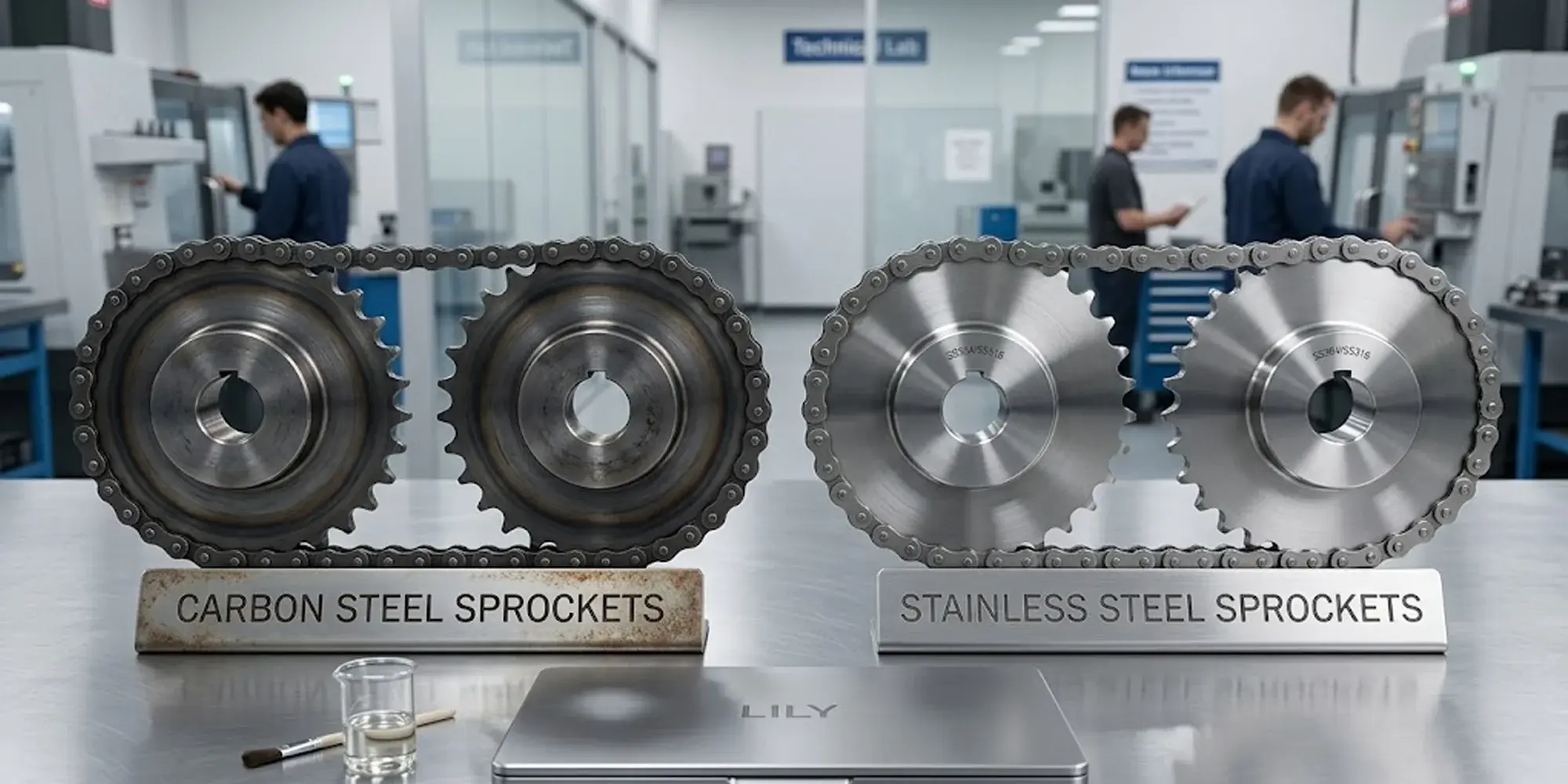
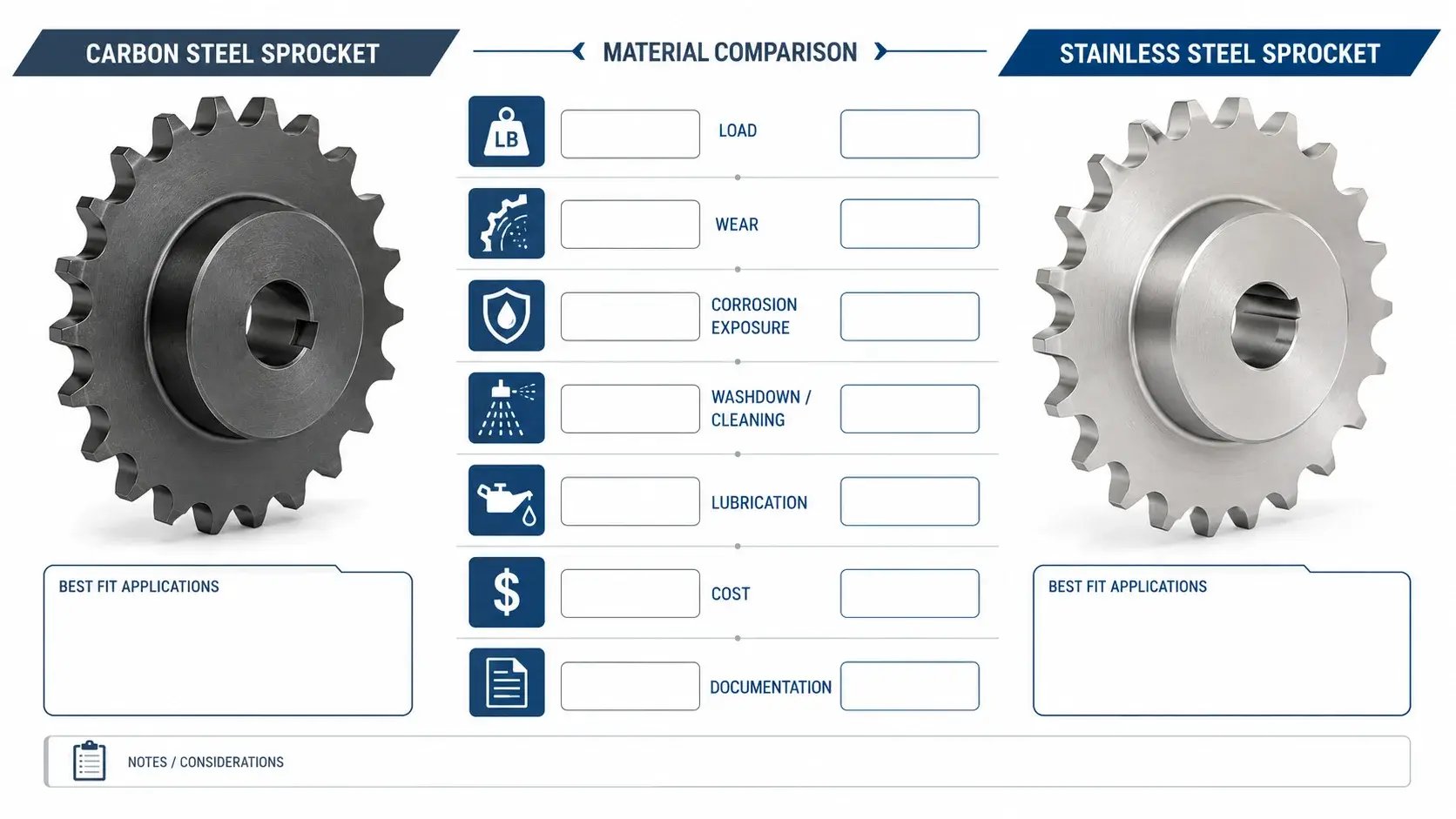
Carbon steel and stainless steel sprockets comparison for industrial material selection based on load, wear, corrosion exposure, cleaning, lubrication, and cost.

Choose carbon steel sprockets when the application is mainly driven by load, wear, and cost-performance, and the environment is dry, controlled, or manageable with suitable surface treatment and maintenance.

Choose stainless steel sprockets when corrosion exposure, moisture, humidity, washdown, outdoor use, or material compatibility is a major concern. Stainless steel can improve corrosion resistance in suitable environments, but performance still depends on grade, exposure, cleaning process, lubrication, and maintenance.

Neither material should be selected by material name alone. Buyers should also confirm chain standard, chain size, pitch, number of teeth, bore type, keyway, hub dimensions, mounting holes, strand count, speed, load, shock load, contamination, lubrication, and quality-document needs.


Carbon Steel vs Stainless Steel Sprockets: Key Selection Factors

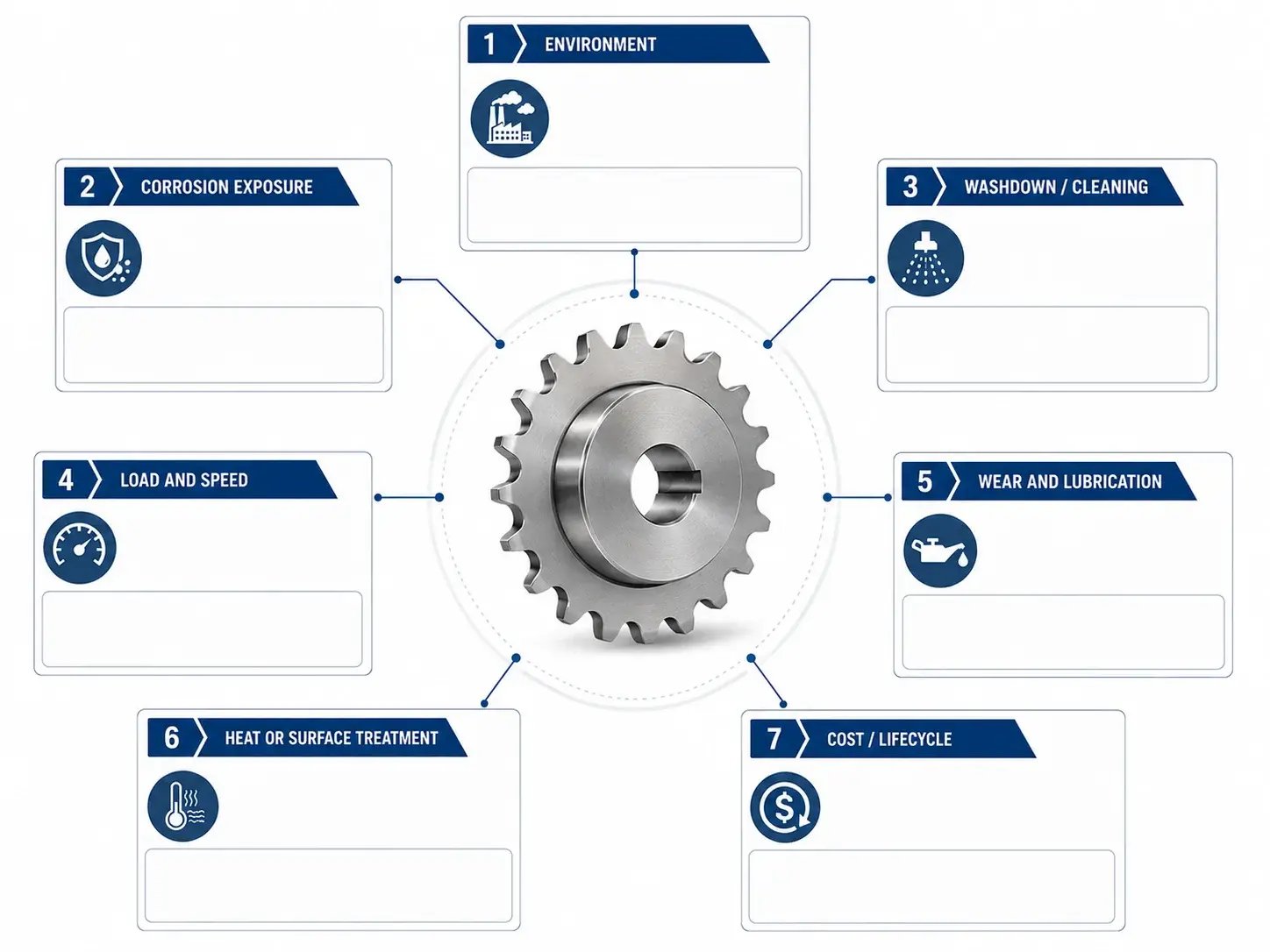
Sprocket material selection factors including corrosion exposure, washdown, load, speed, wear, lubrication, treatment, and cost.

The best sprocket material is application-specific. Before requesting a quote, compare the following factors.


Corrosion exposure

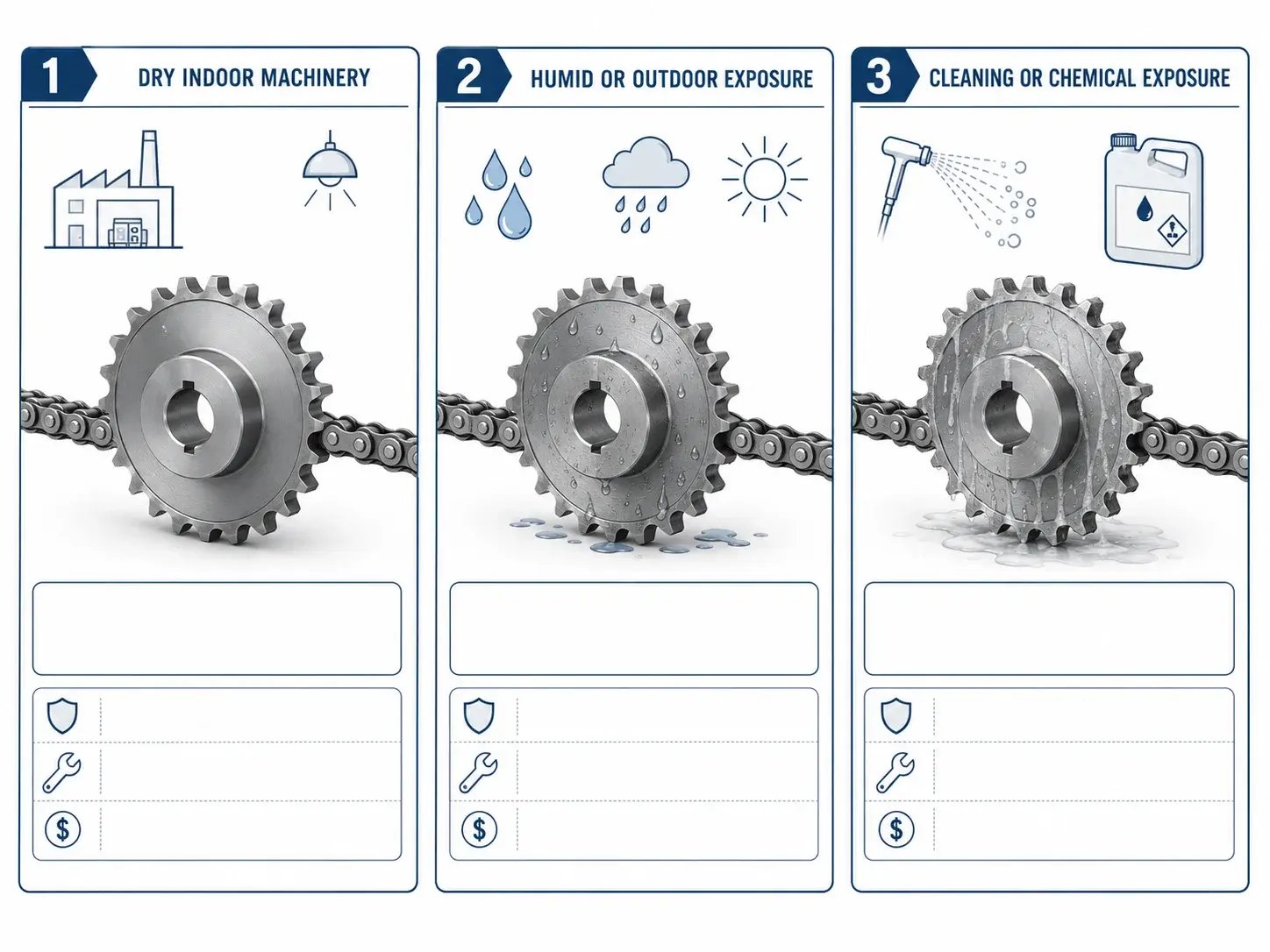
Sprocket environment exposure comparison showing dry indoor, humid outdoor, washdown, cleaning, and chemical exposure conditions for material review.

If the sprocket runs in a dry indoor environment, carbon steel may be a practical option. If the sprocket is exposed to moisture, humidity, outdoor conditions, cleaning fluids, or corrosive media, stainless steel or another corrosion-focused option may be worth reviewing.

For chemical exposure, buyers should provide the chemical type, concentration if known, temperature, cleaning frequency, and contact duration. Material suitability should be reviewed against the exposure details before quoting.


Washdown and cleaning environment

Washdown or frequent cleaning can change the material decision. Stainless steel sprockets may be considered for washdown environments, but buyers should still confirm the exact material grade, cleaning exposure, regulatory or application requirements, and documentation needs.

Do not assume that a stainless steel sprocket automatically satisfies food processing, cleaning, or application-specific requirements. Those requirements should be stated in the RFQ.


Load, speed, and shock load

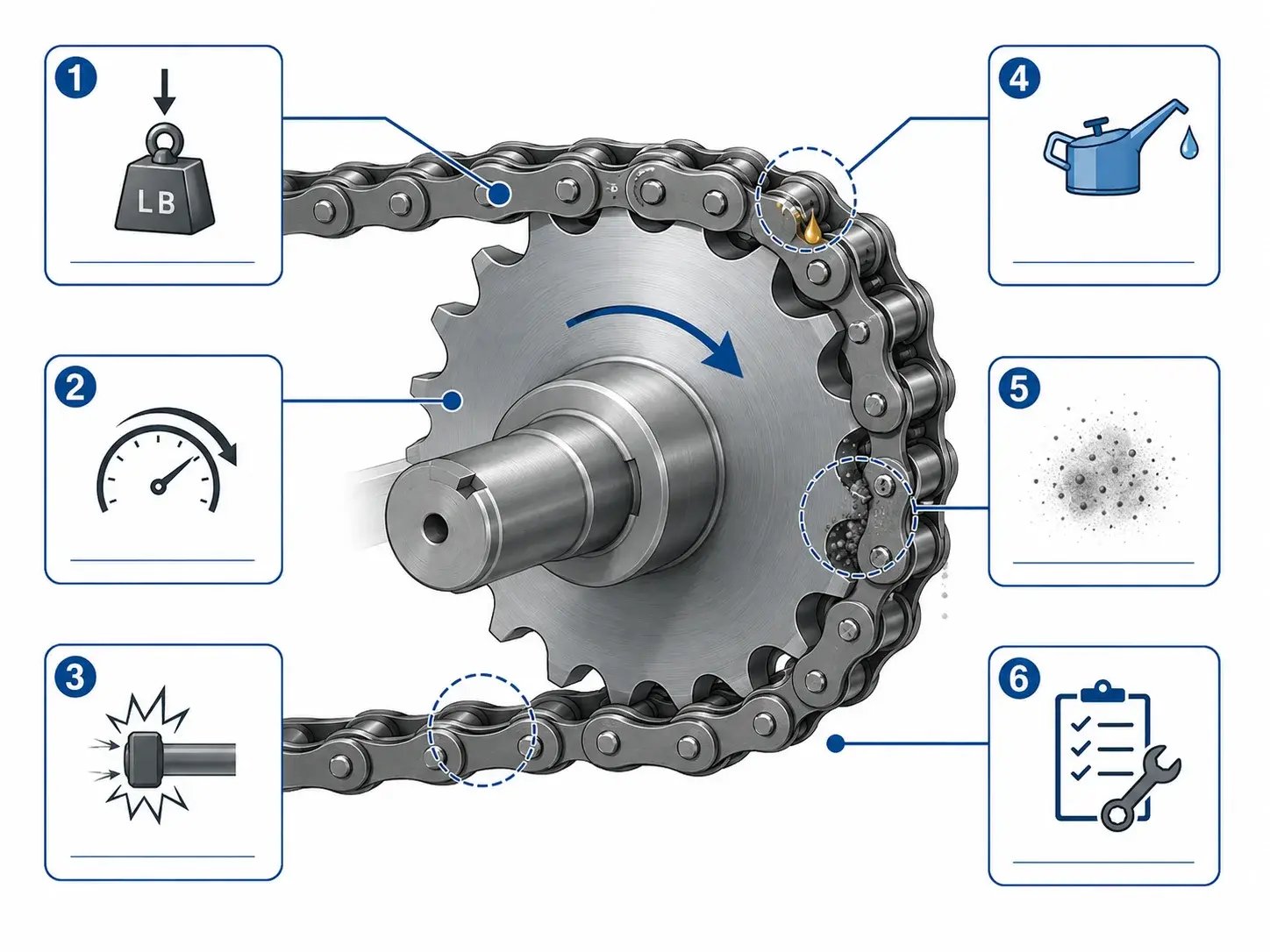
Industrial chain drive sprocket diagram showing load, speed, shock load, lubrication, contamination, and wear factors for material selection.

For power transmission, material selection should be reviewed against load, speed, shock load, duty cycle, chain size, tooth count, lubrication, and wear expectations. Carbon steel or alloy steel sprockets may be considered for load and wear-focused industrial transmission when corrosion exposure is limited or manageable.

Stainless steel sprockets can be useful in corrosion-exposure applications, but their wear and load performance should still be reviewed against the chain drive requirements.


Lubrication and contamination

Lubrication affects wear, heat, chain engagement, and maintenance intervals. Abrasive contamination, dust, process residue, or cleaning chemicals can also change material and treatment decisions.

If the sprocket operates in a dirty, abrasive, wet, or cleaning-intensive environment, include those details in the RFQ.


Heat treatment, surface treatment, and cost

Carbon steel sprockets may be paired with heat treatment or surface treatment when specified and confirmed for the order. Heat treatment and surface treatment options may include quenching and tempering, tooth induction hardening, carburizing, nitriding, black oxide, phosphating, zinc or nickel plating, painting, powder coating, or stainless passivation, depending on material, operating conditions, and order requirements.

Stainless steel may cost more than carbon steel, depending on grade, geometry, quantity, and sourcing requirements. Cost should be compared against lifecycle needs, corrosion exposure, maintenance expectations, and replacement risk.


When Carbon Steel Sprockets May Be a Good Fit

Carbon steel sprockets may be considered for general industrial transmission, load, wear, strength, and cost-sensitive applications. They are often evaluated when the operating environment is dry or controlled, and corrosion exposure is not the primary design driver.

Carbon steel may be a good fit when:

· the application is dry or has limited corrosion exposure;

· load, wear, and cost-performance are important;

· suitable lubrication and maintenance can be maintained;

· heat treatment or surface treatment can be specified if required;

· the chain size, tooth count, bore/keyway, hub, and mounting interface are already defined;

· the buyer wants a practical material route for industrial power transmission.

The boundary is corrosion. Carbon steel is generally more vulnerable to corrosion than stainless steel in wet, humid, washdown, outdoor, or corrosive environments. It may need surface protection, oiling, coating, plating, or maintenance depending on exposure.


When Stainless Steel Sprockets May Be a Good Fit

Stainless steel sprockets may be considered when corrosion exposure, humidity, washdown, outdoor use, or material compatibility is important. They are also commonly reviewed when a buyer needs a cleaner material route than untreated carbon steel for a specific environment.

Stainless steel may be worth reviewing when:

· the sprocket is exposed to moisture or humidity;

· washdown or cleaning exposure is part of the process;

· outdoor equipment faces weather exposure;

· corrosion concerns are more important than lowest initial material cost;

· material compatibility is part of the application requirement;

· the buyer can provide the operating environment and cleaning details for review.

Stainless steel is not a universal answer. Its performance depends on the stainless grade, environment, chemical exposure, temperature, lubrication, maintenance, and chain drive conditions. For food processing or washdown applications, buyers should confirm material, cleaning exposure, documentation, and any regulatory or application requirements before selecting the sprocket.


Carbon Steel vs Stainless Steel Sprockets: Comparison Table

Factor Carbon steel sprockets Stainless steel sprockets RFQ note
Typical reason to consider Load, wear, strength, and cost-sensitive industrial transmission Corrosion exposure, humidity, washdown, outdoor use, or material compatibility Describe the application and operating environment
Corrosion exposure More vulnerable in wet, humid, outdoor, or corrosive environments May improve corrosion resistance in suitable environments Provide moisture, cleaning, and chemical exposure details
Wear/load May be suitable for load and wear-focused applications depending on grade and treatment Should be reviewed against load, wear, speed, and lubrication Send load, speed, shock load, chain size, and duty cycle if known
Treatment options Heat or surface treatment can be specified when required and confirmed Grade, finish, or passivation requirements should be reviewed State treatment expectations during RFQ
Maintenance May need protection, lubrication, coating, or maintenance depending on exposure Still depends on grade, exposure, lubrication, and maintenance Do not treat material choice as a substitute for maintenance planning
Cost Often evaluated for cost-performance, depending on specification Often higher, depending on grade, geometry, and quantity Confirm by project quote
Typical industrial use cases Dry or controlled machinery, transmission components, load/wear-focused drives Moist, humid, outdoor, washdown, or corrosion-exposure applications Confirm exact environment and documentation needs


Material Alone Is Not Enough

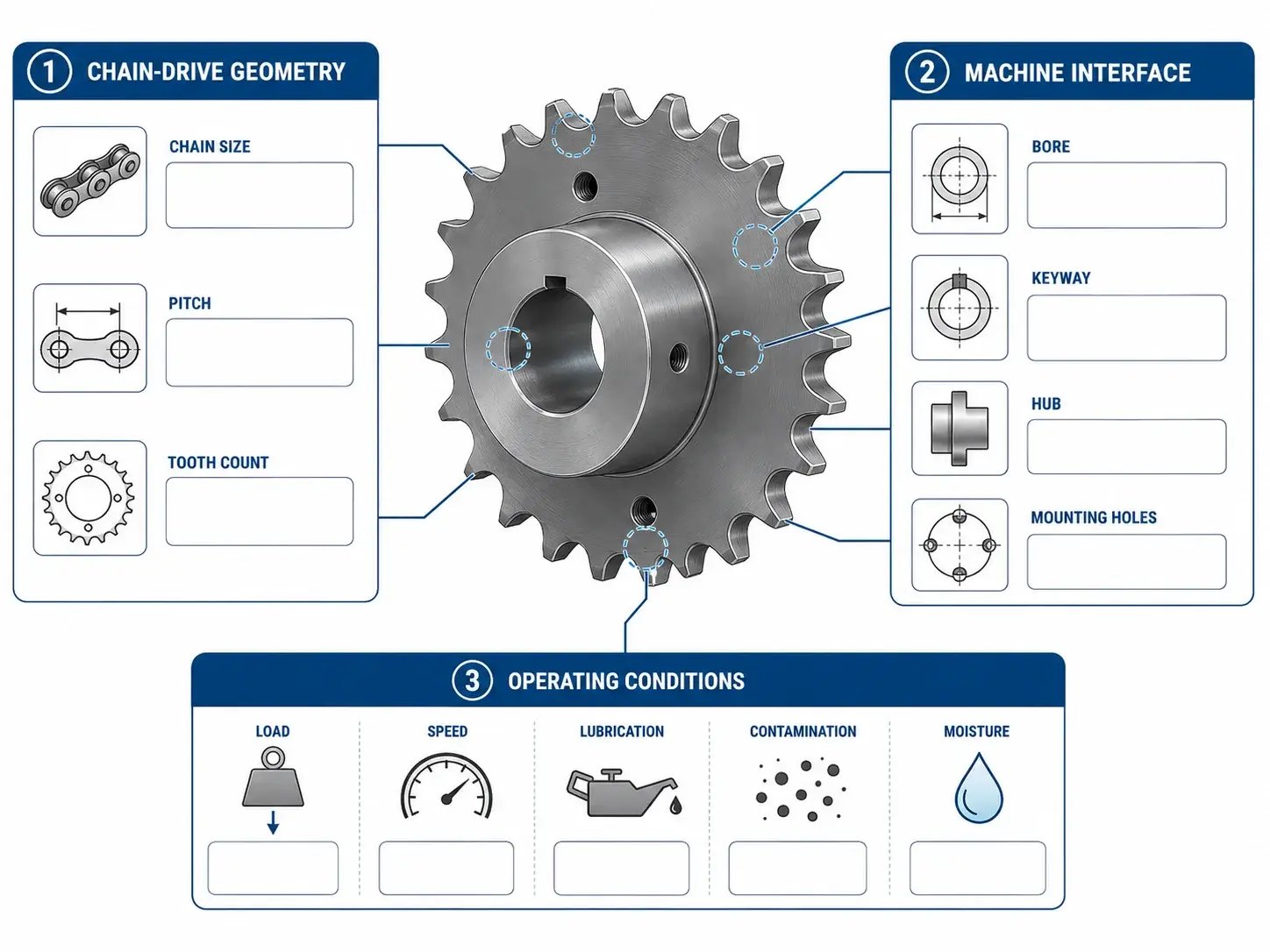
Sprocket material and geometry checklist showing chain size, pitch, teeth, bore, keyway, hub, mounting holes, and operating conditions.

A sprocket can use the right material and still fail to fit the chain drive if the geometry is wrong. Material selection should be reviewed together with:

· chain standard;

· chain size;

· pitch;

· number of teeth;

· bore diameter and bore type;

· keyway width and depth;

· hub structure and hub dimensions;

· mounting holes or special features;

· sprocket thickness or face width;

· strand count;

· shaft mount and set screw details;

· drawings, samples, or existing sprocket photos.

Operating conditions matter as much as dimensions. Include load, speed, shock load, duty cycle, lubrication, contamination, moisture, washdown, outdoor exposure, cleaning exposure, chemical exposure, temperature, and maintenance expectations.


Manufacturing and Custom Options to Review

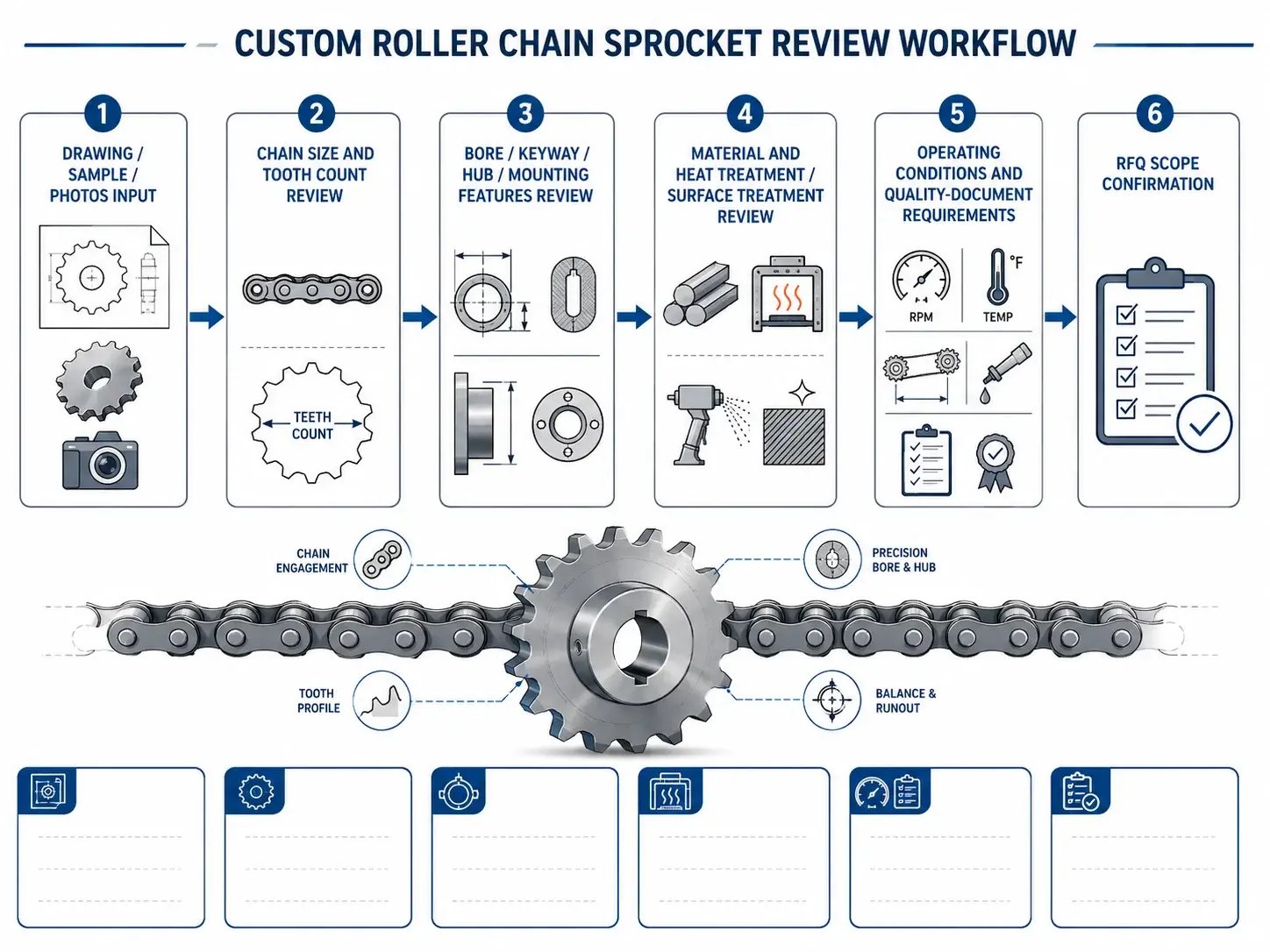
Custom sprocket review workflow for carbon steel or stainless steel sprockets based on drawings, chain size, bore, keyway, material, treatment, operating conditions, and documents.

LILY Bearing supports industrial sprocket and power transmission component projects, including standard and custom roller chain sprockets for OEM and industrial equipment applications. LILY Bearing can review carbon steel or stainless steel sprocket requirements against chain standard, chain size, pitch, tooth count, bore/keyway, hub structure, material, treatment, quantity, and operating conditions.

Sprocket capability supports roller chain sprocket projects according to ANSI, BS, DIN, and JIS standards, with requirements confirmed for each RFQ. Product discussions may include single-strand, double-strand, multi-strand, plate, hub, QD bushing, taper bushing, stainless steel, engineering chain, large-pitch, conveyor chain, and special tooth-profile sprockets.

Custom sprocket projects may involve finished bore, keyway, set screw holes, hub modification, mounting holes, spline bore, taper bore, counterbore, or special tooth-form machining, depending on drawings and application requirements.

Heat treatment or surface treatment can be reviewed based on material, tooth wear expectations, corrosion exposure, drawing requirements, and operating conditions.


Custom Sprocket RFQ Checklist

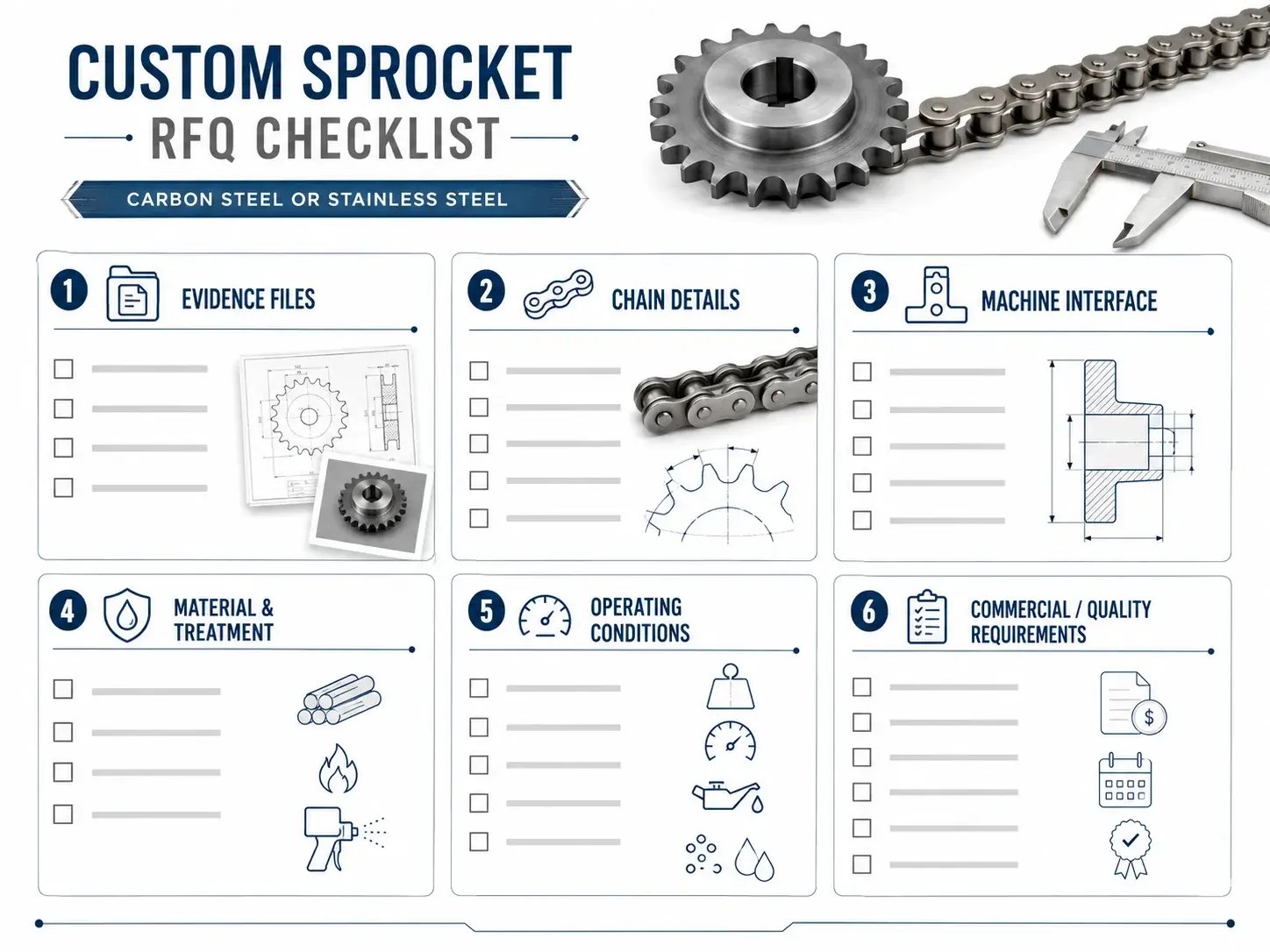
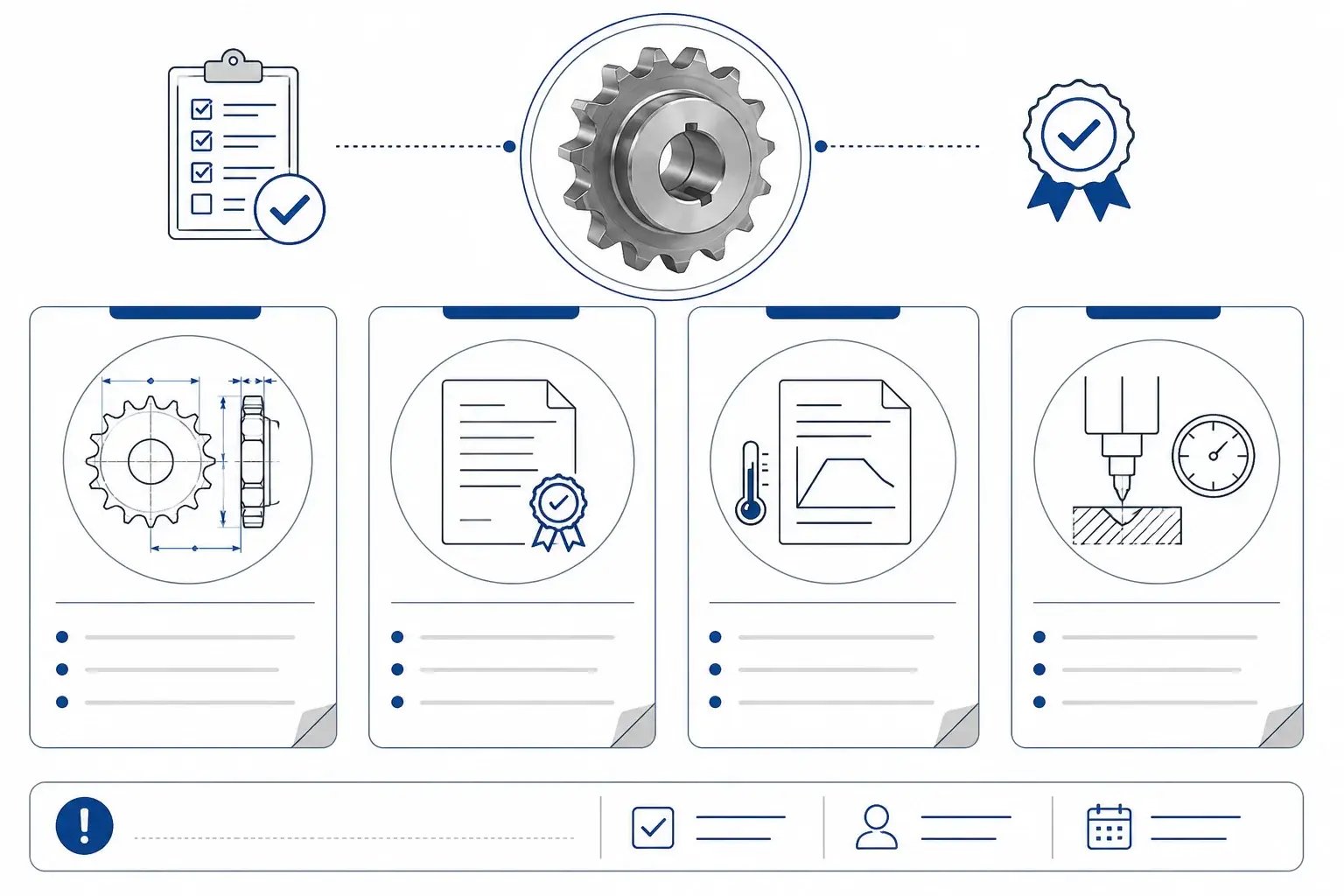
Custom sprocket RFQ checklist for carbon steel or stainless steel sprockets including drawings, chain size, pitch, bore, keyway, material, treatment, operating conditions, quantity, and quality documents.

For a custom sprocket RFQ, provide as much of the following as possible:

· drawing, sample, part number, or existing sprocket photos;

· chain standard and chain size;

· pitch;

· number of teeth;

· bore diameter and bore type;

· keyway width and depth if required;

· hub type and hub dimensions;

· mounting holes or special features;

· strand count;

· material preference: carbon steel, alloy steel, stainless steel, or open to review;

· heat treatment or surface treatment expectations;

· quantity;

· application and equipment type;

· load, speed, shock load, and duty cycle if known;

· lubrication and contamination conditions;

· moisture, washdown, outdoor, cleaning, or chemical exposure;

· quality-document requirements.

Clear RFQ information helps avoid quoting a material in isolation. It lets the supplier review material, geometry, treatment, manufacturing path, inspection needs, and quote assumptions together.


Quality Documents and Inspection Requirements

Sprocket quality document options including dimensional reports, material certificates, heat treatment reports, and hardness reports when specified for the order.

Quality-document needs should be stated during RFQ review. They should not be assumed after the order scope is already defined.

Depending on the order requirements, quality documentation may include dimensional reports, material certificates, heat treatment reports, or hardness reports when specified and confirmed.

For custom sprocket projects, buyers may also discuss inspection points such as tooth profile accuracy, pitch consistency, bore size, keyway position, face runout, and radial runout.

Requirements such as H7/H8 bore tolerance, 40–55 HRC tooth hardness, Ra 1.6 / Ra 3.2 surface roughness, dynamic balancing, or inspection reports can be specified when required, may be available upon request, and should be confirmed for the order.

If PPAP, FAI, CoC, or other project-specific documents are required, include them in the RFQ so availability and scope can be reviewed before ordering.


FAQ


What is the main difference between carbon steel and stainless steel sprockets?

Carbon steel sprockets are often considered for strength, wear, and cost-sensitive power transmission applications. Stainless steel sprockets may be considered when corrosion exposure, humidity, washdown, outdoor use, or material compatibility matters. Final selection depends on application conditions.


When should I choose carbon steel sprockets?

Choose carbon steel sprockets when load, wear, and cost-performance are key factors and corrosion exposure is limited or manageable. Heat treatment, surface treatment, lubrication, and maintenance expectations should be reviewed for the specific order.


When should I choose stainless steel sprockets?

Choose stainless steel sprockets when moisture, humidity, washdown, outdoor exposure, cleaning exposure, or corrosion concerns are important. Confirm the stainless grade, environment, cleaning process, lubrication, maintenance, and documentation needs before ordering.


Do stainless steel sprockets prevent all corrosion?

No. Stainless steel may improve corrosion resistance in suitable environments, but performance depends on grade, exposure, cleaning chemicals, temperature, lubrication, and maintenance. Provide the operating environment in the RFQ.


Can carbon steel sprockets be treated for better wear or corrosion resistance?

Carbon steel sprockets can be reviewed with heat treatment or surface treatment expectations when required. Options depend on material, geometry, operating conditions, and order requirements, and should be confirmed during RFQ review.


Are carbon steel sprockets better for heavy-duty transmission?

Carbon steel or alloy steel sprockets may be suitable for many load and wear-focused transmission applications, but the choice depends on grade, treatment, chain size, load, speed, shock load, lubrication, environment, and maintenance conditions.


What information is needed for a custom sprocket quote?

Send drawings or samples, chain size, pitch, tooth count, bore, keyway, hub structure, mounting holes, strand count, material preference, heat or surface treatment expectations, quantity, operating conditions, and quality-document needs.


What quality documents can be requested for sprocket orders?

Quality documents may include dimensional reports, material certificates, heat treatment reports, and hardness reports when specified for the order. If PPAP, FAI, CoC, or other documents are required, state them during RFQ review so availability can be confirmed.


Are stainless steel sprockets always better for food processing or washdown environments?

No. Stainless steel is often considered for moisture, washdown, or cleaning exposure, but buyers should confirm exact material grade, cleaning exposure, regulatory or application requirements, documentation needs, and operating conditions before selecting a sprocket.


CTA: Send Your Sprocket Requirements for Review

Need help selecting carbon steel or stainless steel sprockets? Send your drawing, sample, chain size, pitch, tooth count, bore/keyway, hub details, mounting holes, material preference, treatment expectations, quantity, operating environment, and documentation requirements.

LILY Bearing can review carbon steel or stainless steel sprocket requirements based on drawings, samples, chain size, pitch, tooth count, bore, keyway, hub structure, mounting holes, material preference, heat or surface treatment expectations, quantity, operating conditions, and quality-document needs.


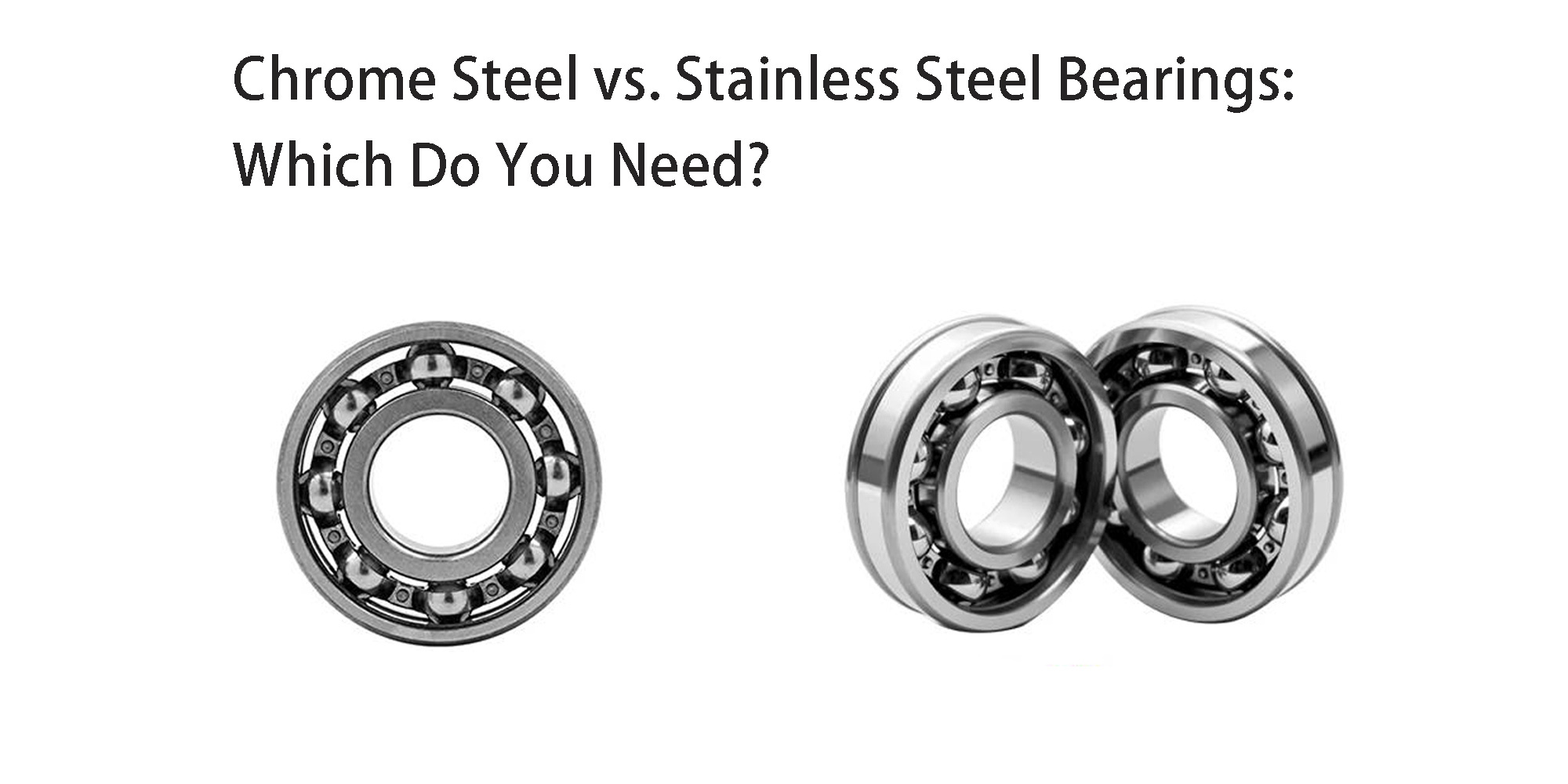
Chrome Steel vs. Stainless Steel Bearings: Which Do You Need?

Chrome Steel vs. Stainless Steel Bearings: Which Do You Need?

Bearings are crucial for precise movement and reliability in mechanical systems. The type of material affects how well and how long a bearing works....
Read More
Ceramic Bearings Vs Steel

Ceramic Bearings Vs Steel

Bearings are the unsung heroes of modern industry, ensuring the smooth operation of machinery in sectors ranging from aerospace to manufacturing. ...

Read More
Ceramic vs. Stainless Steel: Choosing the Best Dental Bearings

Ceramic vs. Stainless Steel: Choosing the Best Dental Bearings

Dental bearingsare vital for the precision, smooth operation, and durability of dental handpieces. Choosing the right dental bearings, whether...

Read More