


Home/
Blog/
Bad Cam Follower Symptoms: 5 Warning Signs You Shouldn't Ignore

6 min read

Bad Cam Follower Symptoms: 5 Warning Signs You Shouldn't Ignore

Bad Cam Follower Symptoms: 5 Warning Signs You Shouldn't Ignore
12:47

Understanding Bad Cam Follower Symptoms


The engine, often referred to as the heart of a vehicle, depends on several components to run smoothly.

Among these, the cam follower regulates the position of the Camshaft by engaging with the CAM lobe, ensuring that the right amount of fuel is delivered for combustion.

It plays an integral role in the fuel delivery system, influencing the overall engine performance.

Recognizing bad cam follower symptoms promptly is paramount for maintaining an engine's efficiency and longevity.


Common Symptoms of a Bad Cam Follower


Intermittent Loss of Power

A bad cam follower can compromise valve timing and operation.

As it deteriorates, the precise opening and closing of the engine's valves become disrupted, leading to an imbalanced air-fuel mixture and incomplete combustion.

Especially during acceleration, when the engine demands optimal performance, this inefficiency results in noticeable power loss.

Proper valve function is crucial for maintaining peak engine output, and a failing cam follower directly impedes this, reducing acceleration capability.


Misfiring

A failing cam follower can disrupt valve timing, leading to an imbalanced air-fuel mixture in the combustion chamber.

This causes incomplete combustion or non-ignition, resulting in engine misfires.

Faulty cam followers can also compromise valve sealing, further contributing to misfire issues.

Such misfires manifest as jolts or judders when the engine is running.

Continuous misfiring can cause extensive damage, leading to a rough engine operation and compromised vehicle performance.


Fuel Cutting Out

The cam follower plays a pivotal role in the operation of fuel injectors, ensuring timely fuel delivery to the combustion chamber.

A compromised cam follower can interrupt this synchrony, leading to inconsistent fuel delivery or even complete fuel cut-outs.

When the fuel supply is disrupted, it can cause the engine to run lean, leading to misfires, reduced power, or even potential engine shutdown. 


Engine Stalling/Not Starting

A malfunctioning cam follower can lead to significant engine problems, including stalling and difficulties in starting.

These issues arise when the cam follower, integral to maintaining proper valve timing, fails to operate optimally.

This affects the engine's ability to intake air and fuel efficiently, leading to imbalanced combustion.

An engine reliant on precise valve timings will struggle to sustain operations, leading to stalling or, in severe cases, preventing the engine from starting altogether.


Relevant Fault Codes

Diagnostic tools have become invaluable for pinpointing engine issues. OBD-II — the standardised on-board diagnostic system required by the US Environmental Protection Agency for all 1996 and later vehicles — is what makes this possible. When a cam follower starts to fail, it typically disrupts fuel pressure, and that shows up quickly on a scanner. The fault codes below are the ones most commonly associated with cam follower wear:


P0087 — Fuel Rail/System Pressure: Too Low

This is often one of the first codes to appear. A worn cam follower reduces the HPFP's ability to build adequate fuel pressure, triggering P0087. If you're seeing this alongside power loss or rough running, the follower should be one of the first things you check.


P0089 — Fuel Pressure Regulator 1 Performance

P0089 indicates the fuel pressure regulator isn't performing within expected parameters. While the regulator itself can be the cause, a degraded cam follower that's not driving the pump correctly will produce exactly this symptom. Don't replace the regulator before ruling out the follower.


P1093 — Bank 1; Fuel Measuring System 2: Malfunction

This code is more specific to VAG-group vehicles and points to a fault in the high-pressure fuel measuring system. It frequently appears alongside P0087 when the cam follower has worn to the point where fuel delivery is becoming inconsistent.


P2293 — Fuel Pressure Regulator Valve (N276): Mechanical Malfunction

P2293 indicates a mechanical issue with the pressure regulator valve. In practice, this is often a downstream consequence of cam follower failure — the pump isn't generating consistent pressure, so the regulator valve appears to be malfunctioning even when it isn't.


Accurate diagnosis using these codes aids in timely interventions. It's worth noting that these codes rarely appear in isolation — if you're pulling two or more of them together, a worn cam follower is a very likely common cause. For a broader overview of how OBD-II systems work and what triggers fault codes, the California Air Resources Board's OBD-II fact sheet is a useful reference.


Diagnosing and Replacing a Bad Cam Follower


Diagnosis

  • Begin with a visual inspection. Look for signs of wear or damage on the cam follower's surface, which might indicate friction or undue pressure.
  • Utilize diagnostic tools such as an engine diagnostic scanner to check for fault codes related to the cam follower or valve operation.
  • Listen for unusual sounds from the engine, like clicking or tapping, which might be a direct result of cam follower degradation.


Replacement Process


Access HPFP and CAM Follower

  • Detach the EA113 engine cover, which integrates the air intake.
  • Unplug the MAF Sensor and release adjacent metal clips.
  • Shift the engine cover sideways for complete removal.


Depressurize the Fuel System

  • Unplug the fuel pump's electrical connector.
  • Start the vehicle momentarily to reduce pressure.
  • Disconnect the thrust sensor, remove the dust cap from the Schrader valve, and release the fuel using a 13mm valve.

 Depressurize the Fuel System


Detach High-Pressure Fuel Pum

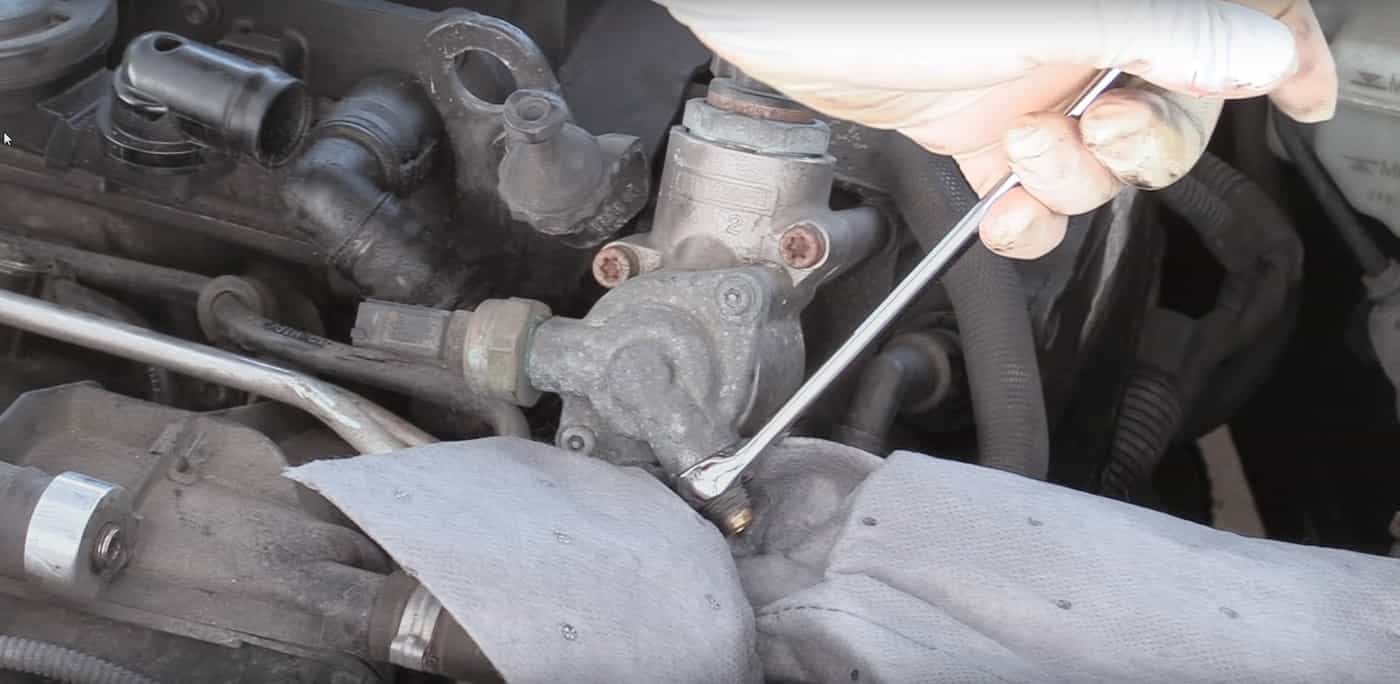
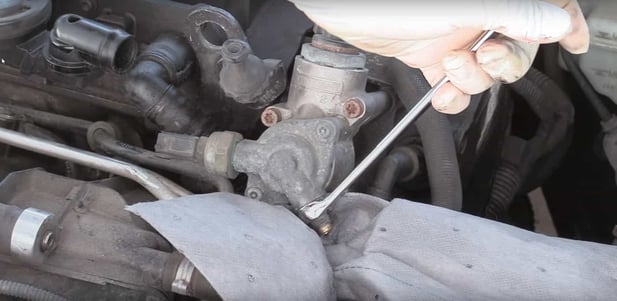
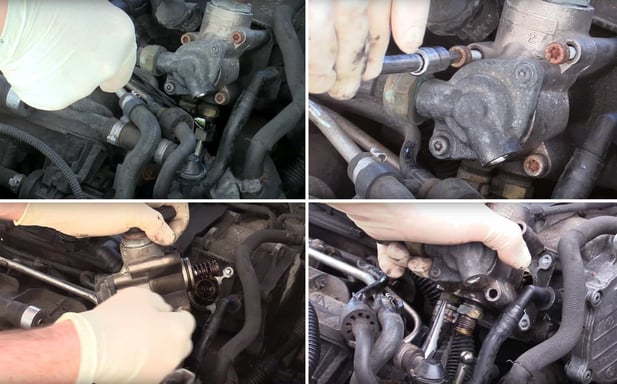
  • Loosen the fuel lines at the pump base using a 17mm spanner.
  • Remove the hose clamp and T30 fuel pump bolts.
  • Gently ease the pump out after removing the rubber fuel line.


Detach High-Pressure Fuel Pum


Change the Cam Follower

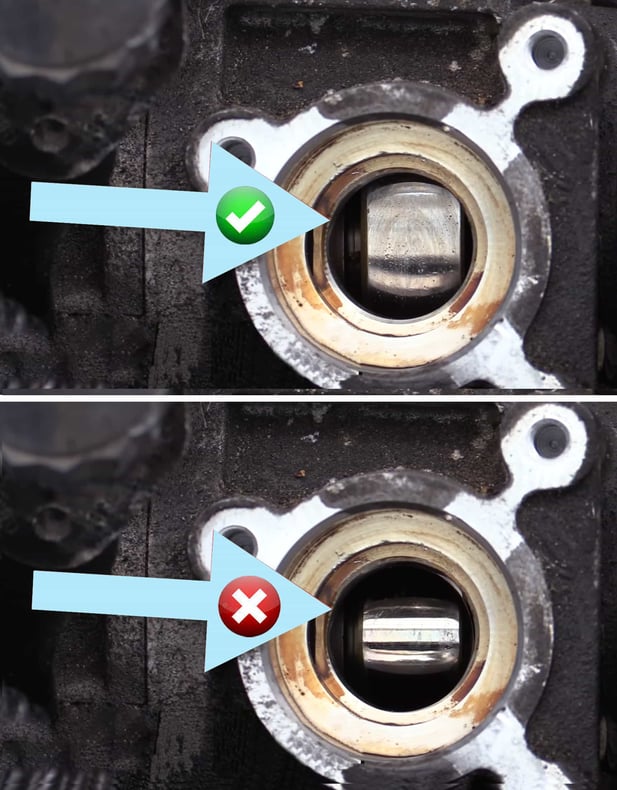
  • Take out the CAM follower and inspect the CAM lobe.
  • Prepare the area for the new CAM follower, ensuring it's clean and the CAM lobe is well-lubricated.
  • Place the new follower, ensuring both it and the lobe are amply oiled.

 Change the Cam Follower


Set Up the New Fuel Pump and Sensor

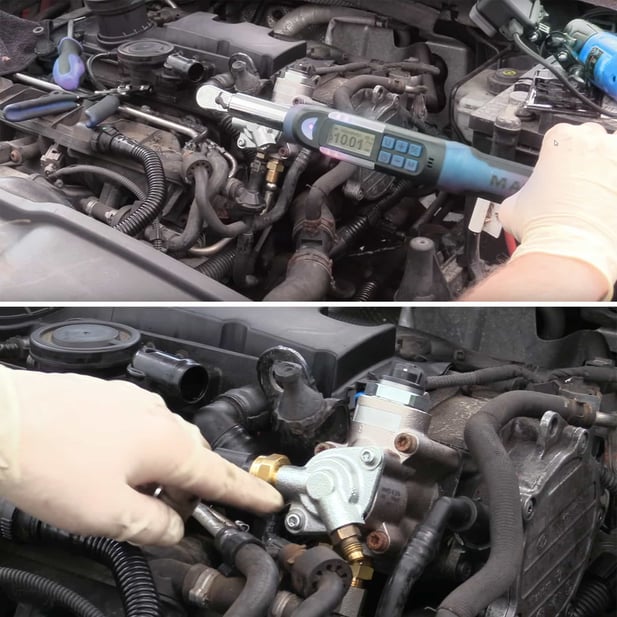
  • Secure the pump in a vice and attach necessary parts with appropriate torque: thrust sensor (24mm spanner, 30nm), barbed fitting (17mm, 30nm), schrader valve (13mm).
  • Attach the rubber fuel line, then secure the pump using new T30 bolts (10nm). Reconnect the hard metal fuel line with a 17mm spanner (27nm).
  • Reconnect all electrical connectors and cap the Schrader valve.

 Set Up the New Fuel Pump and Sensor


Reassemble Air Intake and Engine Cover

  • Replace the engine cover, secure the metal clips, and reconnect the MAF sensor.
  • Clear any diagnostic codes and prime the fuel system before starting the engine.

For more details, please refer to the page of Cam Follower Replacement.


Tools and Parts Required for the Replacement

  • Essential tools for cam follower replacement include:
  • Spanners (e.g. 17mm, 13mm, 24mm)
  • Ratchets (e.g. 3/8 Ratchet)
  • Torque wrench (e.g. 3/8 Torque wrench)
  • Capable Diagnostic Tool
  • Mechanic Gloves
  • Lubricants

For genuine cam follower kits, prioritize purchasing from reputable dealers or authorized distributors to guarantee part compatibility and performance. 


The Importance of Proper Installation

Correct cam follower installation is vital for engine performance. When properly positioned, they maintain valve timing and reduce component wear.

Incorrect installation can cause engine inefficiencies and risk damage from misaligned followers, leading to potential costly repairs.


Preventive Measures and Maintenance


The Significance of Regular Servicing

Like any mechanical component, cam followers require consistent maintenance.

Regular inspections can preemptively detect and rectify potential issues, ensuring the engine's longevity.


Service Intervals for Cam Follower Replacement

It's recommended to inspect the cam follower between intervals of 10,000 – 20,000 miles.

However, various factors, like driving conditions and vehicle age, can influence this schedule.


How to Maintain the Cam Follower and Extend its Lifespan

Keeping the cam follower well-lubricated and clean ensures its efficient operation. Research published in the peer-reviewed journal Lubricants (MDPI) confirms that the cam-follower mechanism operates under an extremely thin film of lubricant, and that maintaining adequate film thickness is essential to reducing wear and extending service life.

Regular check-ups and adopting preventive measures can extend the cam follower's lifespan significantly.


Cam Follower vs Camshaft Follower: Is There a Difference?

Short answer: no. "Cam follower" and "camshaft follower" refer to the same component — the small cylindrical part that sits between the camshaft lobe and the high-pressure fuel pump.

The confusion is understandable. Workshop manuals, parts catalogues, and online forums all tend to use these terms interchangeably, and occasionally you'll also see it called a bucket tappet or valve lifter depending on the engine type and whoever wrote the guide.

In most everyday conversations — and in most DIY repair contexts — "cam follower" is the term that sticks. If you're searching for a replacement part or looking up symptoms, either term will lead you to the same place. Just be aware that some parts suppliers list the component under one name and not the other, so it's worth trying both if you're not finding what you need.


Frequently Asked Questions


What does a bad cam follower sound like?

A ticking or tapping noise coming from the top of the engine is usually the first thing people notice. It tends to be most obvious when the engine is cold and sometimes quietens down once it's warmed up — but don't let that fool you into thinking the problem has gone away. If anything, that pattern is a pretty reliable sign that the follower is wearing unevenly.


Can I still drive with a bad cam follower?

Technically yes, but it's not a good idea. A worn cam follower doesn't just affect itself — it puts extra stress on the cam lobe, and once that starts to wear, you're looking at a much more expensive repair. If you're seeing misfires or the engine is cutting out intermittently, it's worth getting it looked at sooner rather than later.


What are the symptoms of a bad cam follower?

The most common ones are intermittent power loss (especially under acceleration), engine misfires that feel like a judder or stutter, fuel cutting out at odd moments, and in worse cases the engine stalling or struggling to start. You might also pick up fault codes like P0087 or P0089 on a diagnostic scan.


How often should the cam follower be replaced?

Most people go by mileage — somewhere between 10,000 and 20,000 miles is a common inspection interval. That said, it really depends on your driving style and how well the engine has been maintained. Short city trips and infrequent oil changes tend to wear followers out faster than steady motorway driving with regular servicing.


Is a cam follower the same as a camshaft follower?

They're the same thing — "camshaft follower" is just the more formal name for it. You'll also hear it called a bucket tappet or valve lifter depending on who you're talking to. In everyday conversation and in most workshop manuals, "cam follower" is the term that tends to stick.


How much does it cost to replace a cam follower?

Parts-wise, a cam follower kit is relatively affordable. The bigger variable is labour — because accessing the follower requires removing the high-pressure fuel pump, some garages charge a fair amount for the time involved. If you're comfortable working on engines and have the right tools, it's a job that can be done at home, which is why we put together the step-by-step guide above.


Conclusion

Understanding and addressing bad cam follower symptoms is vital for preserving an engine's health.

Early detection, coupled with regular maintenance, ensures that the engine runs smoothly and efficiently.

At Lily-Bearing, we advocate for proactive engine care and offer solutions including custom bearing manufacturing, bearing maintenance, and even lubrication, to help you achieve just that.


Bearing Static vs Dynamic Load: C, C0, L10 Explained + Free Calculator

Bearing Static vs Dynamic Load: C, C0, L10 Explained + Free Calculator

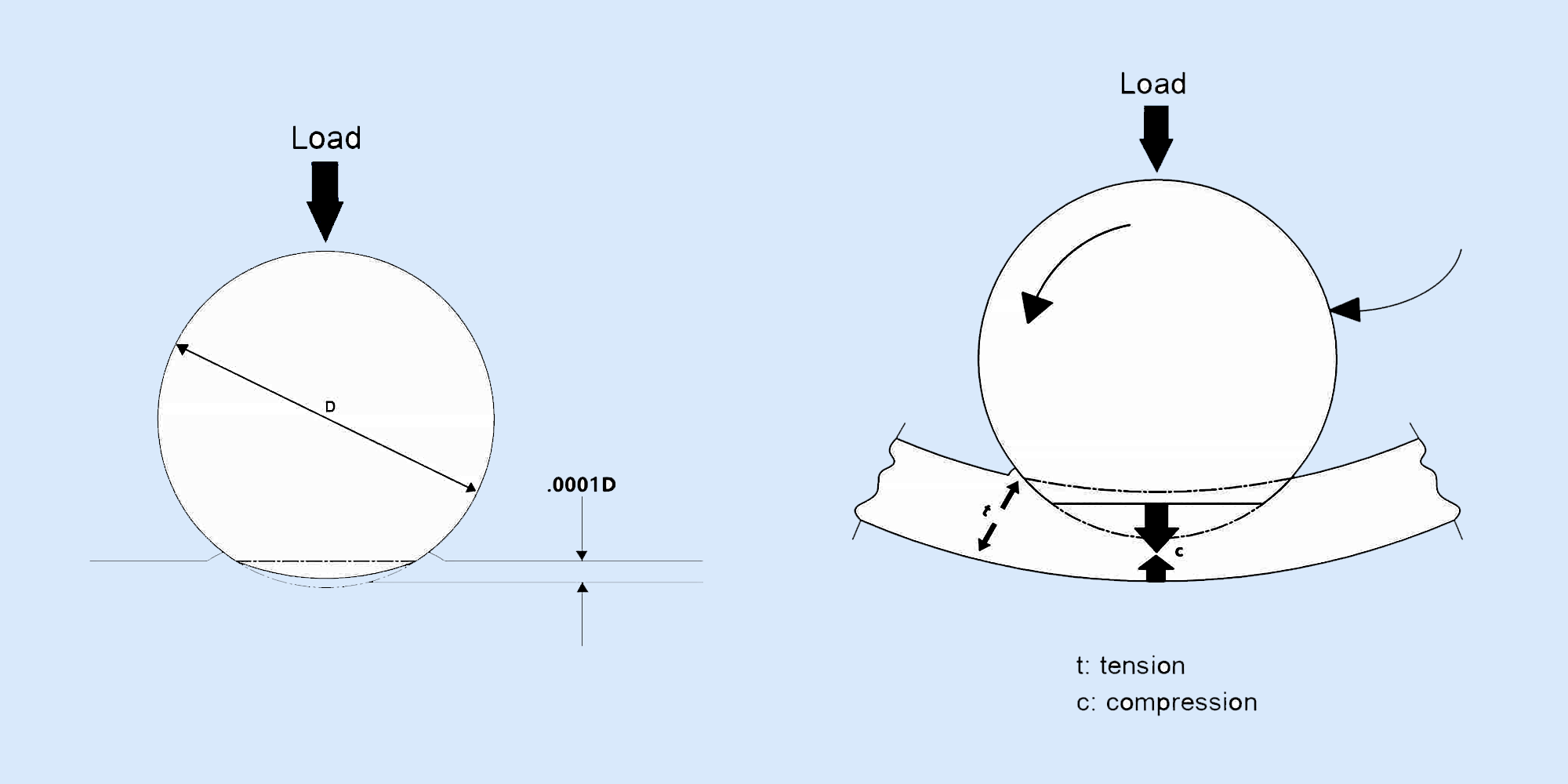
Bearings play a vital role in machinery by ensuring smooth motion and reducing friction. Understanding load capacities, specifically static load vs...
Read More
Black Oxide vs. Zinc Phosphate for Bearings: Which Should You Use?

Black Oxide vs. Zinc Phosphate for Bearings: Which Should You Use?

Both black oxide and zinc phosphate are conversion coatings — they chemically react with the metal surface rather than depositing a separate layer...

Read More
Chrome Steel vs. Stainless Steel Bearings: Which Do You Need?

Chrome Steel vs. Stainless Steel Bearings: Which Do You Need?

Bearings are crucial for precise movement and reliability in mechanical systems. The type of material affects how well and how long a bearing works....

Read More